Den filosofiska forskningen i Sverige: Inledning till första boken

Den filosofiska forskningen i Sverige: Förord

En lätt, moderniserande språklig bearbetning, åtminstone ifråga om stavningen, kunde kanske vara lämplig här i bloggen. Jag återkommer eventuellt med en sådan.

Ehuru det säkerligen vore af stort intresse att följa den filosofiska forskningens utveckling i Sverige altifrån dess tidigaste begynnelse ända intill våra dagar, så skulle dock ett arbete af så omfattande natur öfverstiga måttet af de krafter, som stå oss till buds. Vi hafva därföre inskränkt oss till försöket att gifva en framställning af den filosofiska spekulation, som, förberedd af andra tänkare, inleddes af Boethius, fortsattes af Höijer, Biberg, Grubbe, Geijer, och slutligen vunnit sin principiella fulländning genom Boström. Ehuru väckelsen till denna spekulation egentligen utgick från Kant, och ehuru den under hela sin fortgående utveckling stått i ett så nära förhållande till samtida former af filosofisk idealism i Tyskland, att den endast i sammanhang med dem kan rätt uppfattas; innehåller den dock i sig både principiella undersökningar och därpå grundade vetenskapliga resultat, hvilka väsentligen afvika från alt, som inom den tyska spekulationen hitintills förekommit. Det vore ock därföre ganska orätt att betrakta denna svenska filosofi endast såsom en gren på den tyska bildningens träd utan lefvande rot i den fosterländska jordmånen. Innehållet af de nämde svenske tänkarnes forskningar är emellertid icke blott nästan okändt utom Sveriges gränser, utan äfven inom dessa är bekantskapen därmed ännu ganska sparsam och ofullständig. Så  beklagligt detta förhållande än må vara, så är det dock lätt förklarligt, när man besinnar, att Boström i allmänhet blott under det muntliga föredragets form meddelat sin verldsåsigt, och att Bibergs och Grubbes efterlemnade föreläsningar och skrifter, i stället för att vara från trycket fullständigt utgifna, till störesta delen otrykta förvaras antingen hos någon anförvandt eller inom väggarne af något offentligt bibliotek. Under sådana förhållanden torde en sammanhängande framställning af det filosofiska forskningsarbetets fortgång i Sverige från slutet af 18:de århundradet intill närvarande tid kunna anses vara särskildt af behofvet påkallad. En sådan framställning bör icke blott kunna användas såsom en källa till bekantskap med våra store tänkare, till dess att deras arbeten hunnit att fullständigt utgifvas, utan bör äfven, sedan detta skett, kunna tjäna till ledning vid studiet af dessa, och sålunda i sin mån bidraga till att göra dem fruktbärande för den fosterländska bildningen.

Att rätt skildra den med Boethius begynnande spekulationen vore dock icke möjligt, utan att först och främst hafva kastat en blick tillbaka på den Lockeska filosofien och dess utveckling i England och Frankrike. Vid den tid, då Kant uppträdde, herskade nämligen i Sverige, likasom i det öfriga bildade Europa, denna filosofi både inom och utom universiteten och det var under lifligt motstånd från Lockianernas sida, som Kantianismen hos oss infördes af Boethius. Men utom de egentliga Lockianerna funnos på den tiden i vårt fädernesland tvänne tänkare, hvilka, ehuru de ytterst stödja sig på Lockes principer, kunna betraktas såsom föregångare till en högre riktning, och hvilka på den efterföljande svenska spekulationen utöfvat et omisskänligt inflytande. Desse tänkare voro Thorild och Ehrensvärd. Äfven för att kunna rätt förstå dem och den plats, hvilken de intaga inom den europeiska bildningens häfder, är det nödvändigt att ega någon kännedom af den Lockeska filosofien. Vi ämna därföre att inleda vår efterföljande framställning med en öfversigt af den Lockeska empirismen och dess vigtigaste förgreningar i och utom England. En sådan inledning är oundgänglig icke blott af de skäl, vi redan antydt, utan äfven för att i det följande kunna rätt tydliggöra skilnaden emellan den form af idealism, som genom Fichte, Schelling och Hegel utvecklat sig i Tyskland, och den idealism, som genom Biberg, Geijer och Boström utvecklat sig i Sverige. Ty denna skilnad beror väsentligen därpå, att de nyssnämde tyske tänkarne i likhet med Kant bibehållit vissa från Locke hemtade obestyrkta förutsättningar, åt hvilka däremot de svenske tänkarne icke velat tillerkänna någon vetenskaplig giltighet.

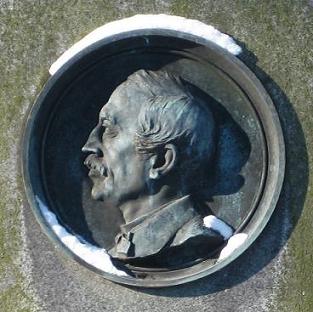
Axel Nyblaeus

Johan Axel N…filosof, universitetslärare, f. 20 maj 1821 i Stockholm, d. 24 febr. 1899 i Lund, blev 1839 student i Uppsala, 1851 filos, doktor och 1852 docent i filosofiens historia vid Uppsala universitet. 1853 utnämndes han till adjunkt i teoretisk och praktisk filosofi vid högskolan i Lund och förestod från nov. s. å. professuren i praktisk filosofi där samt var 1856-86 ord. innehavare av densamma. Han var led. av Fysiogr. sällsk. i Lund (1878), av Vet. o. vitt. samh. i Göteborg (s. å.) och av Vet. akad. (1879); han promoverades vid Köpenhamns universitets jubelfest 1879 till hedersdoktor i juridiska fakulteten. 1876 erhöll han av Svenska akad. Karl Johans pris för utmärkta litterära förtjänster.

Som tänkare tillhör N. den boströmska skolan. Genom flera värderika mindre uppsatser, huvudsakligen på religionsfilosofiens och samhällslärans områden, har han sökt vidare utföra Boströms lära. Under begagnande av den boströmska filosofiens resurser har han även i religiöst avseende sökt verka för en enligt hans åsikt högre uppfattning av kristendomen än statskyrkans, därvid i mycket anslutande sig till sin lärares tankegång i dennes Anmärkningar om helfvetesläran. Det är dock huvudsakligen lärorna om treenigheten och Kristi gudom, mot vilka han riktar sina angrepp. Inom samhällsläran är hans viktigaste arbete, Om statsmaktens grund och väsende, en förträfflig översikt av den filosofiska statslärans historia, den nära nog enda i vår litteratur. Den blev dock ej fullbordad (h. 1 utkom 1864, ny, tillökad uppl. 1882). Bland smärre skrifter av N. må vidare nämnas Om straffrätten (1852; 3:e uppl., Om statens straffrätt, 1879), Är en practisk philosophi möjlig efter Hegels verldsåsigt? (1855; 2:a uppl. 1856; öfv. på da. 1855), Trenne religionsphilosophiska uppsatser (1874; innehållande de redan förut publicerade uppsatserna Om den religiösa tron och vetandet, Theodor Parker och den religiösa frågan samt Striden om Christi gudom mellan V. Rydberg och biskop Beckman) samt Tränne uppsatser om den boströmska filosofien (1885).

Sin ojämförligt största betydelse äger emellertid N. som den svenska filosofiens hävdatecknare. Redan tidigt synes det ha varit hans avsikt att fylla bristen på en fullständig litterär framställning av den boströmska filosofien. Under förberedelserna till detta arbete leddes han emellertid till studiet av den föregående svenska filosofien, och resultatet blev hans stora verk Den filosofiska forskningen i Sverige från slutet av adertonde århundradet, framställd i sitt sammanhang med filosofiens allmänna utveckling (2 dlr, 1873-81, 1:a avd. af 3:e delen 1886, 2:a avd. därav 1888-93, 1:a avd. av 4:e delen 1895). I detta arbete söker N. uppvisa, att den svenska filosofien, trots sin nära förbindelse med den tyska, dock har självständig karaktär och självständig utveckling. Utmärkande för densamma är enligt N. dess avgjorda benägenhet att tränga fram till en rent osinnlig verklighet som den sinnligas grund och att i sammanhang därmed, under opposition mot den samtida tyska filosofiens panteism, söka lägga grunden till en vetenskaplig teism samt vetenskapligt bevisa människans frihet och odödlighet. I sin mest fulländade form framträder visserligen detta strävande hos Boström, men ansatser i samma riktning finner N. redan hos föregångarna, företrädesvis Biberg, Grubbe och Geijer.

Utmärkande för alla N:s arbeten i formellt afseende är det stilistiska mästerskap, varav han i hög grad var i besittning och vilket gjorde hans för fackmannen så värderika skrifter njutbara även för en större allmänhet. Till kännedomen om den svenska filosofien bidrog N. även genom att utge Samuel Grubbes filosofiska skrifter i urval (I- VII, 1876-84; de tre sista banden i förening med R. Geijer).

Lawrence Heap Åberg i Ugglan, stavningen moderniserad

Nyblaeus, Axel, svensk filosof, f. 1821 i Stockholm, stud. 1839 i Uppsala, fil. dr därstädes 1851 och docent i filosofiens historia 1852. Följande år adjunkt i teor. filosofi i Lund och åren 1856-86 prof. i praktisk filosofi där. Död 1899.

N. tillhör den boströmska skolan. Hans filosofiska undersökningar ha huvudsakligen rört sig på samhällsfilosofiens och religionsfilosofiens område. Sin största betydelse äger han som den svenska filosofiens historieskrivare. I sin skrift Om statsmaktens grund och väsende (1864) ger han en klar och koncis historik över olika samhällsteorier fram till den rationella idealismens. N:s mest betydande verk är Den filosofiska forskningen i Sverige (4 delar 1873-93), vari han behandlar den svenska filosofien från Thorild och Leopold till Boström i dess samband med den tyska transcendentalismen. N. söker därvid se den filosofiska utvecklingen i Sverige som en kontinuerlig linje, som går från Boëthius och Höijer över Geijer, Biberg, Grubbe fram till Boström. I denna utveckling framträder personlighetsidealismen allt tydligare under reaktion mot den Schelling-Hegelska panteismen. N:s verk [är] skrivet med ett stilistiskt mästerskap, en sällsynt klarhet och reda samt blick för de olika tänkarnas egenart…Tillsammans med R. Geijer utgav N. Grubbes filosofiska föreläsningar.

Alf Ahlberg, Filosofiskt lexikon (1925)

Wikipedia

Foto: Hedning

Den filosofiska forskningen i Sverige: Förord

Axel Nyblaeus’ över 2 000 sidor långa verk Den filosofiska forskningen i Sverige från slutet af adertonde århundradet utgavs i fyra delar mellan 1873 och 1897. Jag utelämnar ett kort avslutande stycke om dess disposition. Stavningen, och på något ställe språket i övrigt, är moderniserade.

Livligt övertygad, att en närmare bekantskap med den tankevärld, i vilken man införs av våra förnämsta tänkare, utgör ett viktigt medel för utvecklingen av det högre nationalmedvetande och den andliga självständighet, varförutan det svenska folket ej kan uppfylla sin bestämmelse, har författaren till det arbete, vars början härmed lämnas i allmänhetens händer, önskat göra detsamma tillgängligt för en så vidsträckt krets av läsare som möjligt. I anledning därav har han trott sig böra giva hela sin framställning en något större utförlighet, än som varit nödvändigt om han skrivit blott för män av facket eller för dem, som gjort filosofin till sitt huvudstudium och är förtrogna med dess problem. Särskilt har författaren, när han velat uppvisa de historiska förutsättningarna för den svenska filosofin eller någon viss form därav, ansett sig icke böra vara alltför knapphändig vid angivandet av huvudtankarna hos sådana tänkare som en Locke, en Kant etc., vilka gjort epok inom den filosofiska forskningen och givit uppslag till en förändrad grundriktning inom densamma. Också hoppas författaren, att det gustavianska tidevarvets män – Leopold, Rosenstein, Thorild och Ehrensvärd – skall framträda med större åskådlighet, när deras gestalter avtecknar sig mot bakgrunden av den från Locke utgångna spekulationen, än om denna bakgrund hade saknats eller inskränkts till några allmänna drag. Ävenledes hoppas författaren, att redan dessa det gustavianska tidevarvets män skall i sin mån vittna därom, att självständiga filosofiska tankar kan födas även i vårt fädernesland, och sålunda utgöra en vederläggning av den mening, enligt vilken all filosofisk forskning i Sverige – så vitt den ägt något värde – huvudsakligen varit ett återljud från främmande länder.

Än tydligare torde dock denna vetenskapliga självständighet visa sig hos de främsta tänkarna inom följande period. Den högre sidan hos Kant, den sida, som hos honom framträder mera under formen av divination, har nämligen först i Sverige erhållit en fullkomligare utveckling; och ehuru förtjänsten därav företrädesvis tillhör Boström, så tillhör den dock icke honom allena, utan även Biberg, Grubbe och Geijer, vilka alla med större eller mindre renhet, omfattning och energi uttalar och gör gällande den tanke, som är den alltbestämmande grunden för Boströms världsåskådning. Då denna grundtanke – att den sanna verkligheten är upphöjd icke blott över rummet, utan även över tiden och ligger i en absolut personlighet, i vilken de ändliga personerna till sitt sanna väsen ingår såsom organiska moment – ännu icke mäktat framarbeta sig till någon större klarhet hos Kants efterföljare i Tyskland eller andra länder, så bör den väl betraktas såsom en frukt av svensk forskning och såsom ett bevis därpå, att det djupare medvetande om det evigas betydelse, som utmärker den skandinaviska folkstammen, och som frambryter i dess mytologi och i vissa dess världshistoriska handlingar, ännu icke slocknat i det svenska folkets bröst, och således även bör kunna utvecklas till den grad av klarhet och styrka, att det kan bli de lägre tendenserna övermäktigt.

Idealism as Alternative Modernity, 2

Idealism as Alternative Modernity, 1

The concept of what I call an ”alternative modernity” and what others have called a ”second moderntiy” has recently come under attack, along with figures such as Vico, Burke, Herder, Carlyle, Croce, and even Isaiah Berlin, as part of the reactionary counter-Enlightenment discourse, in turn alleged to be intrinsically related to the rise of fascism. I suggest that Zeev Sternhell’s criticism in his latest, somewhat surprising book, The Anti-Enlightenment Tradition, must be rejected as part of an inadmissibly simplified discourse on modernity.

The concept of an alternative modernity is necessary, inevitable. There is and there will be no consensus on a modernity that is monolithic and unidirectional to the extent such critics seem to want. Almost all important thinkers have been strongly critical, on various grounds, of the mainstrem of modernity. An alternative to this dominant form of modernity and its ideological expressions, which shape not least the current problematic direction and substance of globalization, is badly needed. There may be more than one alternative, and all alternatives may not be desirable. But being an alternative modernity, the alternative which is desirable and to which I suggest idealism could decisively contribute, is not just a new, creative defence of elements of tradition, and not just an affirmation of the new factors of the economy and of technology as compatible with unchanged tradition, but, per definition, an alternative, selective defence of elements of modernity’s own Enlightenment and Romantic constituents and partial truths.

Since I am best known for my work on personalism, and among personalists and personalism scholars, some wonder about my interest in idealism. Personalism is no longer always conceived as an idealistic philosophy, not even in America, where the dominant personalist school was started by the obviously idealistic philosopher Borden Parker Bowne. Personalism has increasingly been conceived in terms of the phenomenology, existentialism, and Thomism of its twentieth-century European representatives. The facts that there was, even before the emergence of those best known schools of European personalism, a school of idealistic personalism in America, and that, as I have tried to show, this school was in itself a continuation of an even earlier, heretofore largely ignored European form of idealistic personalism, do not in themselves, from the point when I discovered them, account for my interest in idealism.

I am pleased to have been able to represent the field of personal idealism or idealistic personalism at quite a few personalism and idealism conferences over the years and, not least, to see a little bridge being built between idealism and personalism scholars inasmuch as they now to some extent attend each others’ meetings. A case can, I suggest, be made, along the lines of the personal idealists, that personalism is of necessity implicitly idealistic, and vice versa.

But my interest in idealism in some respects predates my interest in personalism. I became convinced of what was in substance some of the epistemological and purely metaphysical truths of idealism in a very broad sense early on, including not only central themes of Platonism and Neoplatonism, but also what could be regarded as some broadly ”Berkeleyan” ones, although there are problems with Berkeley’s more precise formulations of them.

In school, I was struck by what I found to be the unbelievability of the accounts of my physics textbooks of how sensation is produced by impressions from external, material objects which presupposed objective or absolute time and space out there in which those objects were floating about, impressions somehow received by the likewise objectively material senses, tranformed to signals transmitted through the nervous system to the brain, and there miraculously transformed again, into conscious perceptions completely distinct in nature from the originating objects themselves. I of course also soon discovered that leading modern physicists had long had strong doubts about that account themselves and often even rejected it outright, despite the limitations in principle of their particular perspective.

The ideas of those physicists were increasingly being taken up by the so-called New Age movement, which, while rejecting recent centuries of Western civilizational development as an old, invalid paradigm of gross materialism, in fact for the most part represented in unbroken yet strangely unconscious continuity the nineteenth-century revival of the Western tradition of esotericism which goes back to the Renaissance and to antiquity, a revival which was sometimes closely and reciprocally related to aspects of nineteenth-century idealistic philosophy.

And alongside the various expressions of what could often easily be seen to be the somewhat extreme romantic, distinctly modern pantheism of the New Age movement and of the residual countercultural movement, representatives of the Eastern spiritual traditions continued to appear in the West and feed their wisdom into the more and less congenial Western currents of thought. My study of some of the most important strands of Vedantic as well as Buddhistic thought confirmed my early idealist intuitions and suspicions regarding some forms of empiricism and of course naturalism and materialism or physicalism, reductive as well as so-called non-reductive. It made large chunks of Western philosophy seem irrelevant to me even before I hade made any proper study of them.

I had thus become an idealist long before I became an academic stundent o idealism. But it was of course only when I began my academic study Western philosophy and its history that I could conceptualize and express, to the extent that it was possible, the basic insights thus acquired in its terms and with reference to its thinkers. I then also came to understand how from certain perspectives, certain points of departure of the human mind, or certain levels of understanding, those parts and types of Western philosophy that had seemed irrelevant to me sometimes in fact have legitimate and even necessary functions in the dialectical systematicity of philosophy as a whole. They even to some extent had counterparts in Indian philosophy. But none of this made them any more true on the higher levels of that same philosophical systematicity.

Classical Idealism

In his doctoral thesis from 1937, Humanism and Naturalism: A Comparative Study of Ernest Seillière, Irving Babbitt and Paul Elmer More, written under the direction of Ernst Cassirer at Gothenburg University, Claes Ryn’s teacher Folke Leander gives an account of Seillière’s view of what I call classical idealism as a mysticisme d’alliance, and also of John Dewey’s similar description of it.

This view is part of Seillière’s analysis of human ”imperialism”, which, in turn, is related to his own partial utilitatianism. Despite the similarities in their analyses of romanticism, this utilitarianism, as Leander clearly shows, distinguished him from Irving Babbitt and Paul Elmer More. These positions need not concern us here.

What is interesting is rather the account of classical idealism as such. For even as understood in terms of a mysticisme d’alliance, a striving for protective and strengthening connection with higher powers against the dangers and uncertainties of life, both Seillière and Dewey manage to give a correct description of it, with reference to which Leander defends at least some of the positions of this idealism.

Babbitt chose to dwell mainly on the humanistic level of ethical ”mediation”, not on the metaphysical and mystical level of ”meditation”. He also rejected, in the spirit of Burke, what he perceived as a ”static absolute”, and focused on the inner check, the higher will, and the moral imagination as the path towards reality. And Leander follows him in this.

Yet at the same time, Babbitt did not deny the existence of the higher level of meditation and mysticism. And Leander too clearly affirms some aspects of classical idealism as described in the accounts he cites. He rejects the alliance part that has to do with Seillière’s ”imperialism” and utilitarianism, but affirms what he summarizes as the ”realism of universals”, although he goes on to agree with Babbit on how precisely the universals are in reality apprehended. This makes it possible to get a clear view of how the value-centered historicism, as developed by Leander and Ryn, regards the relation between the levels of mediation and meditation and also how, more precisely, it understands the latter. It also, in fact, affords us an opportunity to affirm, with reference to Leander’s own formulations and those he cites, the validity of those positions of idealism that go beyond their own.

Seillière shares the common, broadly progressivist view of the development of human thought which in the nineteenth and early twentieth centuries was far from being embraced only by positivists. Classical idealism, or the realism of universals, is therefore accounted for in its characteristic, genealogical terms. For Seillière, this idealism or realism is a development of certain elements of the worldview of primitive man, his experience of the power and mana in nature and in the spirit-world that was compactly non-differentiated from nature, although in a different sense and to a greater extent than in the ”cosmological” civilizations which Voegelin analyses in terms of compactness and differentiation. Leander summarizes:

”Man tries to ally himself to the God-Universals, or God-Being, and expects some kind of happiness in return. The realm of Change and Not-Being is the source of misery and pain, and therefore, it is held, one should seek the realm of Being, the source of peace and happiness. The universals are the divine element in the world, the mana, and what partakes of them has mana. The philosopher who communes with God-Being in a mystical contemplation, stands above his fellow-men in dignity, just as the saint does in Christianity and Buddhism, and the inspired genius in aesthetic mysticism. They are all looked upon as having mana. They are the prophets of their divinities, and their favoured children.”

In primitive societies, the social hierarchy is, in general, ”reflected in the distribution of mana or, if one prefers, the participation in the divine”. Leander speaks of a ”homoiosis theou of primitive man”. But here it is important first of all to say something about the worldview of the primitive peoples. For instance, it must be observed that according to the traditionalist school started by René Guénon, the peoples perceived as primitive by modern Western scholars are in reality to be understood as degenerate: their worldview is a reflection or residue on a low or non-civilizational level of conceptions properly belonging to the metaphysical tradition that is also expressed in the early high civilizations.

Whether or not this is so is something I cannot discuss here. A structural similarity, with underlying, recognizably identical broader features variously expressed on different levels of civilization, reflection, conceptualization, and corresponding cultural expressions and practices, does not, however, seem to be an overly speculative understanding. Such phenomenological unity is clearly often discernible. Quite regardless of the question of chronology, history and development, it can of course be accounted for simply by reference to a common, underlying unity of experience and to a shared objective reality. To the truth, quite simply, with its various degrees of apprehension.

Leander quotes Seillière on the development from the primitive worldview to the metaphysical and idealistic: ”’Totemism…gives birth to metaphysical notions which have expanded later into the notion of ”Ideas” in the Platonic sense, and of the archetype, and into the so-called ”realistic” (in reality essentially mystical) conceptions of the philosophy of the Middle Ages.’” This developmental analysis is of course shared by Dewey, who takes what Leander points out is a purely anthropological view of Greek philosophy. The philosophies of Plato and Aristotle were, in Dewey’s own words, ”systematizations in rational form of the content of Greek religious and artistic beliefs.” And again, for Dewey too, religion and idealism are a mysticisme d’alliance: this is ”the Leitmotiv of Dewey’s critiqe of religion, primitive and refined, as well as of the various philosophies clustering around it or absorbing and supplanting it”.

But Leander objects that it is ”by no means clear” that the anthropologist’s point of view, which ”coincides with the realism of ’facts’, or positivism”, is ”the only one”, and goes on to cite Maritain with approval. He thus makes clear that he does not share Dewey’s understanding when he proceeds to cite his characterization of classical idealism.

But some things he has already said about this idealism by way of his summary of Seillière’s view. Even as rendering Seillière’s interpretation of the classical idealist phase in the light of the primitive understood as its origin and a preceding stage in its development, the summary accurately described some elements of classical idealism in a broad sense. And if we regard the relation between the primitive and the classical as at least also one of between different modalities, levels or degrees of apprehension of the same reality,  we can bracket the issue of the progressivist and positivist claim with regard to their connection in terms of causality and sequence.

The first thing that was said about classical idealism is that ”Man tries to ally himself to the God-Universals, or God-Being, and expects some kind of happiness in return.” Here we are immediately introduced to a central ambiguity: ”the God-Universals, or God-Being”. This is a legitimate formulation in this connection, but it is also vague. The question of what, more precisely, universals are, of course immediately takes us far into Plato’s various exposition of the theory of forms, into conceptual realism as worked out in the Aristotelian tradition, and, in this connection, into value-centered historicism. I discuss all of this in other posts, but it is of course to some extent unavoidable in connection with this direct discussion on the part of Leander of classical idealism.

Here I want to focus primarily on ”God-Being”, however. One aspect of the vagueness of the formulation is that although in classical idealism the ”God-Universals” are certainly Being, and indeed, as God-Universals, even God-Being, ”the divine element in the world”, it is not obvious that God-Universals and God-Being are synonymous terms, as the ”or” indicates. It would seem that the God-Universals may not exhaust God-Being, that God-Being, in addition to being the God-Universals, is also something more.

This too would take us into areas which cannot be adequately covered in this post, including as they do the vast subject of the Greek concept of Being. Apart from Heidegger’s thinking on this subject, many readers of the passage will certainly remember how Plato considers the form or idea of the Good ultimately to rise in its dignity above Being itself, perhaps in a particular Greek sense. This fact is especially important in connection with the traditionalist school which often stresses this, not least in the work of Tage Lindbom, in separating Being, as an immanent sphere, from transcendence.    

I have doubts regarding the terminological consequence of this distinction however, and have no problem with the tem God-Being if, when necessary, it is distinguished from Being that is not God-Being and a proper conception of transcendence (which does not imply radical dualism) is maintained. Leander does not do precisely this in his summary, but instead distinguishes God-Being from ”Not-Being”, ”the realm of change and Not-Being”. This too I find uncontroversial, inasmuch as God-Being must be accepted as true Being and the Being that is not God-Being as less Being, as it were, than God-Being. This is all classical Platonism of course – the whole tradition of Platonism.

What is important is that these very first sentences in this characterization of classical idealism express, quite apart from Seillière’s own intentions, such a basic and central truth. ”The realm of Change and Not-Being is the source of misery and pain, and therefore, it is held, one should seek the realm of Being, the source of peace and happiness.”

Given only a few further definitions of each of the terms, this, I contend, is an absolute truth. In itself, it explains the whole need to ever return to classical idealism, the Western philosophy that gave expression to this truth, or rather, expressed it in terms of the new Western phenomenon of philosophy. I would even suggest that those who do not accept this truth are not true philosophers in a proper, strict sense, inasmuch as they are neither wise nor lovers of wisdom. For we must keep in mind here that philosophy in antiquity, while forming a unity in its speculative aspect with emergent science, also had a different aspect of spiritual practice of the kind stressed by Pierre Hadot, often in conjunction with the elements of traditional (in Guénon’s sense) metaphysical substance beyond the reach of the new speculative enterprise, as well as with those elements as rationally reconstituted and adjusted to philosophy in the way we find them to be in the Platonic tradition. This central and constitutive aspect of philosophy as practical spiritual exercise, which, in its universality converged in its intrinsic universality – beyond the separative results of the larger process of differentiation described by Voegelin – with metaphysical or spiritual traditionalism, was largely lost with the realliance with science during the Renaissance or the early modern period. Although some forms of modern idealism began to shown the way, philosophy has yet to reconnect to and revive this aspect, something which is indeed tantamount to reconstituting itself as philosophy proper or philosophy in the full sense as understood in antiquity.

While Western modernity especially needs to return to the truths of classical idealism, having so long drifted into onesided Becoming and thus Not-Being or Non-Being, this is not incompatible with a simultaneous affirmation of the more or less relative values of the phenomenal sphere of Change and the partial truths of the kind of alternative modernity I have tried to defend. And the general truths on the humanistic level described by Babbitt in his centrally important synthesis of the classical tradition of philosophy in the original, broad sense on the one hand and some of those partial truths of modernity of the other, his version of ethical mediation in terms of the higher will and creative imagination, truths on the humanistic level, of course provide a supporting structure of moral and aesthetic values, of character-formation and general humanistic wisdom that is also always needed. Despite his doubts about idealism and the absolute, as he saw them defended by some philosophers, these truths and values were not incompatible with what he called the level of meditation. Babbitt in his own way – and to a still higher degree, More – affirmed the fundamental truth we are talking about here.

In itself, once fully grasped and experienced, this truth about God-Being is however unambiguously superior to the truths on the other levels, and indeed overwhelming, definitive, uncontradictable. To a very considerable extent, discussion ends here. Sat sapienti. From this point, a non-superficial soul engages in the pursuit of God-Being. Other issues – the rest of the history of philosophy, for instance – can attract his attention only as related to and congruent with this pursuit.

All philosophies that propose to reject it are, in the very nature of things, refuted in advance, as it were. The realm of Change and Not-Being is the phenomenal realm of shifting experiences of what is perceived as outer, ”material”, sensual reality, in which all endeavours are not only always inseparable from ”misery and pain”, but are also ultimately futile if disconnected from ”the peace and happiness of the realm of Being”. Nothing in the the relative, phenomenal sphere can ever change and remedy this.

A spiritually advanced Westerner who contemplates this truth in terms of Greek idealism will today naturally continue along the same line directly to the deepened insight that is found in the Upanishads and the Bhagavad-Gita – now that these truths have long been authentically represented and communicated also in the West. This, with or without classical idealism, is where one has to go if one really wants to ”seek the realm of Being”, or rather, if one really wants to find it in the sense of attaining it. Classical idealism speaks of God-Universals, including Truth, Goodness and Beauty of course, and of God-Being. Vedanta speaks – and in the kataphatic schools this is only a preliminary utterance – of sat (being, eternity), cit (consciousness, knowledge), and ananda (bliss) as the nature of atman-brahman.

The world is awash in ignorance and illusion, in maya. It is lost in the transience of Non-Being and thus in suffering, or rather, in passing pleasure and enjoyment inevitably mixed with suffering. The classical idealist philosopher is the result of a particular, in a certain sense non-traditional development in the West and of the particular nature of the Western process of differentiation. Yet against the sophists’ challenge, he restores and renews traditional wisdom within the new framework of philosophy, and gives it a new theoretical and conceptual expression. He too, at least to some extent, indeed ”communes with God-Being in a mystical contemplation”, and to the extent that he does so, he, like the vedantist, the yogi, the guru, calls the world back to the higher life, to brahman, to God-Being, in which ultimate perfection and fulfillment is alone achieved, and through the enlightenment in and through which even the realm of Change and Not-Being, or phenomenal experience, is in a certain way partly transformed.

Here is indeed a direct continuity between India and Greece, and of course another plain similarity, or rather, on this general level, an identity, accountable for by the apprehension of a single reality even without the consideration of direct or indirect historical contact and influence. It points to the limitations which I have briefly indicated in Voegelin’s analysis of differentiation.   

The truth we are talking about that was once naturally stated in terms of philosophy has, because of the latter’s development, tended to be removed to the sphere of mysticism and esotericism. There is nothing wrong with the traditions of mysticism and often not of esotericism either, especially inasmuch as they often seek to add the dimension of philosophical and spiritual practice which modern philosophy had lost, to compensate partly for what was, before the new East-West bridgebuilding of the last few centuries, the absence in the modern West of a widely accepted and in its own way institutionalized spiritual practice corresponding to what without it remained only a theoretical truth. A counterpart and equivalent of Yoga, which always complemented the theoretical disciplines of Samkhya and Vedanta (although they too are forms of spiritual practice). A practice of meditation, beyond the New Humanist practice of ethical mediation, and resuming and sometimes deepening the exercises spirituels of classical philosophy so well described by Pierre Hadot. Indeed, in the Abrahamitic traditions, it is only their mystic and esoteric strands which at all communicate the whole of the truth of God-Being, and that only in some cases.

But it is unfortunate and wholly unnecessary that this truth is no longer or so very rarely expressed conceptually in philosophy as such to the extent that it acutally could be, and thus as central to philosophy. Even modern idealism has tended to occlude it for various reasons which it is of the greatest importance to understand and to the understanding of which not just the traditionalist school but also the New Humanists made considerable contributions.

Although I certainly add some distinctive elements of modern idealism, what I mean when I speak about and defend idealism – as I do when I speak in terms of Western philosophy, trying to remedy the lametable situation – is also an idealism of this original, metaphysical, spiritual and, as it were, uncompromising variety. An idealism that is defined by the affirmation of this absolute truth about God-Being stated by Leander in his account of Seillìère, and, it seems, even believed in by him at least to a greater extent than by Seillière.
Idealism and the Renewal of Humanistic Philosophy, 1

In several publications and conference presentations I have tried to point to the historical connection of modern idealism with the dominant, radical strand in what is today often called the esoteric tradition of the West, which accounts for some of the distinctive features of this idealism as a worldview in the broad perspective of intellectual history.

I have, in very modest format, sought to indicate how it contributes especially to our understanding of some of what can be seen as problematic aspects primarily of so-called absolute idealism in its main versions. Pointing, with reference to the analyses of a number of well-known historians and philosophers, to a deep cultural dynamic in the modern West, comprising both rationalism and romanticism and decisively albeit often covertly inspired by the esoteric tradition, a dynamic which I have described as a “pantheistic revolution”, I have suggested that there is a need for a counterbalancing reconnection, in certain respects, of the partial truths of modern idealism to certain elements, distinctions, and priorities, not least the ethical ones, of the “traditional”, classical (or classicist) and Christian worldview synthesis, without the Christian element entailing any commitment with regard to the dogma or indeed much of the general worldview of exoteric orthodoxy, of which it is rather idealism, broadly conceived, that is the corrective. We need, I have felt, to go deeper than the currently common analyses of the Enlightenment Project, and I have thought that the notion of the pantheistic revolution might serve that need.

Without any moorings in the insights of such traditionalism, it has seemed to me, idealism, as a part and an expression exclusively of the dynamic of the pantheistic revolution, has often indirectly contributed to or become part of some problematic cultural and political manifestations of this revolution in the nineteenth and twentieth centuries.

I have also briefly pointed to the distinctive features of British and American nineteenth-century idealism which are due to its specific moral and cultural contexts, and which made possible more promising developments. In particular, I have stressed what could be argued is the importance of the alternative form of idealism, prominent not least in Britain and America, the personal idealism of Andrew Seth Pringle-Pattison and Borden Parker Bowne, which is in some respects more closely related to these cultural characteristics, although they too draw on the shared continental European legacy of German idealism. Through its focus on the category of the person, this form of idealism – which, incidentally, is also that of the earlier Swedish school of personal idealism – avoids some of the problems of the standard absolute idealist nexus of epistemology and metaphysics, and for this reason dovetails more readily with the non-pantheist truths that I have had in mind.

The reasons why some criticism of what could be called impersonalistic idealism is needed I have stated elsewhere, and they will not be my main focus now. Here, I want rather to point to some of what I consider to be true in modern idealism in general, including absolute idealism. Since it seems to me that this must be disentangled from the pantheistic revolution, the present defence of idealism differs from the standard neo-idealist or semi-idealist defences of a Croce, a Collingwood or an Oakeshott, which, despite their own form of traditionalism, seem to me still in too many respects to be parts of that revolution, and to share some of its pervasive characteristics.

What is true in idealism in general must be defended since, when the problematization that seems necessary to me has been carried out and the needed modifications accepted, it is still as far as I can see by far the most important current of modern thought, and yet still so poorly understood in contemporary philosophy.

Not only would a simple, unhistorical traditionalist return miss its valuable contributions; tradition itself can hardly be wholly unhistorical and static; elements of creativity are not only always needed for its vitality and flourishing, but part of its essence, properly understood. This general truth is applicable to philosophy in the sense that some of the new insights of modern idealism into the nature of subjectivity, reason, and history are not only in tension with but also to a considerable extent synthesizable with some general truths of the pre-pantheistic tradition, in a way that is not always perceived by the leading representatives today of more rigorous traditional thought in this sense, or indeed by an attenuated twentieth-century idealist like Oakeshott in his own definition of a living, historical tradition. The creative traditionalism I feel should be defended is different from Oakeshott’s, and indeed Gadamer’s, and not only in that it is the one which allows me to integrate the partial truths of their thought. Again, it is especially idealism as represented by its personalist version which is thus synthesizable.

What I will have to say here about the truths of idealism, on a very general level which I hope is nevertheless sufficient for my limited purpose, will, however, be in terms of, in the context of, and as a contribution to the renewal of what could conveniently be called humanistic philosophy. For this designation to be convenient, however, it will have to be defined, and I will next try to provide such a definition to the extent that it is needed.