Ficino, Pico della Mirandola, Poliziano
Idealism and the Renewal of Humanistic Philosophy, 1
Idealism and the Renewal of Humanistic Philosophy, 2
Idealism and the Renewal of Humanistic Philosophy, 3
The basic idealistic insight regarding what could be called the experiential whole can be traced back to the first beginnings not only of idealism in Germany, but of the new aesthetic ideas of romanticism in a broad sense. This insight is common to the more “complete” idealism I seek to defend, which synthesizes the Platonic tradition with the partial truths of modern idealism, and the latter form of idealism in itself. It is well described by Folke Leander and Claes G. Ryn in their selective defence of idealism as part of their so-called value-centered historicism. Here as elsewhere, I will build partly on their account. But I will relate it to the work of a wider range of idealist thinkers, draw out its implications of a more complete absolute idealism, and indicate briefly the difference made by the distinct positions of personal idealism or personal absolute idealism.
The discovery of wholes, inspired by the new view of the active and synthetic imagination, was decisive for the reaction against the sensationalistic materialism of the Enlightenment and its dissolution of experience into impressions and associations, and had implications for the whole field of humanistic knowledge and thought.
The post-Kantians and the romantics, perceiving the absence in Kant of a critique of his own critical reason, moved on from his abstractly and rationalistically conceived synthetic wholes to discover, along with the properly creative imagination, the primacy of real, concrete, non-conceptual experiential wholes – moral, aesthetic, and philosophical. Coleridge’s concern was the transcendental deduction of the imagination, i. e. to show that it is a necessary part of the categorical network that constitutes the mind. This imagination orders our experiential wholes and the symbols of the infinity in which everything experienced exists and from which it is separated only by the abstractive operations of reason in the sense that the Germans, less felicitously, designated by the term Verstand and Coleridge, equally unfelicitously, the Understanding.
The insights were now fully expressed that there are no atomic “facts” related only externally to each other, that facts have whatever meaning and reality they have only because of the relations within experiential wholes, that everything is to be understood in terms of its essential relatedness, and that ultimately there is meaning only in relation to the largest whole. The idealist understanding of experience, distinct from both rationalism and empiricism, was soon fully elaborated. Everything has to start from the direct experiential awareness of the flow of life, unmediated by formulas and laws, a flow which is more fundamental and real than any of the conditional modes of experience, as Oakeshott calls them.
I should add here that the expression “flow of life”, used by Leander and Ryn, does not for me signify an endorsement of those expressions of the “philosophy of life”, from romanticism to Dilthey and beyond, which rejected idealism as mere “school philosophy” and sought something else beyond it. Indeed, I find this to be a shared error of the philosophical currents of phenomenology, existentialism and hermeneutics. Although the case is not as serious as that of the analytic philosophers, their rejection of idealism still seems to me often superficial and stereotypical, not seldom based on sheer misunderstanding and spatio-temporally parochial, incomplete assimilation. The work of the philosophers in these traditions contain important insights, but they need to be reconnected to a properly understood and reformulated idealism. The broad metaphysical horizons opened up by the renewed idealist tradition in the nineteenth century, with their great potential not least in the field of comparative studies, need to be restored.
Such an idealism includes but also transcends the insights formulated by Leander and Ryn. Supplemented or qualified by the insights of degrees of reality, truth, and value, and of the perspectival relativity and the possibility of error that follow from a clear distinction between the finite and the infinite subjects of the kind insisted on by the personal idealists, it seems to me that to assert with a more complete idealism that reality is identical with experience, that appearances are real, not illusions, and that experience is self-authenticating, not guraranteed by anything more fundamental, since there is nothing more fundamental, might be admissible. To be real is to be in experience, and every experience is part of or content of consciousness. And the full understanding of what this implies makes it clear that it is not at all a matter of a subjectivist imperialism or reduction of the being of things.
Ultimate reality, on this view, is experience as a whole, the ordered sum of appearances or of what exists, or the experience of this totality – which we can of course conceive of only imperfectly – in which all partial perspectives are overcome. This is one aspect of the absolute. The absolute, the ultimate reality, is absolute experience. Truth is this reality itself, the whole of reality or the absolute. We can in a sense understand that this is so although our own experience as finite is only partial and relative. The absolute is the ultimate standard of truth, reality, and value. Truth is in this perspective ontological rather than semantic, and not only a property of propositions or judgements. These are always distinct from the whole and partial, they are, in their own way, true as partaking of the authority of the whole.
Human thought progresses by stages or moments in its understanding of reality, although Hegel, the Hermeticist, is mistaken in his suggestion that it can actually reach a final completion of self-realization in the Idea, the point at which, in complete knowledge, it grasps its true identity with the Whole. He is right that, to the extent that and in the cases where progress takes place, each successive moment, though defective, contains a greater measure of truth than its predecessor, that each stage represents a provisional coherence until reason, exposing its inchoateness, ascends to the next platform of understanding in an evolutionary hierarchy, and that in relation to the absolute the stages differ in degree rather than kind. There are, generally speaking, degrees of abstraction and mutilation, an ascending scale of validity.
Svante Nordins avsnitt om Hans Forssell (1843-1901) i Den Boströmska skolan och den svenska idealismens fall ger kanske en något överdriven bild av Forssells boströmianism, i det att den helt förbigår både de allmänna spänningarna mellan liberalismen och boströmianismen som kvarstod även efter att Boströms närmaste efterföljare börjat revidera statsläran, och den tidige Forssells egen kritik. Men avsnittet visar i alla fall att boströmianism och liberalism på visst sätt kunde förenas vid denna tid, och Forssell blev väl mer konservativ med tiden. Avsnittet återfinns på s. 43:
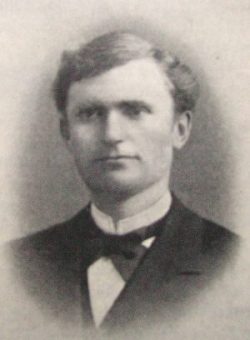 “Hans Forssell var något av oscarianskt underbarn. En man med mångsidiga intellektuella intressen gjorde han viktiga insatser särskilt på den ekonomiska historiens område. Föga mer än 30 år gammal blev han finansminister i De Geers andra ministär. Till sin politiska åskådning framstod han, särskilt under senare delen av sitt liv, som konservativ. Han deltog energiskt i kampen mot materialism, positivism och naturalism. 1881 uppträdde Forssell så för att förhindra kommunala bidrag till Anton Nyströms arbetarinstitut. Som ledarskribent i Stockholms Dagblad bekämpade han Strindberg, Verdandi och andra samhället upplösande kulturkrafter.
Forssell tillhörde Boströms personliga lärjungar, men graden av hans Boströmtrohet har bedömts olika. Torgny Segerstedt har hävdat att det inte torde ‘råda något tvivel om att han själv räknade sig som boströmian’. Mot detta har Nils Elvander gjort gällande att ‘Forssells inställning till den boströmska filosofien var…från början självständig och kritisk’.
Det finns ingen anledning att gå djupare in på detta spörsmål. Det räcker med att Forssell allmänt framstod som en av boströmianismens allierade. 1875 rycker han t.ex. ut till försvar för Boström gentemot Waldemar Dons i en anmälan i Svensk Tidskrift av norrmannens Boströmkritik. Inom det boströmska lägret förefaller man ha varit utomordentligt nöjd med hans insats. Sahlin sade sig t.ex. inte ha ‘ett ord att ändra eller tillägga’ i det Forssell skrivit.
Till andra talanger var Forssell en ypperlig stilist och en man med kulturella intressen. Han hedrades också vederbörligen med en plats i Svenska akademin.”
Idealism as Alternative Modernity, 1
Idealism as Alternative Modernity, 2
While the continuity of its Schellingian and Hegelian versions with the esoteric tradition is today obvious, and other continuities stressed by Muirhead and others are certainly not unimportant, modern idealism in the German post-Kantian and the Anglo-American line is often, perhaps even generally, of a different kind, and introduced new and other elements. In my paper at the Idealism Today conference at Oxford in 2005, ’Idealism and the Renewal of Humanistic Philosophy’, I defended what I find to be the general truths in those lines of idealism. When I speak of idealism as alternative modernity, I have in mind primarily those truths, but I am strongly inclined to emphasize a need for a broader concept of idealism for this purpose too, an idealism reinforced, as it were, by the ”Berkeleyan”, esoteric, Platonic, and Vedantic elements that were decisive for my own early intellectual formation.
In most of those forms, idealism represents, and ever since antiquity in the case of some of them, an alternative to certain historically context-specific exoteric developments of Christian orthodoxy. Because of this, it often tended to become intrinsically and constitutively a part modernity, and both its rationalist, scientific, Enlightenment variation and its romantic one (as I have defined those terms in several publications). Scholars sometimes rightly focus on Hegelianism in the context of the question of the so-called legitimacy of modernity, but their interpretations of both Hegelianism and modernity for the most part seem, as in the case of Robert Pippin, unduly reductive. What is at stake, I suggest, is in reality much broader metaphysical and spiritual concerns.
Although it is perhaps partly because of my ”reinforced” idealism that I have never been able to see the various attempted refutations of idealism in the twentieth century as even very noteworthy, let alone convincing, I insist, as in my Oxford paper, that there are central insights of modern, specifically German idealism and its variations in the Anglo-American “empire of idealism” which are still very much valid, relevant, and indeed simply true, and not just of historical interest. The historical scholarship that dominates the presentations at these conferences help transmit that legacy even as most participants are not themselves thoroughgoing idealists, as it were.
Anglo-American idealism scholars long tended, and quite naturally, to focus on the attack of the analytical philosophers, and to a much lesser extent on the attack of phenomenologists, existentialists, and neo-Thomists. But no less important, I think, is to take a closer look at the efforts of, by now, generations of liberal political philosophers and Marxist historians of various stripes to try to isolate an admissible idealist prehistory of their own liberalism and Marxism and dismiss other important elements of idealism as exclusively part and parcel of the German so-called Sonderweg. Many of the latter elements, as characteristically analysed in works such as Fritz Ringer’s influential The Decline of the German Mandarins, entered into Anglo-American idealism too, even as the latter significantly modified them in accordance with the differences in their cultural traditions and mentalities. Much greater discernment is required for the understanding of idealism – in all its worldview ramifications, not just in philosophy but for the understanding of culture, history, politics, and religion – in Germany and in other European countries.
This is so not least in view of the factual historical course taken by modernity. Did idealism in my broader sense produce the modernity that, in time, turned against it? In my paper at the International Conference on Anglo-American Idealism in Pyrgos, Greece, in 2003, I explored this problem, and argued that, largely because of the opposition to the mentioned developments of Christian exotericism, the broader idealism (before the specific modern versions were developed) often turned into what I called a ”pantheistic revolution” which, because of its inner dynamic, generated the problematically one-sided versions of rationalism and romanticism which have come to determine the shape and substance of the main form of modernity.
Idealism and the Renewal of Humanistic Philosophy, 1
Idealism and the Renewal of Humanistic Philosophy, 2
Scientism was thus correctly criticized by philosophical currents deeply shaped by romanticism, even when as alternatives these were not in themselves tenable due to the problems precisely with this romanticism. The analytic philosophy which turned against and replaced idealism was a militantly scientistic philosophy, and still tries, even if only awkwardly, to be so. Much of romantically inspired “continental” philosophy was sometimes correctly criticized by analytic philosophers even as their alternative was not in itself tenable either, due to the problems with its scientism. But primarily because of the latter problems, the sharp demarcation line between analytic and continental philosophy has for a long time and in many respects been blurred.
This is not always because analytic philosophers relinquished their scientism and continental philosophers their romanticism. Again, on a deeper analysis, we have to do with two expressions of the same underlying cultural dynamic, and thus there were, not surprisingly, instances if not of the potential of synthesis, at least of a characteristic combination. But to the extent that such relinquishing of untenable elements – whether because of the criticism from the other side taking effect or for other reasons – was the reason why the line was blurred, the blurring was welcome.
Some philosophers call for further mutual modification of the analytic and continental traditions. The former has to recognize and assimilate the central humanistic, historical, and hermeneutic concerns of the latter, while the latter is held to stand in need of the formal and conceptual clarity and rigour of the former. It is difficult to see how anything like this is possible without discarding completely the scientistic substance of the analytic project. But to the extent that an interpenetration of the two traditions leads to a mutual modification which does involve this, it is certainly of the greatest historical and intellectual significance. That continental philosophy was not always what the analytic philosophers said it was has always been obvious, and that analytic philosophy can be disconnected as a set of formal instruments from its scientistic substance has of course also long been clear, and is exemplified today not least by analytic philosophical theology and “analytical Thomism”.
Idealistic philosophy was part of a whole cultural paradigm in many countries, which, in the eyes of the radical critics, shaped by the incipient general, post-World War I twentieth-century sensibilities, often made its positions wrongly appear conservative and almost “traditional” in my sense, constituting as it did one major expression of the Victorian spirit, its moralism, and its aesthetics, and symbolizing much of the world before the rise of high modernism and the general cultural radicalism shared, for all of their differences, by the logical positivists, Bloomsbury, the Marxists, the Freudians, and many others. Idealism seemed to represent the lost world of the nineteenth century. Defending it in the Britain of Lytton Stratchey required new and different talents. Defending it in terms of that Britain, or as to some significant extent part of it, was from the beginning a project of poor prospects.
Yet in some more and less obvious ways, nineteenth-century idealism did in fact live on. There were idealists here and there, and idealism’s nineteenth-century legacy contributed important elements to the work of the few non-analytic or, possibly, non-scientistic analytic philosophers in Britain and America, and even more to continental philosophy. Typically, however, idealism was conspicuously absent from the analytic-continental controversy. Both camps considered themselves “post-idealist”. Under the influence of, for instance, Heidegger’s criticism of the epistemology of neo-Kantianism, historicism, and earlier forms of hermeneutics in the case of continental philosophy, and, again, simply of scientism in the case of analytic philosophy, both long tended to forget or play down the idealist themes of modern philosophy of history, art, action, science, and language.
Today, the contributions of idealism in these areas, and elsewhere, are becoming more visible. Not least for the purpose of a modified reconstruction of the “subject”, including but also transcending epistemology, continental philosophers more consciously take up greater or smaller elements of idealism, often with a thorough historical knowledge of its traditions, but also sometimes without critical discernment, and adding some of the problematic twentieth-century assumptions. Some philosophers at least trained in the analytic tradition take up various idealist positions, but, it seems, often from outside, as it were, without the full idealist understanding of experience, reason, or the role of philosophy. It is time, I think, to pay attention not only to the scattered idealist themes and positions that appear here and there in contemporary philosophy, and to not only rediscover idealism’s contributions to and influence on later and other philosophies, but to renew something of the more integral vision of idealism. In the respects mentioned here, the twentieth century is over.
As selectively reappropriated, idealism could, I suggest, contribute both to the completion of the mutually modifying interpenetration of the analytic and continental traditions as I have outlined it, and, simultaneously, to the process of transcending them both. For when some misunderstandings in the criticism of idealism have been cleared up, it might be possible to see that idealism can supplement and indeed in the most central respects supplant both, not least through a broader and deeper view of reason and of objective truth which, for different reasons and with different but equally characteristic consequences, they have both lost.
As disentangled from the pantheistic revolution, idealism is a badly needed moderating force in secular modernity which, I contend, should be embraced in its unabridged anti-naturalistic and anti-physicalist import. The need is for a non-reductive spiritualism.
Cambridge University Press, 1986 (1933) Amazon.com
Book Description:
 This classic work is here published for the first time in paperback in recognition of its enduring importance. Its theme is Modality: human experience recognized as a variety of independent, self-consistent worlds of discourse, each the invention of human intelligence, but each also to be understood as abstract and an arrest in human experience. The theme is pursued in a consideration of the practical, the historical and the scientific modes of understanding.
 [Daniel] K., estetiker och skald, f. 14 sept. 1840 å Ytterstfors brukspredikant-boställe i Västerbotten, d. 29 juli 1867 i Uppsala, blef student i Uppsala 1859, filos. kandidat 1863, filos. doktor 1866 och s. å. docent i estetik vid nämnda universitet. Hängifven lärjunge af filosofen Boström, tillegnade K. sig under själfständigt tankearbete dennes spekulativa resultat och gjorde anmärkningsvärda förarbeten till att i den rationella idealismen skaffa den estetiska vetenskapen en fastare grundval, än panteismen förmått lägga. I denna syftning skref han sin gradualdisputation Om den pantheistiska esthetiken (1864) och afh. Om det tragiska (1865). Bland bidrag till de första årgångarna af den 1865 uppsatta “Svensk litteraturtidskrift” märkas artikeln Om dödsstraffet, som vill bevisa detta straffs orättmätighet, samt en del granskningar af teologisk litteratur, i hvilka han på en gång kraftigt och hofsamt för filosofiens och den protestantisk-religiösa utvecklingens talan. Som skald uppträdde K. först inom det 1860 i Uppsala stiftade förbundet N. S. (“Namnlösa sällskapet”) och offentliggjorde under signaturen “K.” lyriska dikter i kalendrarna “Isblomman” (1861) samt “Sånger och berättelser” (1863 och 1865). Hans dikter äro fina och innerliga uttryck för en kysk erotisk känsla och ett nobelt sinnelag.
K:s Efterlemnade skrifter utgåfvos 1871 (med inledning af C. D. af Wirsén); s. å. utkommo Dikter särskildt.
Ugglan
Ur Gösta Lundströms artikel i Svenskt biografiskt lexikon:
K. härstammade från en norrländsk prästsläkt o. fick en lärd uppfostran, först av fadern, sedan i läroverk. Efter gymnasieåren i Härnösand undervisades han privat av C. J. Dahlbäck, då docent i filosofi, ett ämne som blev K:s huvudstudium sedan han 1859 blivit student i Uppsala. Det var främst estetikens problem som fängslade honom. Han blev lärjunge till C. J. Boström, vars idealistiska tankebyggnad på kristen grund kom K:s personliga åskådning nära. Detta uteslöt dock inte en viss självständighet, bl.a. politikens område, där K. var mer reformvänlig än lärofadern.
K:s gradualavhandling Om den pantheistiska esthetiken 64 innebar ett försök att på den boströmska “rationella” filosofins grund med analytisk metod kritiskt granska Hegels o. Vischers panteistiska skönhetslära. Den följande år utgivna avhandlingen Om det tragiska avsåg att definiera detta estetiska begrepp o. ge en rationell förklaring på personlighetsfilosofins grund. Skriften meriterade K. till docentur i estetik. Han ansågs som en betydande spekulativ begåvning, o. vid univ. fästes stora förhoppningar vid honom, men på grund av hans tidiga bortgång kom hans filosofiska forskning att stanna vid ansatser…
En värdefull insats gjorde K. för den av C. R. Nyblom redigerade Sv. litteratur-tidskrift. I en programartikel visade han en för tiden vidsynt blick för en kulturtidskrifts uppgifter; målet skulle vara “en högre fantasiodling” i nationell anda. Han medarbetade flitigt i tidskriften, bl.a. med inlägg i religionsfilosofiska frågor, varvid han försvarade filosofins frihet o avvisade teologiska angrepp på denna vetenskap.
University of Wales Press, 1995
Back Cover:
There is now renewed and growing interest in post-Hegelian idealism, which was in its heyday at the end of the nineteenth century. This book is concerned with the religious and socio-ethical aspects in the writings of selected idealists. It addresses the question: was post-Hegelian philosophical idealism, in its friendliest guise, more a help than a hindrance to the expression of Christian convictions and the articulation of Christian doctrine?
 In pursuit of an answer, the author discusses the writings of seven British idealists who, if not in every case entirely doctrinally orthodox, were by no means unkindly disposed towards the Christian faith: T.H. Green, Edward Caird, J.R. Illingworth, Henry Jones, A.S. Pringle-Pattison, C.C.J. Webb, and A.E. Taylor.
The book opens with an account of the fomrative intellectual influences upon the seven idealists and their consequent philosophical positions. There follow chapters on God, ethics and society, and Christian doctrine. The conclusion passes some positive and negative judgements upon post-Hegelian idealism in so far as it bears upon, or expresses, Christian belief. It also broaches the underlying question of the method of Christian thought vis à vis the general intellectual environment.
About the Author (Back Flap):
Alan P.F. Sell is Professor of Christian Doctrine and Philosophy of Religion and Director of the Centre for the Study of British Christian Thought at the United Theological College, within the Aberystwyth and Lampeter School of Theology of the University of Wales.
His academic career has included periods as Theological Secretary of the World Alliance of Reformed Churches (Presbyterian adn Congregational), Geneva, and incumbent of the Chair of Christian Thought at the University of Calgary.
His prolific output of publications includes pamphlets, many academic articles, reviews and books. Of his books the most recent include Defending and Declaring the Faith: Some Scottish Examples, 1860-1920 (Exeter and Colorado Springs, 1987); The Philosophy of Religion 1875-1980 (London and New York, 1980); Dissenting Thought and the Life of the Churches: Studies in an English Tradition (San Francisco, 1990); and Commemorations: Studies in Christian Thought and History (Calgary and UWP, Cardiff, 1993).
JOB’s Comment:
Valuable discussion by a distinguished Christian scholar of some British idealists, most of whom I too have written about, from a different perspective.
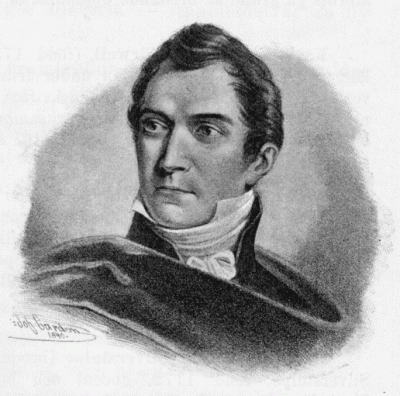
Höijer, Benjamin, jämte Boström Sveriges mest betydande tänkare, f. 1767 i Stora Skedevi (Dalarna), stud. i Uppsala 1783, där han 1788 förvärvade filos. graden och 1789 blev docent i praktisk filosofi. Efter en kort tjänstgöring i ämbetsverk i Stockholm 1790-91 återvände han till Uppsala, var under åren 1795-98 en flitig medarbetare i G. A. Silverstolpes ‘Litteraturtidning’ och ‘Journal för svensk litteratur’, företog under dessa år en resa till Tyskland, varvid han bl.a. gjorde bekantskap med Fichte och Schelling. Förbigången vid sökande av professur 1799, företog han åren 1800-02 en ny resa, bl.a. till Paris och Berlin, där han vistades en längre tid. Länge till följd av sina frisinnade idéer motarbetad, erhöll han efter statsvälvningen 1809 professur i teor. filosofi vid Uppsala universitet. Död 1812.
Impulserna till sin filosofiska utveckling fick H. från Kant. Men liksom Fichte saknade han i dennes filosofi den systematiska enhet, som han ansåg oskiljaktig från filosofien såsom det högsta vetandet. Delvis under inflytande från Fichte och Schelling men dock fullt självständig i sitt förhållande till dem, sökte han i sina huvudarbeten Den filosofiska konstruktionen och De systemate (Om systemet) ävensom i en serie mindre avhandlingar utveckla transcendentalfilosofien till ett systematiskt helt. Det har sagts om honom, att han därvid “successivt anteciperar Fichtes, Schellings och Hegels grundtankar och liksom i mindre skala genomlöper den utveckling, som dessa filosofer i rikare form och på ett mera omfattande sätt genomgingo” – en åsikt som dock nyare forskare, särskilt B. Liljecrantz, väsentligen modifierat. I varje fall har knappast någon svensk tänkare varit så genomträngd av transcendentalfilosofiens principer och så i grund penetrerat dem som H. – Schelling gav honom ock sitt fulla erkännande i sin recension av Den filosofiska konstruktionen.
Filosofiens utgångspunkt är för H. likartad med den, som Fichte utvecklat i sina inledningar till vetenskapsläran. Det är vårt sedliga medvetande, som driver oss att filosofera. Detta fordrar nämligen frihet. Men verkligheten synes protestera mot detta krav. Vi finna oss som en länk i ett nödvändighetssystem, inklämda av “tingens tyranni”. Motsägelsen blir desto mer komplicerad, som dock åter själva detta objektens motstånd är en förutsättning för att ett jag, en personlighet, skall komma till stånd. Filosofiens uppgift blir då att förklara objektens eller (vilket är detsamma) våra förnimmelsers ursprung. Därvid kan den antingen utgå från objekten eller från jaget. Den förra vägen visar sig emellertid omöjlig, emedan man aldrig kan förklara medvetandet ur tingen. Vidare står den i strid med det sedliga medvetandet, då den är oförenlig med friheten. Filosofien måste alltså utgå från det förnimmande subjektet. Därvid gäller det att övervinna den kantska dualismen mellan form och innehåll. Ej blott medvetandets form utan även dess innehåll – som Kant antog härröra från ett “ting i sig” – måste härledas ur jaget. Fichte söker visserligen härleda även förnimmelserna ur jaget, men just därför, att han utgår från detta, lyckas han endast skenbart övervinna dualismen, ty själva begreppet jag förutsätter ett mot medvetandet satt objekt.
Filosofien kan alltså varken utgå från jaget eller objektet – dess princip måste vara det rena självmedvetandet, ty detta är den högsta abstraktionen, till vilken tanken når, när den abstraherar från alla reella objekt och från alla särskilda yttringar av viljande och tänkande. Detta rena självmedvetandes väsen är ren handling, ty man kan icke tänka sig ett medvetande utan att det är statt i handling. Följaktligen är den rena eller absoluta handlingen filosofiens princip. Ur denna har den att konstruera tillvaron på samma sätt som geometrien konstruerar sina objekt ur det rena rummet. Denna handling är icke i rum och tid, ty dessa uppkomma först genom dess begränsning. Såsom självmedvetande, d.v.s. en på sig själv riktad verksamhet, är den åskådning, och då dennas innehåll ej är något sinnligt utan den rena handlingen, är den intellektuell åskådning.
Den filosofiska konstruktionen vill nu uppvisa, hur ur det rena självmedvetandet det bestämda självmedvetandet, jaget med dess innehåll, framgår. Den vill m.a.o. förklara systemet av de nödvändiga och individuella tingen (förnimmelserna) ur den rena handlingens inskränkning av sig själv. Fichte hade vid lösningen av samma uppgift, ehuru han förkastat Kants “ting i sig”, likväl hamnat i en dualism, emedan han till grund för den första inskränkningen av den rena handlingen lade en yttre impuls, en “Anstoss”, som han sökte förklara ur praktiska synpunkter… H. däremot söker denna inskränknings grund i den rena handlingens eget väsen. “I den rena handlingens väsen som handling, icke utom den i någon bemärkelse, ligger nödvändigt en inskränkning, som är lika absolut som handlingen för sig själv. Handlingen kan ej tänkas annorlunda; ty då den tänkes, d. ä. redan i första steget till verklighet, inskränkes den.”
Från denna utgångspunkt söker H. konstruera jaget ur de båda tendenserna hos den rena handlingen, den “utåtgående” och dess självbegränsning genom den motsatta “inåtgående”. Objektet uppkommer därigenom, att de båda tendenserna hålla varandra i jämvikt, att det alltså uppkommer ett moment av stillastående i den rena handlingen. Det producerande sjunker då ned till produkt. I likhet med Fichte konstruerar H. efter ett triadiskt schema i tes, antites och syntes, tills han anser sig ha uppvisat alla de transcendentala akter, som måste tänkas ligga till grund för medvetandet (erfarenheten).
Varje ändligt (individuellt) jag är ett moment i den process, varigenom den rena handlingen övergår från obestämdhet till bestämdhet och uppstiger till ett aktuellt medvetande av sig själv. Varje ändligt jags tänkande av sig själv utgör det absolutas sätt att fatta sig själv i och genom detta jag. Vad som gäller om det absoluta, måste därför även gälla om det ändliga väsendet, i den mån detta sammanfaller därmed. Hos det absoluta måste frihet och nödvändighet var förenade, enär den rena handlingen såsom grund måste vara nödvändig, men då den icke begränsas av något utanför sig själv, måste denna nödvändighet vara till genom en fri akt av det absoluta. På samma sätt måste det ändliga väsendet förena frihet och nödvändighet. “Den ändliga intelligensens första stora skapelse, varigenom han bliver intelligens, är utan inskränkning fri och hans eget verk; man å andra sidan måste han, för att kunna tänka sig själv, redan vara i världen och således även vara nödvändigt bestämd.” (Nyblaeus) Individen väljer så att säga själv den plats, som tillkommer honom i det absolutas utvecklingsprocess. Men denna frihet måste i varje ögonblick börja på nytt; upprätthållandet av friheten sker efter den norm, som vi kalla sedelagen. Fri är den, som följer sedelagen; den, som bryter mot den, gör sig själv till en objektens slav. Naturen såsom gräns för människans fria handling är ett uttryck för hennes ställning inom den moraliska världen och således en “påminnelse om vår plikt”. Människans uppgift såsom moraliskt väsen är att, genom att mer och mer hävda sin frihet, i oändlighet närma sig den sedliga fullkomningen. Historiens process är för den filosofiska betraktelsen en etisk process. Denna grundtanke har H. närmare utfört i avhandlingen Om ett pragmatiskt avhandlingssätt i historien. Han söker där visa, att om historien skall kunna tänkas som ett sammanhängande helt, ej blott som et planlöst aggregat, alla dess hädelser måste hänföra sig till ett högsta ändamål. Endast genom ett sådant filosofiskt betraktelsesät kan historien få en systematiskt vetenskaplig form. Detta ändamål kan icke ligga i tiden, ty då vore det redan uppnått; det måste alltså ligga utom tiden. Historiens ändamål är förverkligandet av människans eget väsen (hennes idé).
I sin statsteori ansluter sig H. i huvudsak till Fichte. Han betraktar staten såsom uppkommen genom ett samhällsfördrag, men ser dess mål i individernas moraliska utveckling. Det styrelsesätt, som bäst realiserar statens idé, anser H. vara den konstitutionella monarkien.
H:s senare filosofiska utveckling är starkt påverkad av Schelling, och den ståndpunkt han intar i sina latinska avhandlingar från åren 1811-12, har ofta betecknats som ren Schellingianism. Fullt riktigt är detta i varje fall ej. H. förhåller sig i många avseenden kritisk till Schelling och närmar sig hegelska tankegångar. Att detta delvis är att tillskriva ren påverkan, torde med sannolikhet vara fastslaget av B. Liljecrantz. “Ett studium av de höijerska handskriftssamlingarna”, säger denne, “icke blott bekräftar min allmänna hypotes, att Höijer vid tiden närmast före sin död trätt i beröring med Hegels tänkande, utan det visar, att han redan på sitt första stadium efter avsägelsen av det fichteska tänkesättet gjort bekantskap med och varit livligt upptagen av hegelska synpunkter.”
H:s samlade skrifter utgåvos i fem band av hans broder, professor J. O. Höijer, 1825-27.
Alf Ahlberg, Filosofiskt lexikon (1925)
 Boëthius, Daniel, svensk filosof, f. 1751 i Västerås, student 1765 i Uppsala och 1773 fil. magister därstädes, 1775 docent i teor. filosofi och från 1783 till sin död 1810 professor i praktisk filosofi.
B. omfattade ursprungligen Lockes filosofi men blev efter bekantskapen med Kants kritiska arbeten dennes ivrige anhängare. Någon slavisk eftersägare var han likväl ej utan sökte – delvis under inflytande från Fichte – utbilda kantianismen i självständig riktning. Sin största betydelse äger han därigenom, att han först gjort Kants läror bekanta i Sverige och därmed verksamt influerat främst på Höijer men även på Grubbe och Biberg. I likhet med dessa bör han alltså räknas till dem, som utbildat den svenska personlighetsfilosofien.
B:s egna undersökningar äro huvudsakligen riktade på den praktiska filosofiens grundproblem. Även här utgick han från Kant men sökte i likhet med Fichte bringa den praktiska filosofien i närmare gemenskap med den teoretiska än Kant. Medan för Kant religionen är helt och hållet grundad på sedligheten, söker B. påvisa, att det tvärtom är denna, som måste grundas på religionen, i det att den sedliga viljan måste tänkas som det gudomligas inneboende i människan. I dessa tankegångar framträder han som föregångare till Biberg, Grubbe och Boström.
Bland B:s utgivna skrifter märkas: Utkast till föreläsningar i den naturliga sedeläran (1782), Om den filosofiska undervisningens ordnande (1794), Om moralitetens grund (en replik till Leopold med anledning av dennes kritik av den kantska etiken), Anvisning till sedeläran såsom vetenskap (1807).
B. översatte även Kants ‘Grundlegung zur Metaphysik der Sitten’ till svenska.
Alf Ahlberg i Filosofiskt lexikon (1925)

