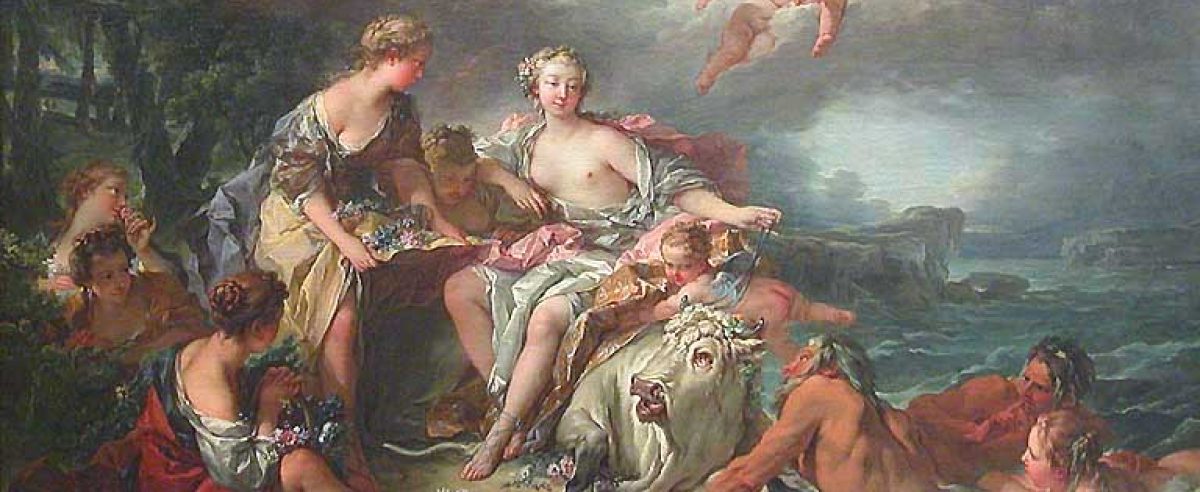
The Wisdom-Way of the Ancient Sages and Its Fulfillment in the Way of “Perfect Knowledge”

The Dawn Horse Press, 2006
Back Cover:
From time to time in human history, Great Sages have appeared, who have, to one degree or another, agreed to instruct devotees. A truly Great Sage speaks as the Very Condition, the Radiant Ocean of Being, That is Reality. Adi Da Samraj, from the beginning of His lifetime, has shown the signs of such a one.
The Wisdom-Teaching of Adi Da Samraj is a great gift to all who need to understand the human event from the viewpoint of Ultimate Truth, beyond the winds of doctrine and the competing philosophies that have made and unmade the cultures of humankind.
From the Introduction by Carolyn Lee
There exists nowhere in the world today, among Christians, Jews, Muslims, Hindus, Buddhists, native tribalists, or any other groups, anyone who has so much to teach, or speaks with such authority, or is so important for understanding our situation. If we are willing to learn from him in every way, he is a pole around which the world can get its bearings.
Henry Leroy Finch
Author, Wittgenstein – The Early Philosophy
and Wittgenstein – The Late Philosophy
JOB:s Comment:
Jones
 Randall E. Auxier is Professor of Philosophy at Southern Illinois University Carbondale, where he specializes in process philosophy, American idealism, and the philosophy of culture. He is author of Time, Will, and Purpose: Living Ideas from the Philosophy of Josiah Royce (2013) and co-author (with Gary Herstein) of The Quantum of Explanation: Whitehead’s Radical Empiricism (forthcoming). He has edited seven volumes of the Library of Living Philosophers and was for 15 years the editor of The Personalist Forum and its successor, The Pluralist. He writes popularly for books, magazines, newspapers and blogs, along with the usual scholarly journals.
 Robert Cummings Neville is Professor of Philosophy and Systematic Theology at Boston University. He is formerly the Dean of the School of Theology at BU and is author of over 25 books, including his recent three-volume Philosophical Theology (SUNY Press, 2014-15), as well as Religion in Late Modernity (2002), The Truth of Broken Symbols (1995), The Cosmology of Freedom (1974), The Tao and the Daimon (1981), Boston Confucianism (2000), and many others. He is well known as a leader in comparative philosophy and theology and as a critic of personalism and process thought.
 Ralph Ellis received his PhD in philosophy at Duquesne University and a postdoctoral M.S. in Public Affairs at Georgia State University. He has worked as a social worker as well as teaching philosophy, and is interested in applied phenomenology and integrating the social sciences with philosophy of mind. His books include An Ontology of Consciousness (1986), Theories of Criminal Justice (1989), Coherence and Verification in Ethics (1992), Questioning Consciousness (1995), Eros in a Narcissistic Culture (1996), Just Results: Ethical Foundations for Policy Analysis (1998), The Caldron of Consciousness: Affect, Motivation, and Self‑Organization (2000), Love and the Abyss (2004), Curious Emotions (2005), Foundations of Civic Engagement (2006, co-authored with Jim Sauer and Norm Fischer), How the Mind Uses the Brain (2010, co-authored with Natika Newton), and a critical thinking textbook, The Craft of Thinking. Ellis is also co-editor with Peter Zachar of a book series, Consciousness & Emotion (www.benjamins.nl/jbp).
 Olle Bengtsson