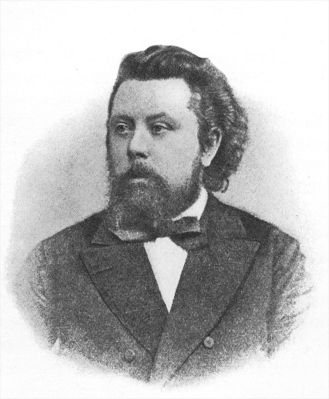
Mussorgsky
A shortened version, from the orchestral Works tour in 1977, of this progressive rock interpretation of Mussorgsky (with some additions) first recorded in 1971.
“Många svenska tidningar är idag i kris”, konstaterar DN rktigt i ingressen till en artikel med rubriken ‘Tidningarnas teknikskifte vidgar informationsklyfta’. Ingressen fortsätter: “När läsandet minskar växer klyftan mellan de välinformerade och de oinformerade.”
Vi får sedan följa tidningens egen och allehanda redaktörers, medieexperters och politikers bekymmer över och åtgärdsförslag för att komma till rätta med att allt färre är intresserade av de stora tidningarna.
“Nyhetsundvikarna” blir utan viktig information, heter det. Men är det inte främst fråga om att man undviker just dessa tidningar, för att “informationen” – innehållet, urvalet, analysen, förmedlingen, åsikterna – helt enkelt är undermålig? Mångfalden som man tidigare sagt sig vilja värna medels presstödet ses nu snarast som ett hot. Hur ser i detta läge “informationsklyftan” egentligen ut? Läsandet av de gamla tidningarna minskar, ja, och många äldre har inte tillgång till internet. Men man är naturligtvis väl medveten om att annat läsande ökar. Vilka är i detta perspektiv i själva verket välinformerade och vilka oinformerade?
Det är inte helt lätta frågor, det finns flera dimensioner. Klart är under alla omständigheter att man från tidningarnas, deras ägares, och närstående politikers håll alltmer fruktar utmaningarna mot en föråldrad och ohållbar ideologisk åsiktshegemoni. Men det är inte bara den groteska opinionskollektivismen inom den politiska journalistiken som är problematisk. Åtminstone för många måste även den rent formella kvaliteten på det publicerade materialet vara en orsak till att det blir alltmer omöjligt att se det som tillförlitligt och auktoritativt.
Härom dagen förmedlade SvD i en rubrik Wilhelm Agrells bisarra åsikt om Reinfeldts högst måttliga och rimliga uttalande att det “i någon mån [är] förståeligt att Ryssland agerar på en rysk minoritets oro på Krim och i östra Ukraina” på följande sätt: “‘Ett av de mest obehagligaste uttalanden jag kan påminna mig om’”. Det allt vanligare “om” i sammanhang som detta kunde väl i sig accepteras, men när man i samma mening där man valt ett sådant stilistiskt kontroversiellt inslag finner ett fel som “mest obehagligaste” blir det verkligen för mycket.
Sådana fel finner man nu nästan varje gång man läser en tidning, och överallt i den. Tidningarna blir därmed i alla avseenden mediokra; ibland känns de, inte minst i förening med alla smaklösa annonser, närmast sjaskiga. Det finns förvisso fortfarande goda skribenter, såväl formellt som innehållsligt. Men redan de formella felen vittnar inte bara om de krympande ekonomiska resurser som är en följd av krisen, utan också om många journalisters, rubriksättares och korrekturläsares (vilka senare såvitt jag förstår ofta redan är avskedade) alltmer bristande utbildning och kompetens, som utgör en stor del av krisens orsaker.
Ofta rättas de heller inte i nätupplagorna, utan står kvar som ständigt sökbara monument över det faktum att vi inte längre har att göra med några värdefulla kvalitetsprodukter av det slag de nämnda kategorierna av intressenter vill tro att de är, och som även jag av flera, om än huvudsakligen andra skäl skulle vilja att de förblev.
Fenomenets övertydlighet blir direkt komisk när den tredje och sista meningen i den korta ingressen till dagens artikel om tidningskrisen lyder: “Nu menar medieexperter om att dagstidningar borde får public service-stöd.”
Ge dem inte det. Tvinga inte folk att betala för detta. I många nya nätpublikationer, forum och kommentarfält skriver man betydligt bättre.
Kooperativa förbundets bokförlag, 1941
Innehåll:
Förord
Utgångsläget
Blick på officerskåren
Är officerskåren politiskt pålitlig?
Existerar Himmelstoss?
Om disciplinen
58 Karlsson i teori och verklighet
“Vi få ingenting veta”
Fritiden
Den militära socialvården
Vad är “försvarets demokratisering”?

As in the Syria crisis last year, when Putin averted the threatening American intervention, and indeed, before I started this blog, in the Georgia crisis in 2008, I have, this far, seen no reason to say in my own words what many others say very well in theirs, but have limited my contribution to regularly posting the latter – their articles, some interviews – on Facebook, and this time also on Twitter. Click on the Facebook or Twitter icons in the sidebar to go to my accounts.
Using the Forces of Life/Understanding the Powers of Darkness
The Notebooks of Paul Brunton
Volume Seven
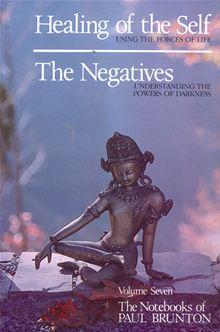
Larson, 1987
Back Cover:
Unless we look behind the world’s problems into the real and spiritual problems which they reflect, we can not properly understand them or solve them.
-Paul Brunton
Part 1, Healing of the Self, treats the mind-body relationship and contrasts conventional, psychic, and spiritual approaches to healing. Recommending a combination of conventional and alternative methods, it gives a variety of practical techniques, many useful in self-healing.
Part 2, The Negatives, examines the nature and roots of evil and traces its activity in recent and impending world events.
In Hegel’s version of the significative attempt to preserve structured order in this new situation, the personal God was seemingly only nominally preserved in some late defensive writings for quite extra-systematic purposes, and the unifying idea on which alone the structuring depended was never conceived as transcendent in the first place. As merely one of the many expressions of a Hermetically conceived immanence, Hegel’s new articulate cataphaticism was doomed already for such intrinsic reasons to fail in a much more obvious way in this regard. From the beginning, the Right Hegelians, or at least the so-called “speculative theists”, saw the need for, and called for, a metaphysical supplementation.
But quite apart from these reasons, Hegelianism was also fated to a considerable extent to become submerged in the forces unleashed by the industrial and political revolutions. Since their classicism had been mixed up with modern rationalism ever since Descartes, the refined defenders of the hitherto dominant, French-inspired culture were often unable, even as they were forced in the face of the historical development of the nineteenth century – in which France itself took a leading part – to turn towards a stricter and more traditionalist classicism, to see the partial truths of the new German criticism of Enlightenment thought. But they did see its untruths.
In the new darkness brought on by the pantheistic revolution, all cows must, in the eyes of the French critics, perforce turn black. There could no longer be any well-grounded distinctions, any proper discernment. Everything flowed, everything was becoming, everything was relative. Since the unity and totality knew itself only through the infinite forms of the chaotic dispersion, the whole noisy confusion of the energies let loose by the Revolution must be accepted, indeed enthusiastically welcomed, embraced by Cosmic Love. Predictably, the demons were already at large, in art and literature as well as on the battlefield. Moral discrimination became impossible. Since transcendence was denied, there was not even in principle the possibility of an accessible vantage-point, or even one accepted as a mere necessary regulative idea, from which to make judgements.
Thought became so vague that contradictions could no longer be identified as such; the limited and the well-defined were dismissed as superficiality. There could be no well-grounded choices between different alternatives, all ideas had the same worth, truth was infinite and all-comprehensive, the mandatory tolerance could be based only on relativism. Criticism was lost, as was selection, refinement, and style. The differentiational perspective from which true and false, good and evil, beauty and ugliness could once be distinguished, at least to some extent, at least for the purpose of general orientation, had been absorbed in the process of the closed immanent totality.
In this pseudo-divine carnival, where the crassest material forces – both of the captains of industry and of the Enlightenment machinery of the state – advanced more ruthlessly than ever behind the shifting veils of neoclassicism, neohumanism, idealism, and romantic reverie and picturesqueness, it was the unstable Ego of individualism, rather than the person, that flourished, and that alone could flourish. For all his self-assertive, neoteric expressionism, the romantic individual moves from narcissism, via cosmic, subjective ego-inflation, to objective self-annihilation in the larger pantheistic whole in any of its manifestations.
Such self-actualization, drawing out the utmost nihilistic consequences of the self-creation of the Renaissance individualists, was sheer illusion, since there simply was no self to actualize. In a world closed upon itself and without ontic logos, the only values there could be were those posited by the individual, and such positing was what was expected of the new historical Heroes. Yet they pathetically failed to perform the expected Deeds, dragged down by the unacknowledged, constitutive imperfection of their human nature, devoid of grace.
The moral ambiguity of the new individual-cosmic self-actualization was glaring; with ethical dualism rejected along with metaphysical dualism, the new autonomy did not stop short of the Satanic. The only enemy, the only remaining evil was that which represented or was perceived as representing the resistance to the new pantheism itself, to the Righteous Goodness of the Human-Divine Ego and Nature: the conventional order of the establishment, the Church, the remnants of the ancien régime. The enemy’s scruples were only expressions of its false morality, and having been so repressed and deformed by this enemy, the Beautiful Soul had the right to go beyond its narrow conventions, to challenge them, if necessary by violent means. Only though releasing the demonic, the criminal, the perverted, the diseased, was it possible, under the present circumstances, to find the true self.
Or rather, to become one with the newly conceived whole. The underlying drive was the age-old one of the problematic forms of esotericism and monistic mysticism: to simply become God. But not only did failure produce disillusion; God was also redefined even beyond the undifferentiated oneness. The Beautiful Souls and Geniuses were lost in erotic intoxication with feelings, in the identification with the resurgent dark, irrational side of reality which the human fiat of modern rationalism had never managed to suppress; they were consumed by the Dionysian urge for ecstatic self-annihilation, for final extinction. At the peak of the absolute freedom, of “authentic” self-expression, of self-exaltation, they turned towards dissolution and destruction of an individual self which was in reality weak and sickly. What it really desired was ultimate ecstatic identification with nature/God, the erotic Mother-Goddess, the All-Ego, the irrational, arbitrary, nihilistic Will of the world-process, the empty oneness, the Void, Nothingness, Death. And a similar impulse was often found to underlie the new kind of search for identification with the Nation, the People, the State.
This, needless to say, is not the whole truth about this historical period. But the neglected fact is that its other truths, and not least its genuinely personalist ones, can be neither properly understood nor preserved or reappropriated unless these general truths about romantic pantheism are understood. The individualism it produced was often the shallowest thing. [For a few of the very many aspects and expressions of this, see Gerald N. Izenberg, Impossible Individuality: Romanticism, Revolution, and the Origin of Modern Selfhood, 1787-1802 (1992), which, however, is far from the fuller and deeper historical understanding of the pantheistic revolution.]
 Olle Bengtsson