Bonaventura
Terrorangst, Sicherheitswahn und das Ende unserer Freiheiten

Deutsche Verlags-Anstalt, 2009 Amazon.de
Kurzbeschreibung:
Wie zur Abwehr des Terrorismus Recht und Freiheit geopfert werden
Aus Angst vor dem Terrorismus riskiert die Politik die Grundlagen des freiheitlichen Verfassungsstaates. Der Kampf gegen den Terror führt Polizei, Militär und Geheimdienste immer öfter ins rechtliche Niemandsland. Völker- und Staatsrechtler, die westliche Regierungen beraten, arbeiten am Modell eines globalen Polizeistaates, in dem die Bürgerrechte bei Bedarf eingeschränkt und für Risikobürger Internierungslager eingerichtet werden könnten.
Seit dem 11. September 2001 verschwimmen im Kampf gegen den internationalen Terrorismus die Grenzen zwischen Krieg und Frieden, zwischen Polizei- und Militäreinsätzen, zwischen Inland und Ausland. Der von den USA erklärte “Krieg” gegen den Terror stellt die Partner vor politische und rechtliche Probleme: Was soll erlaubt sein in einem Krieg, der keiner ist, gegen einen schwer greifbaren Gegner, der weder feindliche Macht noch einfache Verbrecherbande ist? Im Graubereich zwischen Krieg und Frieden, dort, wo die Jagd auf international agierende Terroristen stattfindet, entsteht derzeit fast unbemerkt ein neues Recht. Auf internationalen Konferenzen, in vertraulichen Zirkeln europäischer und amerikanischer Sicherheitsexperten werden Pläne für einen Weltpolizeistaat geschmiedet, der sich über Recht und Gesetz der einzelnen Nationen legt. Und namhafte deutsche Juristen entwickeln Pläne für ein Recht der “Dritten Spur”, wo eine Mischung aus Kriegsrecht und Verfassungsrecht gelten soll: ein brisanter Mix, der den freiheitlichen Rechtsstaat und mit ihm die Bürgerrechte in Gefahr bringt.
– Schildert Bestrebungen von internationalen Politikern und Völkerrechtlern, im Notfall nationale Rechte und Garantien zu begrenzen
– Zeigt, wo im Namen des Antiterrorkampfes bereits Übergriffe von internationaler Seite geschehen
– Beschreibt die gravierende Bedrohung für die Demokratie und rechtsstaatliche Sicherheiten weltweit
Über den Autor:
Thomas Darnstädt, geboren 1949, promovierter Jurist mit Schwerpunkt Staatsrecht, ist seit 1984 Redakteur beim Spiegel und leitete einige Jahre lang das Ressort Deutsche Politik. Er schreibt heute als Spiegel-Autor über die aktuelle politische Entwicklung in Deutschland und Europa.
Edinburgh University Press, 1984 Amazon.com
Book Description:
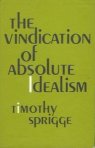 When Timothy Sprigge’s The Vindication of Absolute Idealism appeared in 1983 it ran very much against the grain of the dominant linguistic and analytic traditions of philosophy in Britain. The very title of this work was a challenge to those who believed that Absolute Idealism fell with the critiques of Bertrand Russell and G. E. Moore at the beginning of the 20th century. Sprigge, however, saw himself as providing an underrepresented position in the philosophical spectrum rather than as advocating an abandoned view. For him, idealism did not fall at any determinate point in the history of philosophy. The truth of any philosophical thesis cannot depend on what happens to be currently fashionable, but rather must stand on the soundness of philosophical argument. To this end, The Vindication of Absolute Idealism is a bold statement of his conclusions, a synthesis of panpsychism and absolute idealism, which he contends is the most satisfactory solution to the question of the nature of consciousness and the mind-body problem. Sprigge’s view of consciousness remains a challenge to mainstream physicalism and a viable option that addresses pressing contemporary concerns not only in metaphysics and philosophy of mind but also in environmental ethics and animal rights.
Lindbom pekar på hur Eckhart ibland tenderar att gå utöver både den plotinskt influerade mysticismen och den delvis nya uppfattningen av Gud som intellectus i riktning mot läran om den som individuell uppfattade själens ettning med och uppgående i den Gudhet som är övervarats förment bestämningslösa enhet. [Mystik (1990), 110-13; Före solnedgången (1993), 73.]
Detta uppfattas som en typisk “mystik” lära. Men det finns många olika slags mystik, av vilka många, och i väst de flesta, är känslomässigt orienterade och mest representerar ett annat förhållningssätt till exoterismens Gud, till Kristus, till Maria, än det ortodoxa, inte ett överskridande av dessa. Men den mer utvecklade och sofiska esoteriken är också en del av vad som, i det utpräglat esofoba västerland som den abrahamitiska skapelseexoterikens och hellenska humanitetsidealiseringen tillsammans genom sin inskränkning till Människans synpunkt och horisont skapat, kallas mystik eller mysticism. Det är ett ord vars aktuella betydelse bevarar hela den etymologiskas ursprungliga hemlighetsassociationer, vilket i sig är ett vittnesbörd om hur avvikande och främmande hela fenomenet ter sig inom denna kulturs ram.
Den antika differentieringsprocess som, i två huvudformer, den bibliska och den hellenska, förde västerlandet bort från mytologismens typ av traditionell kultur, fjärmade det också från traditionalitetens högsta former präglade av en avancerad metafysik (för att av de skäl Guénon anför använda den aristoteliska termen för att beskriva vad det här är fråga om) som representerade den centrala och offentliga andliga kulturen, d.v.s. där s.a.s. esoteriken var ortodoxi och exoteriken underordnade uttryck och former för andligheten.
Det är i detta perspektiv man i västerlandet kompromisslöst måste inte bara ansluta sig till den idealistiska filosofi som kommer näras den så förstådda och accepterade metafysiken, trots att själva termen idealism är sämre i det den egentligen enbart uttrycker den för västerlandet specifika och i ett komparativt perspektiv i mycket rent undantagsmässiga idéläran som central i och konstitutiv för denna typ av filosofi.
Man måste också gå utöver principiellt och definitionsmässigt icke- och antitraditionalistiska filosofin sådan den konstituerats som del av framväxten av den principiellt begränsade empiriska och spekulativa vetenskap från vilken den från början, i Grekland, var oskiljaktig, och ävenledes försvara ståndpunkter som av detta skäl i väst normalt enbart finns representerade i de esoteriska och även mystika riktningarna.
Nu var visserligen både Sokrates och Platon själva esoteriker, och den filosofiska praktik som Hadot beskrivit i termer av rena andliga övningar visar att filosofin under antiken snabbt överskred filin och nådde fram till sofin. Men denna situation förmådde inte upprätthållas, så att en esoterism kunde etableras som andlig huvudkultur. Detta beklagliga förhållande konsoliderades sedan under hela den exoterisk-kristna medeltiden, för att därefter endast högst ofullkomligt kunna ifrågasättas och övervinnas under modernitetens gradvis förstärkta helhetliga sekularism i den förnyade filosofins och vetenskapens empiristiska och spekulativa tecken. Den esoteriska traditionen hade i stora stycken i sig under den långa repressionen och den snäva intellektuella horisonten, hänvisad till tolkningar av den bibliska eskatologin, förvandlats till de immanentistisk-revolutionära former som Voegelin studerade, så att även den kom att befrämja modernitetens Människovärldslighet. Sofin i estoterismens äkta mening, den högre, sanna γνῶσις, förblev marginell.
Men endast den flyktigaste komparativa blick på Indien visar vad västerlandet gick miste om ifråga om avancerad intellektuell kultur fokuserad på andlighetens centrala och för varje oförvillad blick uppenbara och ofrånkomliga frågor. Vad som idag i teoretiskt avseende kan göras inom ramen för västerlandets ensidiga, lägre intellektuella kultur är att ta fasta på den idealism, esoterism och mystik som där ändå kunnat nå relativt långt, och så långt möjligt nyformulera dess högsta innehåll i termer av filosofins och teologins etablerade discipliner.
Men moderniteten har skapat mer gynnsamma förutsättningar för västerlandets räddning och komplettering ifråga om de aldrig fullt närvarande och förverkligade dimensionerna av tänkande och andlig odling, såtillvida som själva åtskillnaden mellan öst och väst helt enkelt är på väg att försvinna och ett avsevärt mått av en hela mänskligheten förenande global enhetskultur är på väg att förverkligas. Alla de väsentliga huvudströmningarna av österländsk andlighet och sofi är idag representerade, ja etablerade och lätt tillgängliga i hela västerlandet. [Voegelin framhåller någonstans det fördelaktiga i lättillgängligheten av tankens klassiska verk från hela världen för den nya “ordningsvetenskap” som det samtida västerlandet var i behov av.]
När av detta skäl den akademiska filosofin själv tvingats öppna och vidga sig till att inkludera komparativa perspektiv, och därmed själv mer eller mindre bedriva sofi i överensstämmelse med den övriga världens tanketraditioner, blir esofobins abnormitet och absurditet snabbt uppenbar, och det blir lätt att se med nya ögon på västerlandets hela idéhistoria och identifiera vad som är av verkligt värde, identifiera den sofi som även där har uppnåtts. Esoterik och mystik är global norm, och tiden och kulturen är mogen att överge kyrkans och scientismens i centrala avseenden strukturlika, på mänsklig illusion och lägre behov byggda dogmatiska exoterism i vid mening. Esoterismen kan finna former som gör exoterismens historiskt existerande former överflödiga.
Ifråga om den framväxande och sig ständigt utvecklande personkategorin kan sägas att de västerländska mystikerna i den avancerade meningen, när deras monism blev särskilt långtgående, den implicit i högre grad än ortodoxin nedvärderade den mänskliga individualitetens – hur mycket den än behövdes i form av den sociala och psykologiska individualism som var nödvändig för att motstå exoortodoxins sociala och auktoritära tryck. Ja den förnekade personlighet i modern mening på det andliga planet, och stod stundom till och med oförstående inför Gudpersonernas trehet och åtskillnad. [Om detta Alois M. Haas, ‘”…das Persönliche und Eigene verleugnen”: Mystische vernichtigkeit vnd verworffenheit sein selbs im Geiste Meister Eckharts’, i Frank & Haverkamp, Hg., Individualität, (1988).]
Den eckhartska läran om själen som oskapad, eller om åtminstone ett oskapat element i själen, en gudd scintilla eller Fünklein, har allmänplatonska, gnostiska och indiska drag. För denna typ av mystik representerar detta element endast en delaktighet i Gudhetens högre ontoenhet, och därmed närmast motsatsen till det personliga i den inom kort allt snabbare utvecklade moderna meningen. Medvetna om den nya individualitets- och personlighetskänslans framträngande kan mystikerna stå främmande för den som rent sekulär eller endast motsvarande ortodoxins salvandum, Människan.
Men alla mystiker uppvisade inte lika långtgående Gudhetsmonistiska tendenser som Eckhart; andra kvarhöll åtskillnaden även i det högsta tillståndet. De mer precisa filosofiska formuleringarna av båda dessa ståndpunkter inom ramen för den nygamla mystiken förblev emellertid otillfredsställande, och vissa idealistiska filosofer skulle under de kommande århundradena ta tag i denna uppgift. I den mån vissa av mystikerna var på väg att gå utöver radikalmonismen och återupptäcka den andliga individualitet vi också på olika plan i olika fall återfinner i platonismens stora och vida tradition, stred naturligtvis även den mot ortodoxin på grund av dennas distinkta bibliska och numera i thomistiska termer utlagda förståelse av människans natur, och dess begränsning av individualiteten till den nivå på vilken man där rörde sig.
Mystikernas ståndpunkt var alltså också, på grund av dess självständighet, det sätt på vilket den stred mot den av kyrkoorganisationen upprätthållna ortodoxin, ett uttryck för just den nya individualistiska friheten gentemot den yttre auktoriteten. Karl Joachim Weintraub fångar mycket av komplexiteten i de under de följande århundradena framträdande mystikernas situation, erfarenheter och insatser i avsnittet om Suso, Teresa och Madame Guyon i The Value of the Individual: Self and Circumstance in Autobiography från 1978. Oberoendet av den yttre auktoriteten och den kunskapsmässiga självtillräckligheten aktualiserade samma problem som den tidiga kyrkan hade identifierat i de olika gnostiska riktningarna. De okontrollerbara inre uppenbarelserna och erfarenheterna var ett hot mot den yttre organisationen och dess maktstruktur, och svaret blev en hel världsbild som byggde på yttre kontrollerbarhet och på ett förkastande av den platonska dualismen.
Den nygnostiska typen av andlighet kunde liksom under antiken i sig leda till vilt subjektivistiska missbruk, men de extrema formerna var primärt betingade av det kyrkliga och allmänsamhälleliga undertryckandet. I förening med rent socialt och ekonomiskt missnöje växte revolutionära massrörelser med mer eller mindre gnostiska läror fram alltifrån senmedeltiden och till reformationstidevarvet. Luther fördömde det hela som “svärmeri”. Men också de striktare formerna av platonisk andlighet hade gått förlorade på grund av såväl den kyrkliga ortodoxins makt som dess karaktär: denna andlighet och filosofi, med dess annorlunda uppfattning av den “mänskliga” identiteten, kunde av distinkta historiska orsaker numera ofta endast förekomma i svärmiskt-förvrängd form.
Svärmisk var dock icke Jakob Böhme, men väl en i högsta grad självständig skomakare. Med honom förändras mystiken såtillvida som i Gud en ny princip införs, Ur- eller Ogrunden, den negativa, mörka princip ur vilket det onda skall förklaras och som också har drag av blind vilja. Drews betecknar hans lära som även subjektivistisk och naturalistiskt färgad. [Die deutsche Spekulation seit Kant mit besonderer Rücksicht auf das Wesen des Absoluten und die Persönlichkeit Gottes (2:a uppl. 1895), I, 39.] Lindboms och andra traditionalisters anslutning även till Böhme [Se exempelvis Mystik, 122-8.] är i ljuset av vissa av Lindboms egna övriga ståndpunkter ingalunda i alla avseenden självklar (jag kan dock här inte gå in på de utförliga diskussionerna om förhållandet mellan esoterism och exoterism med hänsyn till detta enskilda historiska fall). Givetvis förklaras den av de inslag av högre, äkta esoterisk andlighet som också återfinns hos Böhme.
Förhållandet mellan den allmänna och gemensamma subjektiviteten å ena sidan och individualismen å den andra är en senare modern problematik, men även när han når fram till dess tid vill Weintraub teckna den gradvisa utvecklingen av en kvalificerad individualitet som står fri från subjektivismens faror. Genom upptäckten av och de nya språkliga uttrycken för det inre livets rikedom, känslan, och den direkta inre kunskapen, gav mystikerna ett avsevärt bidrag till den moderna individualitetens utveckling.
Någon subjektivitetens gemensamma ordning som kunde även samhälleligt och etiskt hålla tillbaka den förvrängda esoterismens missbruk och tillåta det inre utforskandets fortgång i ordnade former, hade ännu icke utvecklats. Mystikernas egen personliga individualitet stod mot den blotta yttre kyrkligt-samhälleliga auktoriteten, hur mycket denna än teologiskt, på sitt sätt och på sina områden, värnade individualiteten mot deras läras impersonalism. Det var väl främst på detta negativa och indirekta sätt, såtillvida som den hindrade det specifikt radikalmonistiska läromässiga hotet mot individualiteten, som denna auktoritet i det uppkomna läget bidrog till individualitetens utveckling. Men kyrkan kom också att utveckla principer och former för ett mått av tolerans även mot mer radikala mystiker, liksom man även, mutatis mutandis, gjorde det inom islam. Men hela problematiken med en potentiellt eller aktuellt samhällsfarlig mystik var från början till största delen skapad av den distinkta abrahamitiska exoterismen sådan den historiskt gestaltat sig.
Das Schlachtfeld der Tugendwächter

Manuscriptum Verlagsbuchhandlung, 2009 Amazon.de
Kurzbeschreibung:
Politische Korrektheit: Denken in den streng vorgezeichneten Bahnen derer, die in einzelnen gesellschaftlichen Bereichen und zu mehr oder weniger grundlegenden Fragen die Deutungshoheit für sich beanspruchen – und jede Verlautbarung in eine oft abstruse, von schauderhaften Worthülsen strotzende Sprache gießen. Man könnte das mit Erheiterung registrieren, wenn sich dahinter nicht etwas sehr Ernstes verbergen würde. Jörg Schönbohm, eigenwilliger und unbeugsamer Konservativer, zeigt in beklemmender Weise, daß das, was einst sinnvoll als Kampf gegen Minderheitendiskriminierung begonnen hatte, heute immer mehr in eine Dämonisierung und Stigmatisierung von Andersdenkenden mündet. Was die Folgen angeht, die Gefahren für Demokratie und Meinungsfreiheit nämlich, kann er sich zu Recht auf Montesquieu berufen: Dort, wo es keine sichtbaren Konflikte gibt, gibt es auch keine Freiheit.
Mystical Writings of the World’s Great Physicists
Shambhala, 2001 (revised edition) (1984) Amazon.com
Back Cover:
 Science and religion are often viewed as antagonists in the quest for truth. It may come as a surprise, then, to find that the leading physicists of the twentieth century were sympathetic to a mystical worldview. In this collection, Ken Wilber brings together the writings of eight great scientists – Heisenberg, Schroedinger, Einstein, de Broglie, Jeans, Planck, Pauli, and Eddington – with the aim of addressing several important questions: Do the findings of modern physics support the teachings of ancient mystics? How does the scientific method compare with contemplative techniques in the quest for truth? Is there really a “battle” between these two approaches to investigating reality? In revealing some answers, Wilber also points the way toward a genuine reconciliation between science and religion.
Back Cover, first edition:
 The popularity of recent books such as The Tao of Physics attests to the unprecedented interest in the relationship between modern quantum physics and mysticism that has arisen in the past decade. And yet nowhere before have th thoughts of the original founding physicists themselves been presented. Quantum Questions brings together for the first time the mystical writings of the world’s great physicists – Heisenberg, Schroedinger, Einstein, de Broglie, Jeans, Planck, Pauli, and Eddington – all of whom express a deep belief that physics and mysticism are somehow fraternal twins.
The seminal thoughts of virtually every major physicist involved in the discovery of quantum physics and relativity are presented here. What their essays show is that each of these remarkable men, without exception, came to believe in a mystical or transcendental world view that embodies the world as a spiritual, rather than material, phenomenon.
Written in completely nontechnical language, the writings collected here are not only accessible, but also eloquent, profound, and brilliant. The selections were made by Ken Wilber, a distinguished scientist in his own right, who also edited The Holographic Paradigm, and is the author of Up from Eden, No Boundary, and A Sociable God.
JOB’s Comment:
An anthology with the texts of the physicists themselves, with their own formulations, is obviously of central importance when their positions on the issues indicated by the blurbs have caused so much speculation and such far-reaching popular applications. It should be noted – since the blurbs do not mention it – that neither the physicists nor Wilber simply take the position that quantum physics in itself supports a mystical worldview. As I said in my post ‘An Open, Intelligible, and Semiotic Universe’, this fact points to the need for a discussion of the distinct and inevitable role of philosophy in the debate about the relation between science and religion or mysticism, which in turn of course calls for a clarification of the nature and reach of philosophy.