Svante Nordin: Romantikens filosofi

Svensk idealism från Höijer till Hegelianerna

Doxa, 1987

Baksida:

“Romantikens filosofi” handlar om den filosofiska idealismens uppkomst och utveckling i Sverige från 1790-talet och fram till 1800-talets mitt. Den skildrar epokens framträdande filosofiska personligheter – radikalen och genombrottsmannen Benjamin Höijer, schelligianen P D A Atterbom, “personlighetsfilosofen” Erik Gustaf Geijer, hegelianerna Fredrik Georg Afzelius och Johan Jacob Borelius och många andra.

Den filosofiska idéutvecklingen ses hela tiden mot bakgrund av tidens sociala, politiska och kulturella förhållanden. Inte minst den föränderliga universitetsinstitutionen i det tidigare 1800-talets Sverige ägnas uppmärksamhet. Boken försöker också ge en bild av vad filosofin under periden betytt för discipliner som medicin, botanik, teologi, historia m fl. samt av dess inverkan på skönlitteraturen och samhällsdebatten.

“Romantikens filosofi” är den första översiktliga framställningen på hundra år av den tidiga idealismens historia i Sverige. Den utgör en helt fristående del av en trilogi tillsammans med författarens båda tidigare utgivna böcker “Den Boströmska skolan och den svenska idealismens fall” (Doxa 1981) och “Från Hägerström till Hedenius” (Doxa 1984).

“Vi har inte många framställningar av filosofins historia på svenska och än färre om den svenska filosofins historia. Svante Nordin har med sin brett upplagda svenska filosofihistoria utfört ett imponerande arbete som i sig förenar filosifisk stringens med idéhistorikerns förmåga att teckna miljöer och personligheter samt att sätta in idéerna i deras historiska sammanhang. “Romantikens filosofi” är en synnerligen utförlig presentation av tänkare och idéer. Här finns stora och kända tänkare som Benjamin Höijer, Erik Johan Stagnelius, Carl Jonas Love Almqvist, Samuel Grubbe, Erik Gustav Geijer osv samt många mindre kända men i idéhistorien betydelsefulla personer. Med hjälp av väl valda citat ger Nordin oss en känsla för idéerna i sin samtidsmiljö.

Det här är ett arbete som kommer att få stor betydelse för kommande forskning i svensk filosofihistoria och idéhistoria.”

Jan Bärmark, Btj
J. J. Clarke: Oriental Enlightenment

The Encounter Between Asian and Western Thought

Routledge, 1997

Amazon.com

Back cover:

“The time is ripe for the big picture to be presented, and Clarke acquits himself admirably of this formidable task.”

Graham Parkes, Harvard University

“Finally a book at the level of maturity required in our globalizing age. It should be strongly recommended reading for citizens in the emerging global village.”

Fred Dallmayr, University of Notre Dame

“A major new contribution to the field of Eastern Studies, the sooner I have this book in my hand the better.”

Ray Billington, University of the West of England

Voltaire claimed that the East is the civilization “to which the West owes everything”. Schopenhauer compared his own philosophy with that of Hinduism and Buddhism, and Heidegger wrote that “it has seemed urgent to me that a dialogue take place with the thinkers of the Eastern World”. Yet C.S. Pierce was contemptuous of the “monstrous mysticism” of the East and Arthur Koestler dismissed its religions as a “web of solemn absurdities”.

What is the place of Eastern thought – Buddhism, Taoism, Hinduism, Confucianism – in the Western intellectual tradition? Oriental Enlightenment shows how, despite current talk of “globalization”, there is still a reluctance to accept that the West could have borrowed anything of significance from the East, and explores a critique of the “orientalist” view that we must regard any study of the East through the lens of Western colonialism and domination.

Oriental Enlightenment, provides a lucid and highly accessible introduction to the fascination Eastern thought has exerted on Western minds since the Renaissance. This panoramic new survey argues that any adequate history of Western thought must take into account how philosophical, religious, and psychological ideas from India, China, and Japan have been drawn into Western thought from the seventeenth century onwards. Tackling debates on orientalism, postcolonialism, and postmodernism, Oriental Enlightenment provides a new perspective on cross-cultural exchanges between East and West.

J. J. Clarke is Head of History of Ideas at Kingston University, London.

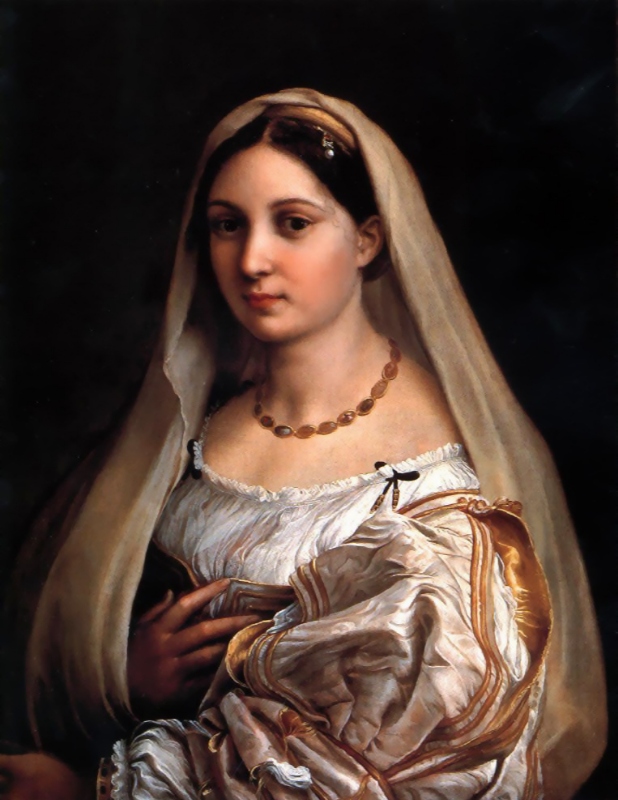
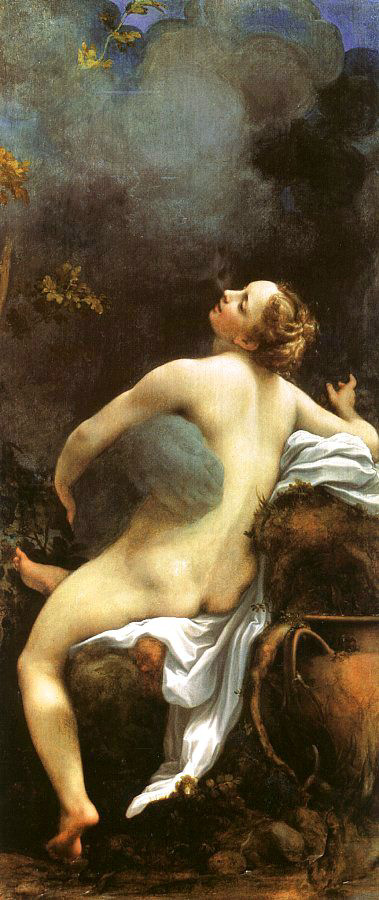
Antonio da Correggio: Io e Zeus

Redan på Platons tid, ja i hög grad på Homeros’, hade man slutat uppfatta myterna som bokstavligen sanna. Med tiden blev de bara “motiv” i största allmänhet, som bara var sådana att man använde dem i måleriet, utan någon särskild innebörd.

Empire of Idealism conference, Prato, Italy

Palazzo Datini

At the Empire of Idealism conference, organized by the R.G. Collingwood Society, in Prato, Italy, immediately after the ISKCON Studies conference outside Florence, I presented in broad outline my defence of ‘Idealism as Alternative Modernity’, or rather, of a few general aspects of it. With no parallel sessions, the presentations at this conference had to be very short; when I sent my abstract, I didn’t know I had only twenty minutes + ten minutes for questions and discussion; when I learnt this, I had to write another paper than the one I had originally planned. But it seems I managed to communicate some of my main points. Many of the scholars attending I knew well from other idealism conferences over the years. The organizers’ emphasis on Collingwood probably explains why some were missing this time, though (Phillip Ferreira, James Allard, and Leslie Armour, for instance). Although the Collingwoodians have broadened their meetings to include earlier idealism, or, I should say, idealism proper, and the theme of this conference was the spread, and variations, of idealism throughout the British empire, there were still many more specialized Collingwood papers here than at the more general idealism meetings. Prato was chosen because of the Australian Monash University Centre there, the organizers coming from Australia; but we only met at this centre for a drinks reception – the sessions were held in the beautiful Palazzo Datini. Everything, including hotels and restaurants, was conveniently within walking distance  inside the walls of Prato’s medieval historic centre.

http://www.cardiff.ac.uk/euros/research/researchcentres/collingwood/newsevents/

conference-2010.html

http://en.wikipedia.org/wiki/File:Palazzo_Datini.JPG