
Marx
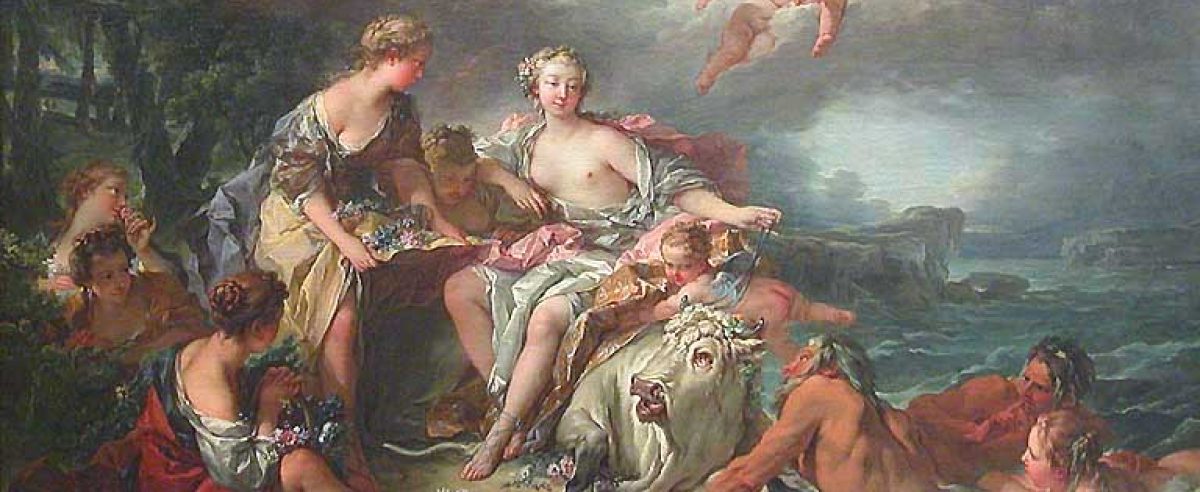
Based on the description of Diodorus
Princeton University Press, 2006 (2004)
 Winner of the 2005 National Jewish Book Award, Ronald S. Lauder Award in Eastern European Studies, Jewish Book Council
Winner of the 2005 Wayne S. Vucinich Book Prize, American Association for the Advancement of Slavic Studies
Winner of the 2004 Award for Best Professional/Scholarly Book in Religion, Association of American Publishers
This masterwork of interpretative history begins with a bold declaration: The Modern Age is the Jewish Age – and we are all, to varying degrees, Jews.
The assertion is, of course, metaphorical. But it underscores Yuri Slezkine’s provocative thesis. Not only have Jews adapted better than many other groups to living in the modern world, they have become the premiere symbol and standard of modern life everywhere.
Slezkine argues that the Jews were, in effect, among the world’s first free agents. They traditionally belonged to a social and anthropological category known as “service nomads”, an outsider group specializing in the delivery of goods and services. Their role, Slezkine argues, was part of a broader division of human labor between what he calls Mercurians – entrepreneurial minorities – and Apollonians – food-producing majorities.
Since the dawning of the Modern Age, Mercurians have taken center stage. In fact, Slezkine argues, modernity is all about Apollonians becoming Mercurians – urban, mobile, literate, articulate, intellectually intricate, physically fastidious, and occupationally flexible. Since no group has been more adept at Mercurianism than the Jews, he contends, these exemplary ancients are now model moderns.
The book concentrates on the drama of the Russian Jews, including émigrés and their offspring in America, Palestine, and the Soviet Union. But Slezkine has as much to say about the many faces of modernity – nationalism, socialism, capitalism, and liberalism – as he does about Jewry. Marxism and Freudianism, for example, sprang largely from the Jewish predicament, Slezkine notes, and both Soviet Bolshevism and American liberalism were affected in fundamental ways by the Jewish exodus from the Pale of Settlement.
Rich in its insight, sweeping in its chronology, and fearless in its analysis, this sure-to-be-controversial work is an important contribution not only to Jewish and Russian history but to the history of Europe and America as well.
Table of Contents:
Preface
Acknowledgments
Introduction
1 Mercury’s Sandals: The Jews and Other Nomads
2 Swann’s Nose: The Jews and Other Moderns
3 Babel’s First Love: The Jews and the Russian Revolution
4 Hodl’s Choice: The Jews and Three Promised Lands
Notes
Index
Reviews:
“One of the most innovative and intellectually stimulating books in Jewish studies in years… [An] idiosyncratic, fascinating and at times marvelously infuriating study of the evolution of Jewish cultural and political sensibility in the 20th century… Nearly every page of Slezkine’s exegesis presents fascinating arguments or facts.” Publishers Weekly
“Jews are not unique, [Yuri Slezkine] maintains in his fascinating new study, and it is only European provincialism that makes them seem that way… Slezkine’s interpretation of Jewish history…is wonderfully antiparochial not only vis-à-vis the Jews but vis-à-vis America, which, he reminds us, not everyone saw as a promised land and which large portions of the huddled masses struggled to avoid.” Daniel Lazare, The Nation
“To come across a daring, original, sweeping work of history in this age of narrow specialization is not just a welcome event; it is almost a sensation.” Walter Laqueur, Los Angeles Times
“If Osama Bin Laden ever reads this book, he will be spinning in his cave.” Gene Sosin, The New Leader
“For Slezkine, Jews, urban, mobile, literate, flexible, have been role models of adaptability in a changing modern landscape.” Joel Yanofsky, National Post
“Brilliant… The Jewish Century is history on a majestic scale… [It] is fresh, compelling and frequently startling… The clarity of analysis is extraordinary, and the relatively simple conceptual tools Slezkine provides are unexpectedly powerful.” Noah Efron, Jerusalem Report
“This book is witty, sardonic and clever, written with zest and brilliant imagination and presents us with remarkable images of our recent past.” John Levi, Australian Jewish News
Yuri Slezkine’s The Jewish Century defies standard categorization, and this makes it a masterly work of history.” Marc Dollinger, Journal of American History
“[T]his is a brilliant book – it is extremely well written… Slezkine’s book joins a very small number of first-rate studies of the modernization of the ‘Jews’ seen through the lens of eastern rather than western history… Buy the book; read the book; use the book in Russian history and Jewish culture classes.” Sander L. Gilman, Slavic Review
“The Jewish Century revives, with intellectual sophistication and stylistic verve, an old perception of the Jew’s centrality to modernity.” Hillel Halkin, Commentary
“Reading Yuri Slezkine’s scholarly arguments…may make for difficult reading but it also provides intriguing ventures into highly original thinking.” Jewish Book World
“Yuri Slezkine’s work…is a serious scholarly study of East European Jewry in the modern age, but dressed up in an eccentric and nonconventional style… [An] immensely entertaining and diputatious book… It is a work which will simultaneously inform, irritate, and entertain any reader with an interest in Russian, the Soviet, or modern Jewish history.” John D. Klier, Russian Review
“This brilliant essay may significantly alter how we think about twentieth-century history… The part that the Jews played in Soviet Russia, or, perhaps better, the part that Soviet Russia played in the cultural imagination of the Jews, lies at the heart of the book.” Angus Walker, Central Europe
“Yuri Slezkine has written an extraordinary book with continual surprises. A landmark work.” Ronald Suny, University of Chicago
“I can think of few works that match the conceptual range, polemical sharpness, and sheer élan of The Jewish Century. An extraordinary book: analytically acute, lyrical, witty, and disturbing all at once.” Benjamin Nathans, author of Beyond the Pale: The Jewish Encounter with Late Imperial Russia
“Yuri Slezkine’s book is at the same time very personal and very erudite. A blend of political and cultural history at its best, it is a splendid work, beautifully written. A true accomplishment by a master historian.” Jan T. Gross, author of Neighbors
“Once every few decades, a book forces a reevaluation of basic assumptions in a field. Yuri Slezkine’s passionate and brilliant tour de force not only challenges received wisdom about Russian and Soviet Jews, but just as provocatively overturns the uniqueness that many ascribe to Jewish history altogether. The Jewish Century is a work sure to spark heated debate not only about the Jews, but also about what it means to be modern.” David Biale, editor, Cultures of the Jews: A New History
“The Jewish Century is an extraordinarily stimulating and ambitious piece of work that invites debate and controversy. Slezkine’s account is subtle, beautifully written, and very moving; it combines humor, irony, and understated passion.” Tim McDaniel, author of The Agony of the Russian Idea
“This is a strong, well-documented, passionately argued, original, and bold essay on history, or the ideology of history, in what I called ‘a Jewish century’ (see my Language in Time of Revolution). One wants to argue with the author on many pages of the manuscript, but it is such a powerful, sweeping statement that it must be left whole and intact, as a central position in future arguments on modernity, the twentieth century, and the history of the Jews.” Benjamin Harshav, Yale University
About the Author:
Natur och Kultur, 1991
Vitterhetsakademiens skriftserie om Europa
Baksida:
 Vitterhetsakademiens skriftserie om Europa vill bidra med kunskap om bakgrunden till de integreringssträvanden och de nya konflikthot som präglar den senaste politiska utvecklingen i Europa. Akademien som företräder humanvetenskaperna i vid mening i vårt land vill med denna serie ställa sina ledamöters och andra ledande forskares kunskaper om Europas kultur, historiska utveckling, språkliga mångfald och samhälleliga struktur till allmänhetens förfogande. Akademiens roll är i sammanhanget just förmedlande. För skrifternas sakliga innehåll och värderingar svarar givetvis de enskilda författarna själva. Det är redaktionens strävan att serien i sin helhet på ett så allsidigt och tankeväckande sätt som möjligt skall bidra till belysningen av Sveriges nutida och framtida roll i ett Europa som är både traditionsrikt och statt i snabb omvandling.
Stig Strömholm förmedlar en överskådlig men inte alltför förenklad bild av rättsarvets roll som sammanhållande element i dagens Europa. I denna historiska framställning ses rätten och rättstänkandet som en väsentlig beståndsdel – kanske rent av den väsentligaste – i det samlade arv som ger Europa och västerlandet dess identitet.
Stig Strömholm, f. 1931, professor i civilrätt med internationell privaträtt vid Uppsala universitet, tillika universitetets rektor och Vitterhetsakademiens preses. Vid sidan av sin rika vetenskapliga produktion har han ett omfattande författarskap i form av skönlitterära verk och lärda essäer.
SNS Förlag, 2008
Förlagets presentation:
 Den brittiske juristen, politikern och litteratören Edmund Burke (1729−1797) är känd som ”konservatismens fader” och som förespråkare för det gamla samhället och dess eliter. Han författade inflytelserika skrifter och höll känslostarka och uppmärksammade tal inom estetik och politisk idédebatt. Den franska revolutionen samt Irlands, de amerikanska koloniernas och Indiens situationer engagerade honom särskilt.
”Bevara genom att förändra”, skrev han, och gjorde stora insatser inom nya reform- och liberaliseringsfrågor, aktualiserade av tidens ekonomiska omvälvningar.
Recensioner:
“Den är ett nyansrikt och mångsidigt porträtt tecknat på ett enkelt och lättförståeligt sätt.” Jakob E:son Söderbaum, Tradition & Fason
“… tunn skrift som dock innehållsmässigt är bred och mycket användbar som kortreferens.” Gunnar Westling, BTJ
Edited by John H. Hallowell
Duke University Press, 1975
Back Cover:
 “This book is of dramatic significance on two levels: it represents an incisive analysis of one of the most critical periods in the unfolding of Western European consciousness, and it provides illuminating insights into the developing perspective of a man who by any criteria is one of the leading philosophers and political theorists of the 20th century.
There is great value in this work for all serious students of man in search of order; for those interested in the Enlightenment and the development of Voegelin’s thought it is indispensable.”
Journal of Church and State
“An intransigent and independent thinker of complete intellectual integrity, Voegelin seeks to interpret the historical record and to follow the trail of equivalent symbols wherever it leads.
His documentation is vast and impressive; his interpretations are sensitive and philosophically profound. His extraordinary interpretive and philosophical gifts serve to transform a familiar period in the history of political thought into a truly original and significant historical work, a work which is also the best introduction for the general reader to Voegelin’s c omplex philosophy of politics and history.
The implications of this volume for Contemporary historical existence are immense.”
Dante Germino, Journal of Modern History
Contents:
Editor’s Preface
1 The Emergence of Secularized History: Bossuet and Voltaire
2 Helvétius and the Genealogy of Passions
3 Helvétius and the Heritage of Pascal
4 Positivism and Its Antecedents
5 The Conflict Between Progress and Political Existence After Turgot
6 The Apocalypse of Man: Comte
7 The Religion of Humanity and the French Revolution
8 Revolutionary Existence: Bakunin
9 Bakunin: The Anarchist
10 Marx: Inverted Dialectics
11 Marx: The Genesis of Gnostic Socialism
Eric Voegelin (Wikipedia) Eric Voegelin Institute
JOB’s Comment:
This is an edition of a part of Voegelin’s long manuscript on the history of political ideas. The latter was never published by Voegelin in its entirety, since he abandoned its particular philosophical approach for the one found in Order and History. But the importance of this difference is hardly as great as Voegelin himself thought it was; although written from a position less fully developed than his later ones (in the course of writing the volumes of Order and History, he changed and developed his approach further), the work has considerable value, and the complete text is now available as volumes 19-26 of the Collected Works.
Bildningsideal och kulturkritik i Sverige 1848-1933
Brutus Östlings bokförlag Symposion, 1999
Baksida:
 Ett av de centrala honnörsorden i den västerländska traditionen är humanism. Men vad betyder det egentligen? Sedan 1800-talets början har humanismens problematik varit ständigt aktuell. Man har frågat sig hur humanismen förhåller sig till den moderna utvecklingen, om det går att förena humanism och religion och om humanismen kan existera utan en klassisk bildning. Det hävdas också ofta att humanismen befinner sig i kris, men vilket är då ursprunget till denna kris? Finns det ett samband mellan humanismens kris och en kris för bildningen?
I Humanismens kris klargör Jonas Hansson de olika betydelser som begreppet humanism haft alltsedan det lanserades i början av 1800-talet. Mot en internationell bakgrund skildras hur begreppet humanism slår igenom i Sverige och hur latinets vänner, radikala skribenter och kristna kritiker diskuterar humanismen på 1800-talet. Genombrottet för slagordet humanism i början av 1900-talet sätts i samband med upplevelsen av en allmän kulturkris. Samtidigt ger Jonas Hansson i sin studie en bild av en epok i svensk idéhistoria då inflytande från Tyskland var starkt och begrepp som bildning och kultur representerade samhällets högsta värden.
Om författaren:
Jonas Hansson (f. 1967) är docent i idé- och lärdomshistoria vid Lunds universitet.
The Shadowy History of the Secret Bank that Runs the World
Public Affairs, 2014 (2013)
Summary:
 Tower of Basel is the first investigative history of the world’s most secretive global financial institution. Based on extensive archival research in Switzerland, Britain, and the United States, and in-depth interviews with key decision-makers – including Paul Volcker, the former chairman of the US Federal Reserve; Sir Mervyn King, governor of the Bank of England; and former senior Bank for International Settlements managers and officials – Tower of Basel tells the inside story of the Bank for International Settlements (BIS): the central bankers’ own bank.
Created by the governors of the Bank of England and the Reichsbank in 1930, and protected by an international treaty, the BIS and its assets are legally beyond the reach of any government or jurisdiction. The bank is untouchable. Swiss authorities have no jurisdiction over the bank or its premises. The BIS has just 140 customers but made tax-free profits of $1.17 billion in 2011-2012.
Since its creation, the bank has been at the heart of global events but has often gone unnoticed. Under Thomas McKittrick, the bank’s American president from 1940–1946, the BIS was open for business throughout the Second World War. The BIS accepted looted Nazi gold, conducted foreign exchange deals for the Reichsbank, and was used by both the Allies and the Axis powers as a secret contact point to keep the channels of international finance open.
After 1945 the BIS – still behind the scenes – for decades provided the necessary technical and administrative support for the trans-European currency project, from the first attempts to harmonize exchange rates in the late 1940s to the launch of the Euro in 2002. It now stands at the center of efforts to build a new global financial and regulatory architecture, once again proving that it has the power to shape the financial rules of our world. Yet despite its pivotal role in the financial and political history of the last century and during the economic current crisis, the BIS has remained largely unknown – until now.
Reviews:
“Tower of Basel is essential reading. Meticulously researched and fluently written, it reveals a slice of the modern world’s untold history – a gripping tale of covert networks, secret deals and unaccountable, powerful individuals whose decisions shape our lives.” Edward Lucas, author of Deception: The Untold Story of East-West Espionage Today
“Adam LeBor has written an absolutely fascinating history of the BIS, perhaps the most enigmatic financial institution in the world. The story he unveils of the many skeletons in its closet and its astounding ability to remake itself periodically only add to its mystique.” Liaquat Ahmed, author of Lords of Finance: The Bankers Who Broke the World
“Compelling reading – a masterly depiction of the role of the BIS in the Nazi period and Second World War.” Harold James, professor of history and international affairs, Princeton University, and author of Making the European Monetary Union
“An absorbing and thorough examination of one of the world’s most important yet opaque institutions” Reuters Breaking Views
“[LeBor] does a creditable job in this well-researched account.” New York Times Book Review
“LeBor exposes the wheeling, dealing, and often nefarious activities of global investment bankers…Lively…The historical and contemporary power of the secretive BIS will surprise and alarm readers.” Publishers Weekly
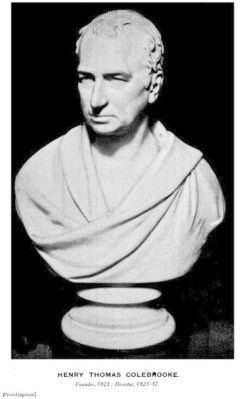
“Henry Thomas Colebrooke (June 15, 1765 – March 10, 1837) was an English orientalist.” Read more: Wikipedia

