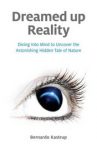
Bernardo Kastrup: Dreamed up Reality

Diving Into Mind to Uncover the Astonishing Hidden Tale of Nature

Iff Books, 2011

Back Cover:

KastrupA strong and growing intuition in society today is the idea that our thoughts create our own reality. Yet it seems obvious that, try as we might, our lives are not quite what we fantasize. Is the intuition thus wrong? Through a rational, methodic interpretation of meditative insights, the validity of which is substantiated with a compelling scientific literature review, the author constructs hypotheses that reconcile facts with intuition. Mesmerizing narratives of his expeditions into the unconscious suggest an amazing possibility: just as dreams are seemingly autonomous manifestations of our psyche, reality may be an externalized combination of the subconscious dreams of us all, mixed as they are projected onto the fabric of space-time. Perhaps the laws of physics are an emergent by-product of such synchronization of thoughts. Through computer simulations, the author explores the implications of these hypotheses, with conclusions uncannily reminiscent of observed phenomena.
About the Author:

Bernardo Kastrup has a Ph.D. in computer engineering and has been a scientist in some of the world’s foremost scientific laboratories. He researches and writes about metaphysics and philosophy of mind.

Kristian Claëson

ClaësonKristian Teodor C., filosof, f. 7 juli 1827 i Stockholm, blev student i Uppsala 1847, filos. doktor 1857 och docent i praktisk filosofi vid Uppsala universitet s. å. Strax efter det han nästan enhälligt fått främsta rummet på förslaget till den ena av de 1857 inrättade rörliga adjunkturerna vid nämnda universitet, avled han i Uppsala 21 nov. 1859.

C. ägde en ovanligt stor spekulativ begåvning och hade tidigt förvärvat en mångsidig lärdom. I sina filosofiska åsikter rönte han först inflytande av Hegel, men blev sedan en avgjord anhängare av sin lärare Boströms filosofi. Särskilt ägnade han sina bemödanden åt att fylla den lucka  i det boströmska systemet, som bestod däri att Boström väl upptagit den filosofiska etnologin såsom en av den teoretiska filosofins tre huvuddelar, men själv icke lämnat något bidrag till denna disciplins utveckling. Till detta ämne hör båda de större filosofiska avhandlingar, som C. under sitt korta liv hann fullborda, nämligen Om möjligheten af en filosofisk rättslära (akad. avh. 1857) och Om språkets ursprung och väsende (Nord. univ. tidskr. 1858). I båda dessa skrifter börjar han med en omsorgsfull granskning av de åsikter, som förut i vetenskapens historia framträtt rörande problemet i fråga, och söker uppvisa såväl rättens som språkets karaktär av att vara individuella, förnuftiga bestämningar hos nationens väsen. I flera uppsatser behandlade han frågor på språkundervisningens område, såväl den klassiska som den svenska, liksom han också skrev värdefulla essayer om Goethes “Faust”, Byrons “Don Juan” m.m. Mot slutet av hans liv var det särskilt religiösa och moraliska frågor, som upptog hans intresse. Hans religiösa ståndpunkt var frisinnat kristen. Liksom filosofin är människans högsta teoretiska angelägenhet, ansåg han religionen vara hennes högsta praktiska; och då enligt hans åsikt viljan är människans livs centrum, så anser han religionen såsom viljans högsta livsform vara människans högsta uppgift, den där griper vida kraftigare in i det mänskliga väsendet både till omfattning och djup, än någon vetenskap enligt själva sin uppgift förmår det. Med sina mångsidiga intressen för vad som djupast rörde sig i tiden förenade C. såsom skriftställare stor klarhet och åskådlighet i framställningen, och hans skrifter var därför väl ägnade att göra vetenskapens resultat fruktbringande för den allmänna bildningen. Vid hans död yttrade en kompetent bedömare, att vårt land i honom “förlorat en av våra rikast begåvade och mest levande vetenskapsmän”. C:s samlade Skrifter utgåvos året efter hans död (2 bd, 1860) av hans broder Gustaf C., med en av denne författad levnadsteckning samt en av C. Y. Sahlin lämnad filosofisk karakteristik.

Frans von Schéele i Ugglan (lätt språklig modernisering)

En lärjunge som Boström fäste de största förhoppningar vid var Kristian Claëson (1827-1859). Det blev därför ett svårt slag för Boström när denne dog endast 32 år gammal. Som ofta är fallet med unga döda fick Claëson ett rykte om sig att ha ryckts bort från en stor framtid. Han vore den, som framom andra varit skickad att föra boströmianismens färger till nya triumfer. Säkert är att Claëson är en utmärkt, ställvis intagande skriftställare, som visar prov på både skarpsinne och bred allmän kultur.

Kristian Claëson skildras i en av hans bror Gustaf författad levnadsteckning som en brådmogen yngling, vilken tidigt vigde sitt liv åt studierna. Han kom från en borgerlig Stockholmsfamilj, fadern var assessor. 1847 blev han efter skolgång i Stockholm student vid Uppsala universitet…Till en början anslöt han sig till Hegels läror…Med tiden drogs Claëson emellertid alltmera in under Boströms inflytande. 1857 promoverades han till magister och kallades därefter omgående till docent i praktisk filosofi. Claëson kom att stå Boström personligt nära. Som tidigare nämnts hjälpte han denne med utgivningen av flera skrifter. Han tog dessutom på sig uppgiften att försvara dessa mot sådana offentliga angrepp som de gav upphov till…Boström hade också höga tankar om Claësons begåvning. I ett samtal strax efter Kristians död, som Gustaf Claëson refererar i sin dagbok, skall Boström ha sagt att han nu vore “vingskjuten”, att Kristian visat sig förstå statsläran “fullt ut lika bra som jag själf”, och att nu ingen funnes av de yngre som kunde “föra filosofien framåt hos oss”.

I sin minnesteckning antyder brodern emellertid också att Kristian på en och annan inte oväsentlig punkt avvek från Boströms åsikter, visserligen tills vidare på ett föga deciderat sätt: “Att emellertid ett oafbrutet tankearbete fortgick inom honom, och att hans inre lif under tiden närmast före hans bortgång var stadt  uti en betydelsefull kris, uppenbarade sig omisskännligt på flera sätt. Huruvida resultatet af denna utveckling, om hon fårt ostördt fortgå, hade blifvit ett fullständigt anslutande till Professor Boströms åsigt eller ett bestemt afvikande derifrån, är nu omöjlit att afgöra.”

Mot detta har [den senare boströmianen Efraim] Liljeqvist invänt: “Så riktigt detta än är, bör å andra sidan framhållas, att ingenting i C:s föreliggande produktion tyder på någon sådan begynnande divergens i det principiella från mästarens åskådning”.

Detta är riktigt. Vill man finna uttryck för en divergens i Claësons skrifter får man söka den i ton snarare än bokstav. Men tonen är inte oväsentlig och ingen tvekan råder om att det hos Claëson finns ett betydeande mått av självständighet…

Claëson hade…framhållit Aftonbladets missuppfattningar som ett exempel på hur svårt det kan vara att med sunda förnuftets hjälp fatta innebörden i en filosofisk lära…Claëson hade anfört att: “Det är mer än en gång fallet, att satser ur vetenskapen förefalla orimliga för sens commun. Det kan nu icke undvikas.”…Uppsalaidealismen var alltid angelägen att framhäva hur liten domsrätt profanum vulgus och sunda förnuftet besatt i filosofiska spörsmål. Filosofin var en sak för de lärde, den krävde specialiserad intellektuell träning och dess resultat kunde ofta te sig förvånande för vardagsförnuftet. Om detta kunde Schellings, Hegels och Boströms anhängare vara ense, det låg inbyggt i filosofin, men var också ett utslag av lärdomsstolthet. Gentemot detta artikulerade Aftonbladet och dess liberala kolleger ett upplysningsfilosofiskt förakt för abstrakt konstruktion och lärd självöverskattning…

Claëson hade i en recension av ett teologiskt arbete urskiljt två riktningar inom modern teologi, en hegeliansk, vilken alltför mycket framhävde det objektiva, kyrkan såsom institution etc., och en kierkegaardsk, som innebar en irrationell subjektivism. Båda dessa felaktigheter borde kunna övervinnas, menade Claëson, men därvid måste teologin hämta hjälp från filosofin: “Det är m.a.o. en filosofisk reformation som behöfves, innan någon utsigt finnes för en theologisk.”

Mot sådana filosofiska överhöghetsanspråk vände sig [den ortodoxe teologen O. F.] Myrberg. Teologin vore inte filosofins tjänarinna, förnuftet var inte den enda kunskapskällan…Striden äger intresse främst som det tidigaste tillfälle där åsiktsskillnaden mellan boströmianism och teologisk ortodoxi ventileras i hela sin vidd.

[Claësons artikel] ‘Äro anklagelserna mot tidehvarfet för materialism ogrundade eller icke?’…ingick som led i den kamp som boströmianismen ständigt förde mot materialistiska åsikter. I Tyskland hade vid århundradets mitt en materialistisk strömning gjort sig gällande. Dess mest representativa verk blev Ludwig Büchners Kraft und Stoff (1855), som också i Sverige blev mycket omdiskuterad och bl.a. gjordes till föremål för en rad vederläggningar av boströmianska pennor.

Också Claëson tar upp en polemik mot Büchner. Men originellt i hans uppsats är hans sätt att avgränsa filosofins uppgifter från naturvetenskapernas. Claësons artikel är en recension av en skrift med samma namn av den liberale tidningsmannen Johan Johansson. Denne hade gjort gällande att det vore naturvetenskapens uppgift att vederlägga materialismen. Claëson ser detta som orimligt – materialismen är en filosofisk ståndpunkt och kan vederläggas endast på filosofisk väg. Men härav följer också att mellan filosofi och naturvetenskap inget gräl kan finnas. Büchners och hans likars fel är “att af fysik och kemi göra filosofi eller att tillägga ontologisk och metafysisk betydelse åt vissa naturvetenskapliga hypoteser eller, rättare sagdt, vissa för kalkylens skuld inom naturvetenskapen sedan länge införda fiktioner.”

De största naturvetenskapsmännen, en Berzelius t.ex., har också insett denna skillnad mellan naturvetenskapens och filosofins jurisdiktion…Instrumentalistiska lösningar av den typ  Claëson förerädde skulle…framemot sekelskiftet vinna åtskillig popularitet, inte minst bland idealister. I Sverige skulle de odlas främst av Vitalis Norström.

Ur Svante Nordins Den Boströmska skolan och den svenska idealismens fall (1981)

Warsaw Conference

The University of Warsaw has a department of philosophy of culture, and that department has a humane philosophy project, in collaboration with Oxford. All who have followed this blog will understand how promising that sounds to me. I just came back from a one-day conference on Saturday organized by the department as part of the project, on Personhood, Law and the Idea of the Tragic, to which, at a late stage, I had been kindly invited as a guest. The speakers were Przemysław Bursztyka (Warsaw), Janusz Ostrowski (Warsaw), Marcin Rychter (Warsaw), Ferenc Hörcher (Hungarian Academy of Sciences), Jonathan Price (Leiden and Oxford), Randall Auxier (Southern Illinois University), Marija Selak (Zagreb), Ralph Weir (Cambridge and Oxford), and Mikołaj Sławkowski-Rode (Warsaw and Oxford). To some extent a political dimension was added to the discussion at the excellent dinner at Akademia Smaku when I discovered that three of the speakers, Hörcher, Price, and Sławkowski-Rode, were members of the Vanenburg Society, or the Centre for European Renewal.

Claes Ryn om Sveriges kulturradikala experiment

Föreningen Heimdal publicerade nyligen på sin hemsida Claes Ryns kanske viktigaste artikel om Sverige någonsin, med rubriken Sveriges kulturradikala experiment. Artikeln torde nu också föreligga i tryckt form i tidskriften Heimdal.

“Som utlandssvensk med djupa rötter i Sverige tänker jag ofta på mitt gamla hemland. Min bild av dagens Sverige bygger på mångåriga iakttagelser och reflektioner. Huvudskälet till att jag här kommer att skriva ner vissa av mina intryck är en allt starkare känsla, att landet har allvarliga problem men att flera av dem egentligen inte diskuteras eller bara berörs ytligt i den tongivande debatten. Ett särskilt betänkligt missförhållande är att debatten blivit orimligt snäv, på något sätt låst sig. Behovet av nya perspektiv och frispråkighet förefaller mig akut. Att svenskar av gammalt är obenägna till mer än marginell självkritik medger även många i Sverige boende svenskar.

Jag har under större delen av mitt vuxna liv bott i Washington, D.C., där jag är professor i statskunskap. Eftersom min fru och jag bara har sommarbostad i Sverige, kommer jag att ha mindre att säga om det svenska vardagslivet än om utvecklingens huvuddrag. Hur jag uppfattar Sverige hänger delvis ihop med att jag i min akademiska gärning ägnat mig åt filosofi och idéhistoria såväl som statskunskap i snävare mening. Jag har också stor erfarenhet av andra länder, inklusive särskilt ett utanför västvärlden, Kina. Det borde ha sitt intresse för i Sverige boende svenskar hur en person ser på landet, som är en sorts utomstående men som känner samhörighet med Sverige och svenskarna och har rätt goda kvalifikationer för att göra en bedömning.

Syftet med denna artikel är inte att försöka teckna en nyanserad helhetsbild av Sverige. Jag avser att ta upp problem och svagheter, som synes mig iögonenfallande och olycksbådande. Denna betoning av avigsidor kan väcka olust hos läsaren. Jag bör väl också förvarna om att artikelns grundperspektiv av många kommer att uppfattas som ovant och förvånande och att mitt ifrågasättande av i Sverige djupt rotade och förmodat oantastliga synsätt kan utlösa irritation.”

Läs mer

Susan Stebbing och standardfallargumentet

En analytisk Cambridgefilosof som kort behandlas av Svante Nordin i hans stora översiktsverk Filosoferna: Det västerländska tänkandet sedan år 1900 (2011) och som jag inte tidigare kände till är Susan Stebbing (1885-1943), huvudsakligen verksam som professor vid Bedford College, University of London, grundare av tidskriften Analysis, och ordförande för både the Mind Association och the Aristotelian Society. Nordin tar upp hennes bidrag till vad som senare skulle kallas “standardfallargumentet”, ett bidrag som enligt honom blev viktigt i vardagsspråksfilosofin, nämligen hennes kritik av Eddingtons och Jeans‘ tolkning av “den moderna naturvetenskapens resultat i riktning mot idealistisk metafysik”.

Jag har inte Stebbings bok Philosophy and the Physicists (1937) tillgänglig och utgår därför från Nordins återgivning och översatta mening för denna kommentars begränsade syfte; eventuellt kan jag översätta den till engelska senare: eftersom nästan alla filosofer fortfarande sitter fast i vad jag föreslår är de missförstånd diskussionen bygger på kan det vara motiverat, och jag kan i så fall också fördjupa mig i Stebbings fullständiga argumentation. Men Nordins referat brukar inte vara missvisande, inte ens de allra kortaste och mest förenklade.

Stebbings polemik förnyade enligt Nordin G. E. Moores försvar för common sense: “När de spekulativa fysikerna försökte visa att exempelvis ett bord enligt den moderna partikelteorin inte är ‘solitt’, eftersom det mest består av tomrum mellan de virvlande partiklarna, ställde Stebbing motfrågan: …’Var kan vi finna en tillämpning av orden “solid verklighet”, som vi inte kan använda med referens till bordet? Åter måste vi fråga: Om bordet inte är “solitt”, vad innebär “solid”?'”

Nordin kommenterar: “Det kan förefalla som om ett bord eller ett skåp eller en sten utgör standardexempel på ‘solida’ föremål. Det är genom sådana föremål vi överhuvudtaget vet vad som menas med ‘solid’. Om man då förnekar att sådana föremål är ‘solida’ uppstår frågan vad man alls menar med ‘solid’. Något föreföll vara fel åtminstone med Eddingtons och Jeans sätt att uttrycka sig.”

Om Eddington och Jeans verkligen säger att ett bord inte är solitt eftersom det mest består av tomrum mellan virvlande partiklar, är förvisso deras sätt att uttrycka sig problematiskt, otillräckligt, missvisande. Men Stebbings invändning, som Nordin framställer den, förefaller i lika hög grad bygga på ett missförstånd.

Vad “de spekulativa fysikerna” med fog kan säga är att bordet inte existerar som objektiv materiell substans med det förnumna bordets egenskaper, utan tomrum, flytande omkring i objektiv tid och objektivt rum. Såtillvida har de rätt. Men något sådant hävdade inte 16- och 1700-talets empirister och fysiker heller. Enligt dem var bordet som sådant, som vi uppfattade det, en produkt av just vårt sätt att uppfatta; vad som objektivt existerade var en för oss otillgänglig, av atomer uppbyggd formation av materia i rummet. Man kom att göra en distinktion mellan “primära” och “sekundära” egenskaper.

För Eddington och Jeans hade atomerna ersatts av virvlande subatomära partiklar, och “tomrummet” ökat, men vår förnimmelse, förnimmelsen av bordets soliditet, var subjektiv och oriktig i det den inte motsvarade denna verklighet. Detta motsvarade ju inte helt den gamla distinktionen, men principen var, så här långt, likartad. Att Eddington och Jeans sedan också går in på relationen mellan vår förnimmelse och de virvlande partiklarna och tomrummet behöver vi inte gå in på här eftersom det enda Stebbing, åtminstone så långt Nordin refererar henne, tar fasta på är uppfattningen om det “illusoriska”, om man får kalla det så, i upplevelsen av soliditet och den i förhållande till denna kontrasterande verkligheten av de virvlande partiklarna och tomrummet.

En av de filosofer som sitter fast i denna allmänna dikotomi, formulerad som en dualitet och motsättning mellan å ena sidan den fenomenellt, subjektivt upplevda livsvärlden å ena sidan och den objektiva, naturvetenskapliga världsbilden å den andra, är, som jag tidigare påpekat i en kommentar till en av hans böcker, Roger Scruton. Det finns anledning att nämna just honom i detta sammanhang eftersom en mycket stor del av hans filosofi kretsar just kring det problem som den senares invasion av den förra, som i så stor utsträckning präglar den västerländska moderniteten, utgör: dess hot mot livsvärlden, räddandet av livsvärldens värden undan detta. Men den objektiva, naturvetetenskapliga världsbilden kvarstår för honom som objektivt sann, det finns där ute en verklighet som svarar mot fysikens modeller och som på något sätt bidrar till att ge upphov till vår så annorlunda beskaffade upplevelsevärld.

Inte heller Keith Ward, som jag också skrivit om och som i princip fortsätter på Eddingtons och Jeans’ väg i sin kritik av materialismen, har helt släppt denna dualitet: med de flesta materialismkritiker kvarhåller han föreställningen om en åtminstone rent matematisk realitet som i någon mån faktiskt svarar mot fysikens modeller, som en yttersta, oberoende grund för vår förnumna verklighet och som sanningen om materien.

Eddington och Jeans går som sagt (åtminstone som jag minns det) längre i sin analys, och närmar sig därmed sanningen. Men från ett boströmianskt perspektiv måste framhållas att Stebbing har rätt i att vi kan använda “solid verklighet” med referens till bordet, att bordet är “solitt”, att “solid” inte har eller behöver ha någon annan innebörd. Hela problemet uppstår ju enbart på grund av den gamla ohållbara åtskillnaden mellan primära och sekundära egenskaper eller dess variant, åtskillnaden mellan vår förnimmelse av soliditet å ena sidan och de virvlande partiklarna och tomrummet å den andra.

Vad som i Nordins framställning ser ut som Stebbings fel tycks bero på hennes tilltro till Moores common sense. Om Eddington och Jeans tror att bordet i verkligheten är icke-solitt, virvlande partiklar och tomrum, och att detta talar för en idealistisk metafysik, tycks Stebbing, eftersom hennes syfte – som vanligt i hennes hopplösa skola – är att vederlägga all idealistisk metafysisk, tro att bordet existerar, som solitt, i en objektiv verklighet, oberoende av vår eller någon annan förnimmelse.

I själva verket finns ingen som helst motsägelse mellan hennes argument för bordet som standardfall och referens för “solid verklighet”, som förklarar meningen av “solid”, och idealistisk metafysik. Vad en hållbar idealistisk metafysik säger här är bara att bordet och dess soliditet inte existerar oberoende av vår förnimmelse i enlighet med den nya fysikens virvlande partiklar i tomrum, den gamla fysikens atomer, eller common sense’s naiva realism. De existerar som sådana endast som ett helt av förnimmelser, som obakomgåbart medvetandeinnehåll, vars intersubjektiva verklighet, ja objektivitet, måste fastställas på helt annat sätt. Det finns ingen materia eller ens någon matematisk verklighet bortom detta, som medverkar till uppkomsten av vår fenomenvärld.

Detta innebär på intet sätt att bordet inte är solitt. Det är just genom att vara bevetenhetsinnehåll, och enbart detta, som bordet och skåpet och stenen verkligen kan vara solida, som de i sig har alla de egenskaper som en dominerande empiristisk riktning betraktade som blott sekundära och som materialismen idag felaktigt tillskriver endast de mänskliga sinnenas och hjärnans uppfattningssätt.

Att Stebbings realistiska common-sense-uppfattning av soliditeten är felaktig uppvisas väl av den nya fysik som Eddington och James försvarade. Men denna fysiks uppfattning, såsom uttolkad av Eddington och Jeans, att soliditeten s.a.s. är overklig, är också felaktig, såtillvida som den kvarhåller ett moment av den abstrakt-rationalistiska scientismens hypostaserade och i någon mening som oberoende, yttre verklighet postulerade konstruktioner.

Om detta vymodus bibehålls kommer i längden knappast något blott fenomenologiskt försök, av Scrutons typ, att försvara och upprätthålla livsvärldens konkretion och värden vara tillräckligt. Det är i lika hög grad som den naiva realismen detta postulat, med alla dess teoretiska och inte minst praktiska konsekvenser, som är en illusion, en för moderniteten näranog konstitutiv och, genom de tillämpningar man tror sig berättigad att göra, för vår kultur förödande illusion. Den kan endast upplösas genom en rätt förstådd idealistisk metafysik.

Comments on Boström

In my introduction to Lawrence Heap Åberg’s Den Boströmska världsåskådningen (The Boströmian Worldview) from 1882, which I published as a long series here, I mentioned that I would come back with a few comments of my own, and I think that in a discussion with a reader who commented on one of the early parts in the series this was developed into a promise. I will now therefore start a new series of posts with some comments on Heap Åberg’s introduction, in which selected passages will be translated into English.

Readers of my book The Worldview of Personalism (2006) will be familiar with some of the positions of Christopher Jacob Boström, the leading Swedish 19th-century philosopher. A general introduction is found in Robert N. Beck’s long essay published together with the translation of Boström’s Philosophy of Religion by Yale UP in 1962. The character of Boström’s own writings, however, is such that it is almost inevitable, if something of the substance of his worldview is to be successfully communicated to the philosophically interested reader of today, to take as the point of departure one of the many available introductions to his work. Moreover, my purpose is merely to present in broad outline and to make comprehensible some of Boströms basic and essential idealistic positions.

Much attention has been given by Swedish historians of philosophy to the special, detailed positions of Boström’s theory of the state (his statslära) as related to his idealist metaphysics, positions which are of no significance and have often obscured the meaning of his more general idealist positions. They can, however, easily be ignored in the study of his philosophy, and that is also what Heap Åberg does: all such things are simply left out – the author clearly saw the need for this already at the time of writing his introduction, i.e. in the early 1880s.

It is only with reference to the general, central positions of Boström that I claim that his philosophy, or rather, perhaps, that of his school, in which many of his positions were improved upon, remains not just important and relevant, but in some respects superior to all later philosophy that has not, by different means, reached the same insights. And very few professional philosophers have reached such insights. Those who have done so have done it through the traditions by means of which I too seek to supplement and modify Swedish idealism, and also, for that matter, to supplement the elements of other 19th- and early 20th-century forms of idealism that I also try to assimilate. I.e., primarily through aspects of the broad and deep current of Platonism, or, more precisely, Neoplatonism, and also through Vedanta and some Buddhist schools.

Such supplementation and modification is necessary: the Boströmian school, and the broader Swedish idealist tradition to which it belongs, is of course imperfect and displays weaknesses, as do all modern systems. But its basic orientation is correct, it is on the right path, its essential intuition is a true one. The philosophical way ahead – and this is one of my modest main theses – is not via any break with its idealist assumptions, in any of the forms that came to dominate in the second half of the 19th century and the first half of th 20th (neokantian, pragmatic, Hägerströmian, positivist, phenomenological, historicist, materialist, analytical, Marxist, hermeneutic, vitalist, psychological), but only through partial correction, general deepening, and further development.

As many scholars are now realizing, the rupture with idealism involved gross misunderstandings of idealism on all levels, as well as of philosophy in general and not least its relation to the sciences. It meant an obvious step back in the understanding of reality and hence in the general level of culture; indeed, not seldom deep illusion, confusion and decadence.

In comparison with the main positions of idealism as we find them in the main Swedish current, later modern philosophy has merely, at its best, provided minor, relatively marginal truths and formal instruments of thought. And for their value to be properly assessed and rightly understood, they must be connected to and seen in the light of the lost idealist perspective – i.e., the later must be reconstructed or rediscovered.

Now, it is of course possible to reach the basic truths of the worldview to which I seek to draw the reader’s attention through the other schools and traditions I mentioned, and, again, I draw on them myself. But there is no reason, in Sweden, to keep exclusively to them and not to connect to the history of our own philosophy and to our own leading thinkers. German idealism never died; British idealism has been revived. Now Swedish idealism needs to be rediscovered and renewed.

Not least German idealism is of course more richly developed in many respects than Swedish idealism. But it is also quite different, as not least the Boströmians kept insisting. While Swedish idealism is certainly not as fully elaborated in all of the special branches of philosophy, it at least has a certain strict continuity in its development and a considerable sharpness of profile in most of them. And, not least, it is more completely and consistently idealistic, in a way that brings it closer to the great, earlier traditions than most other forms of “modern” idealism in the west.

It is, I submit, not least in this that we find its strength, and that which makes it quite as relevant and important as anything else that is currently being rediscovered by philosophers and historians of philosophy in the rich but forgotten currents of idealism. At least those with a sufficiently broad overview of the history of human thought will, I hope, quickly see that there is in fact nothing strange about this claim. The exclusive dominance of the characteristic 20th-century schools was spatio-temporal provincialism.

Edward F. Kelly, Adam Crabtree & Paul Marshall, eds: Beyond Physicalism

Toward Reconciliation of Science and Spirituality

Rowman & Littlefield, 2015

Publisher’s Description:

KellyThe rise of modern science has brought with it increasing acceptance among intellectual elites of a worldview that conflicts sharply both with everyday human experience and with beliefs widely shared among the world’s great cultural traditions. Most contemporary scientists and philosophers believe that reality is at bottom purely physical, and that human beings are nothing more than extremely complicated biological machines. On such views our everyday experiences of conscious decision-making, free will, and the self are illusory by-products of the grinding of our neural machinery. It follows that mind and personality are necessarily extinguished at death, and that there exists no deeper transpersonal or spiritual reality of any sort.

Beyond Physicalism is the product of an unusual fellowship of scientists and humanities scholars who dispute these views. In their previous publication, Irreducible Mind, they argued that physicalism cannot accommodate various well-evidenced empirical phenomena including paranormal or psi phenomena, postmortem survival, and mystical experiences. In this new theory-oriented companion volume they go further by attempting to understand how the world must be constituted in order that these “rogue” phenomena can occur. Drawing upon empirical science, metaphysical philosophy, and the mystical traditions, the authors work toward an improved “big picture” of the general character of reality, one which strongly overlaps territory traditionally occupied by the world’s institutional religions, and which attempts to reconcile science and spirituality by finding a middle path between the polarized fundamentalisms, religious and scientific, that have dominated recent public discourse.

Contributions by: Harald Atmanspacher, Loriliai Biernacki, Bernard Carr, Wolfgang Fach, Michael Grosso, Michael Murphy, David E. Presti, Gregory Shaw, Henry P. Stapp, Eric M. Weiss, and Ian Whicher.

Reviews:

“The Sursem project has been, in recent times, the longest lasting and most intellectually substantial enquiry into rogue phenomena. It has resulted in [a] mammoth work…Beyond Physicalism – a volume that not only provides much food for thought but is in itself a feast of thinking.”  Network Review

Beyond Physicalism presents a serious challenge to physicalism from psychologists, neuroscientists, physicists, philosophers, and Eastern scholars. This volume is no ‘New Age’ pap with easy answers, but it carefully considers so far intractable issues; and, it demands careful and repeated Readings…Beyond Physicalism should interest readers who are willing to consider the intricacies and extraordinary nature of consciousness, rather than dismissing them offhand. No doubt some of the ideas covered in the book will be shown to be limited…but they seek to provide a comprehensive explanation of mind and matter that has been lacking in most discussions until now. Beyond Physicalism does not offer a definitive theory, but it describes serious alternatives to materialism. The appropriate reply by the holders of the latter position should be not to ignore the phenomena explained by these alternatives, as they have usually done so far, but to advance a better materialist position to explain them. Will they take up the gauntlet?”  PsycCRITIQUES

Beyond Physicalism heralds an impending shift of epic proportion in humankind’s efforts to understand the nature of reality, and potentially the most significant advance in the recent history of the mind-body debate. This landmark book provides an unprecedented synthesis of science, psychology, philosophy and theology, approaching the deeper truth of all existence.”  Eben Alexander III, MD, neurosurgeon and author of Proof of Heaven and The Map of Heaven

“Finally, a book that conclusively demonstrates that it is possible, in fact preferable, to reconcile genuine science with spirituality. Drawing upon a massive amount of compelling empirical data, and weaving together several interrelated and extremely thoughtful theoretical perspectives offered by a range of highly respected scientists and humanists, Beyond Physicalism articulates a cogent and compelling alternative to the distorted ‘all or nothing’ dichotomy between a narrow-minded religious fundamentalism and an equally dogmatic and rigid scientistic mentality.”  G. William Barnard, professor of Religious Studies, Southern Methodist University

Beyond Physicalism lays several stones for the foundation of a new world-view. No book has gone further toward reconciling science and spirituality.”  William Eastman, former director of SUNY Press

“In this wonderful sequel to Irreducible Mind: Toward a Psychology for the 21st Century, ‘rogue’ phenomena that are the essential facts denied by psychology too long mired in varieties of physicalism are rightly accepted as empirical fact. Abandoning neither the truths of science nor those of religion, evolutionary panentheism provides the tertium quid that that can steer us safely home. This is a must read book. Marvelous!”  Ralph W. Hood Jr., professor of Psychology, University of Tennessee at Chattanooga and former editor, Journal for the Scientific Study of Religion

“Dogmatic materialists, sometimes called skeptics, claim that to accept the possibility of any non-physical force or entity requires that we sacrifice all of modern science. No matter the apparent evidence, we are told, the future of scientific progress and rationality are at stake. Creationism and the flat Earth lie in wait. Beyond Physicalism, however, presents both solid empirical evidence and fully rational theoretical views demonstrating that the materialist’s dichotomy is false. This book offers a third way, reconciling science and spirituality without diluting either. Robust and evidence-based, this work by highly respected scholars and scientists demolishes orthodoxies right and left, allowing the reader a way forward past the Scylla and Charybdis of religious and scientific fundamentalisms.”  David J. Hufford, professor emeritus, Penn State College of Medicine

“Beyond Physicalism is much more than a book. It is the intimate expression of a decade and a half of critical but collegial conversations between established scientists and professional humanists around some of the most important but still unsettled questions facing humanity: those involving the nature of mind or consciousness – that is, the nature of us.”  Jeffrey J. Kripal, J. Newton Rayzor Professor of Religious Studies, Rice University

“Beyond Physicalism is an eye-opening (perhaps one might be permitted to say ‘soulful’) collection of essays by disciplined researchers who seek to develop a credible conception of the spiritual nature of human beings. The authors are hard-nosed scientists and humanistic scholars who believe it is possible to reject the ‘old man in the sky pulling the strings’ version of theism without embracing dispiriting contemporary versions of materialism.”  Richard A. Shweder, Harold Higgins Swift Distinguished Service Professor, Department of Comparative Human Development, University of Chicago

“Some of the philosophical problems that occupied William James longest and deepest, along with solutions he thought most promising, have literally been written out of history. This volume presents the first serious collective attempt since James’ death to revive his project. Its chapters are characterized by an intellectual ethos reminiscent of the ‘father’ of modern American psychology himself: sympathetic open-mindedness made fruitful through disciplined, calm and penetrating rigor.”  Andreas Sommer, junior research fellow in history and philosophy of science, Churchill College, University of Cambridge

“If you are personally content thinking of yourself as a meaningless byproduct of accidental chemical reactions, what I’ve called the Total Materialism view of reality, and think you’re superior for being so “scientific,” you don’t want to read this book, not that you can actually freely make a choice, because it will upset you and you’ll need some tranquilizing drugs to calm your agitated brain. But if you believe facts are more important than currently fashionable scientistic theories and wonder about the spiritual side of human nature, you will find this volume fascinating!”  Charles T. Tart, professor emeritus of psychology, University of California, Davis

“I see this book as a landmark publication that may help to catalyze two urgently needed, radical transformations in modern civilization. The first is the first true revolution in the mind sciences, which is bound to have profound repercussions all the way down to the foundations of physics. The second is a renaissance in the world’s great contemplative traditions. Both science and spirituality need to return to a spirit of open-minded, radical empiricism, casting off the shackles of dogmatic metaphysics, whether materialistic or religious.”  B. Alan Wallace, physicist and Buddhism scholar, president of the Santa Barbara Institute for Consciousness Studies

“When I first encountered Kelly and colleagues’ first book, Irreducible Mind, I enthusiastically read all 800 pages, excited to see a book that so carefully documented the research that supports the notion that consciousness is not simply a product of neural activity. When I completed the book, I wanted to know more. I wanted to know details of a theoretical framework they had alluded to, which might include both mystical experiences and scientific understanding of consciousness within one ‘big picture’. Their second book, Beyond Physicalism, brings together key scholars in the areas of quantum physics, psychology, Asian philosophy and mysticism to thoughtfully explore ways that mystical and psi experiences can fit into an expanded scientific worldview.”  Marjorie Hines Woollacott, professor, Department of Human Physiology and Institute of Neuroscience, University of Oregon

About the Editors:

Edward F. Kelly is a research professor in the Department of Psychiatry and Neurobehavioral Sciences at the University of Virginia, with interests in psychical research and functional neuroimaging. He is lead author of three previous books: Computer Recognition of English Word Senses; Altered States of Consciousness, and Psi: An Historical Survey and Research Prospectus; and Irreducible Mind: Toward a Psychology for the 21st Century.

Adam Crabtree is a psychotherapist in private practice and on the faculty of the Centre for Training in Psychotherapy in Toronto, with interests in the history of animal magnetism and hypnotism, as well as the history and practice of psychodynamic psychology. He is author of six books including From Mesmer to Freud: Magnetic Sleep and the Root of Psychological Healing; Multiple Man; and Memoir of a Trance Therapist.

Paul Marshall is an independent researcher with interests in mysticism, philosophy and psychology of religion, science-religion relations, and consciousness studies. He is author of two previous books, The Living Mirror: Images of Reality in Science and Mysticism; and Mystical Encounters with the Natural World: Experiences and Explanations.

Bernardo Kastrup: Why Materialism Is Baloney

How True Skeptics Know There Is No Death and Fathom Answers to Life, the Universe, and Everything

Iff Books, 2014

Publisher’s Description:

KastrupThe present framing of the cultural debate in terms of materialism versus religion has allowed materialism to go unchallenged as the only rationally-viable metaphysics. This book seeks to change this. It uncovers the absurd implications of materialism and then, uniquely, presents a hard-nosed non-materialist metaphysics substantiated by skepticism, hard empirical evidence, and clear logical argumentation. It lays out a coherent framework upon which one can interpret and make sense of every natural phenomenon and physical law, as well as the modalities of human consciousness, without materialist assumptions. According to this framework, the brain is merely the image of a self-localization process of mind, analogously to how a whirlpool is the image of a self-localization process of water. The brain doesn’t generate mind in the same way that a whirlpool doesn’t generate water. It is the brain that is in mind, not mind in the brain. Physical death is merely a de-clenching of awareness. The book closes with a series of educated speculations regarding the afterlife, psychic phenomena, and other related subjects.

About the Author:

Bernardo Kastrup has a Ph.D. in computer engineering with specializations in artificial intelligence and reconfigurable computing. He has worked as a scientist in some of the world’s foremost research laboratories, including the European Organization for Nuclear Research (CERN) and the Philips Research Laboratories (where the “Casimir Effect” of Quantum Field Theory was discovered). Bernardo has authored many scientific papers and philosophy books. His three most recent books are: More Than Allegory, Brief Peeks Beyond and Why Materialism Is Baloney. He has also been an entrepreneur and founder of a successful high-tech start-up. Next to a managerial position in the high-tech industry, Bernardo maintains a philosophy blog, a video interview series, and continues to develop his ideas about the nature of reality. He has lived and worked in four different countries across continents, currently residing in the Netherlands.