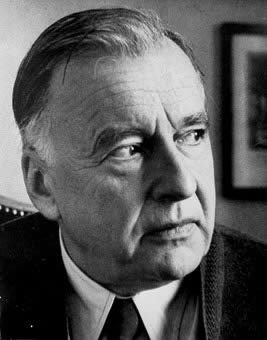
The first and most basic comment that needs to be made about Lawrence Heap Åberg’s Den Boströmska världsåskådningen (The Boströmian Worldview), or, through it, on Boström’s philosophy as such, concerns the nature of Boström’s idealism in general. In my first separate post with comments, Comments on Boström, I made very big, broad and sweeping claims for this idealism, suggesting, in fact, that it was superior, in general and with regard to its central positions, to all subsequent non-idealist currents of Western philosophy that have been dominant throughout the 20th century, and in some respects even to other versions of 19th-century idealism. This will certainly have seemed quite remarkable to most readers, and the first thing that has now to be added by way of further commentary is more support for those claims. But first of all, I want to say something more about my understanding of the role and meaning of idealism today.
The defence of idealism, including some of the forms of idealism that first developed in 19th-century Europe, has for me a broader significance than its metaphysical, ethical and other positions. It is part of a whole cultural dynamic, a natural development of the European spirit in the 19th century that, contrary to how it has been perceived by 20th-century historians of philosophy, in reality points ahead to the specific needs of the 20th century, including those of its cultural, social and political life. Broadly speaking, idealism represented a decisive advance in relation to the empiricist, lower rationalist, utilitarian and materialist legacy of the Enlightenment, which was also intrinsic to the liberal and capitalist social and political order (or disorder). Clearly distinct from the Marxist reaction to this order, as it remained tied to these obsolete philosophical currents even in its mobilization of its distorted reinterpretation of a selective Hegelianism, idealism in a broad sense was the 19th century’s own important alternative contribution, answering the questions raised and the problems caused by both of these historical forces, carrying forward and bringing to fruition the inner impulses, needs and exigencies of the development not only of philosophy but of culture in general at this point in the history of Europe.
Thus idealists not only in Germany but also in other European countries also characteristically offered, in outline, a social and political philosophy of their own, which sought to synthesize a historical legacy of values and insights that was in many respects threatened by the forces of radical modernism, with its own ways of meeting the undeniable social requirements of the new historical circumstances produced by modernity’s vast transformations. Boström himself, admittedly, did not yet perceive fully the necessity of developing this side of idealist thought, but some of his disciples and later followers, belonging to generations of European thinkers where these new issues were central to the social thought of idealism, understood the need to revise and develop further their positions in this regard – and, significantly, they found it possible to do so while preserving some of the distinct principles of Boström’s theory of the state.
Idealism, in its full and comprehensive meaning, thus constitutes the central, decisive advancement of the 19th century in relation to the Enlightenment and its lingering, typical philosophies, at its most developed a comprehensive cultural paradigm not only answering the needs of its day but pointing ahead to the situation of world-historical challenges that Europe would have to face in the 20th century. And since, as can be understood, for instance, from the list of philosophical schools which I provided, suggesting they were all inferior to and represented distinct forms of retrogression in relation to idealism, Europe did not, to put it mildly, successfully meet the challenges in the 20th century, it still stands before these challenges, now vastly aggravated. And hence the general idealist paradigm is in fact more relevant than ever.
Already in the title of his introduction to Boström or Boströmianism, Heap Åberg correctly emphasizes that what we are dealing with is a worldview, and thus the importance of the kind of comprehensiveness and coherence that a worldview implies. On a general level, the principles and the general orientation to which also specifically 19th-century expressions of idealism contributed, and which, as I briefly indicated, comprise distinctive social and political dimensions, remain not just relevant but, in a sense, necessary for the spiritual, cultural, moral and political defence and renewal of Europe. At the same time, it offers a far superior point of departure for authentic, historically based intercultural exchange with the rest of the world of the kind that is of course inevitable. Both through its philosophical penetration and its practical applications, it facilitates the search for, brings us closer to, the “common human ground”, the unity of universality and particularity in a multicultural world, that Claes Ryn speaks of, while at the same time representing the distinctly European manifestation of this synthesis that is needed for Europe’s own present purposes. It was always obvious that there is a natural limit to and an inevitable reaction against romantic, liberal-democratic and postmodern fragmentation, relativization, dispersion.
Idealism in the broad sense here indicated, in a general sense alone adequate to the challenges of modernity and even, in my view, in a sense inevitable for a European future, can of course, as a more general movement of cultural, social and political renewal, be assimilated in different aspects and on many levels for the various needs in all the fields of theory and practice. But for the purpose of its deeper understanding, the more difficult and exclusively philosophical issues of metaphysics, epistemology etc. must also be revisited and taught at least to a sufficient extent. In his Introduction to The Boströmian Worldview, Heap Åberg discusses the reasons why it is so much more difficult to explain the idealist position to the general reader than the widespread philosophical positions based on “common sense”. And he immediately proceeds to use a formulation that can be said to exemplify not only the difficulties in this regard with 19th century idealism more generally, but the specific difficulties with Boströmianism, with that aspect of it, or one of the aspects of it, which sets it apart from or goes beyond the dominant, originally German current of modern idealism.
This concerns the most basic, general position of Boström, reminiscent of and indeed developed with reference to Berkeley, but also bringing Boström closer than other forms of contemporary idealism to one aspect of Neoplatonism and, in substance, to aspects of Vedanta and some Buddhist schools in a way that clearly goes beyond Berkeley and his specifically modern empiricist concerns: what we experience as the external, material, corporeal world is in reality “a whole”, a totality, “of our own perceptions” (“ett helt av våra förnimmelser”). Formulations like this immediately produce a number of familiar misconceptions whose familiarity has never made them any less difficult to clear up or even reduce. They are almost always taken to mean that the phenomenal world is less real according to this kind of idealism than according to the common-sense view or philosophical materialism or physicalism, that it is a subjective experience only, perhaps just an illusion.
In reality the meaning of the position thus expressed is precisely the opposite. Although it does of course emphasize that this totality of perceptions, being our perceptions as finite beings, is limited, imperfect, relative etc., it also strongly emphasizes, in contradistinction precisely to common-sense realism, materialism, and physicalism, that within such general limitation caused by our own finitude, the world is really as we perceive it. The qualities of things, of the whole space-time world, are really there, are real and objective, not just secondary qualities incomprehensibly produced by our own sensual apparatus out of the inexplicable stimuli of merely primary-quality “matter”, unknowable in itself and somehow floating about out there (and in the course of the 20th century increasingly reduced to mere mathematical models). In a different sense, this idealist position could be said to be “realist”, whereas materialism turns out to be a bizarre speculative concoction of never ascertainable postulates. There is no “nothing but” about the world as a whole of our perceptions.
Now, I will not further elaborate this argument here. I have prepared these comments by posting in the References category a number of books by Bernardo Kastrup, in which can be found the most extensive and complete non-technical formulation, explanation and defense of this idealist position that I have ever seen. For the full comprehension of the most central and essential and at the same time most difficult and controversial idealist position in Boström’s system I therefore simply refer to Kastrup, and especially his book Why Materialism Is Baloney from 2014, but see also his other books under Philosophy on the References page; I have also posted a video where he gives a brief account of some aspects of his argument in this blog’s Idealism category.
Kastrup’s “popular” yet sophisticated statement of the argument is not only extensive, careful, and detailed, but also highly creative, innovative, and original. There is no reason for my purposes to add to it or even further comment on it here. This is the basic idealist position that people find to be the hardest to understand, the one that has always been the greatest challenge in all Boströmian idealist pedagogy. Once it has been understood – and I hope Kastrup will strongly and, for many, even decisively contribute to this – the most important task, the explanation of this most difficult yet decisive tenet of this form of idealism, will have been accomplished.
Further comment is needed only with regard to the positions where, within the general idealist framework thus established, Boström differs from Kastrup, namely in the distinctly “personalist” aspects of the former’s philosophy – a differentiation within idealism to which counterparts can also, as I have often emphasized, be found in the broader and older traditions referred to above. It could be argued that Kastrup’s articulation of this general idealist position as such implies precisely the distinctively “impersonalist” version or interpretation that Kastrup espouses, and that it does so to the extent that the position as formulated by him is not in reality a common position, shared by Boströmianism.
There are deep issues involved here having to do with the nature of the finitude of our perception of the world, and, as related to this, the nature of our existence as finite beings. But the fact that, at the present stage of the development of his thought at least, Kastrup differs in his conclusions regarding these things does not, in my view, invalidate or in any significant way minimize the relevance of the general argument from the “personal idealist” standpoint. I.e., the argument and the general idealist position it establishes are indeed, at least to a sufficient extent, common ones, they do provide a shared idealist framework within which, at a later point of more specific analysis, the differentiation of positions with regard to “finite centres” etc. emerges and can be contained. In this respect, the situation is similar to the relation – as discussed by me in The Worldview of Personalism and elsewhere – between what can for some purposes be called idealism in general, as affirmed also by forms of 19th-century impersonal absolutism, on the one hand, and at least some central versions of personal idealism.
Kastrup’s analysis of the world as a whole of perceptions can thus be affirmed even as his specific position regarding the nature of such centres and their relation to the absolute is bracketed, as it were, and identified as susceptible to certain modifications not unknown in the history of idealism – although clearly, for the purpose of relating them to Kastrup’s specific renewal of the idealistic argument and explaining them in terms of a modification precisely of his articulation, they stand in need in some respects of a correspondingly innovative reformulation. Needless to say, the resulting analytical and argumentative presentation would then also have to be related to and coordinated with the partly – certainly not entirely – different terminology of the earlier idealists.
If this position and its various implications are understood and accepted, it makes about as dramatic a difference as philosophical argument and theoretical insight can ever make. Given human nature, even that difference is not always sufficient to effect concrete changes in life and action, or even permanent insight. In most cases, it must be consolidated and supplemented by several other factors, having to do not least with the moral life, character, and faith, as also quite extensively discussed by Heap Åberg in Boströmian terms. Yet it can be concluded that, to the extent that such a thing is at all possible, the problematic legacy of the radical Enlightenment in philosophy that the idealists confronted (primarily in its 19th-century manifestations), with all of its moral, social and cultural ramifications, has been refuted.
The real consequences, once fully discovered, and by whichever supplementary means the discovery comes about, are vast, and often beautifully explained and illustrated by Kastrup in his other books, as affecting our lives and the way we live them. The implied necessary preconditions of the reality of the world being as explained by this idealistic analysis and argument of course involve several further positions, not least with regard to consciousness and spirituality. And these, in turn, are such as to make it easier to understand what I meant by my sweeping claims about this form of idealism in relation to twentieth-century philosophy. One important part of the metaphysics of idealism has in this way been established, in the sense and to the extent that things can be established in the specific Western institution of philosophy. There is more to the metaphysics of idealism than this. But without the core of insights reached and established in this and other ways, the further developments and applications of the idealistic worldview in the various fields of theory and practice cannot be correctly made, and the historic role of this worldview in the life of Europe and of European culture cannot be properly fulfilled.
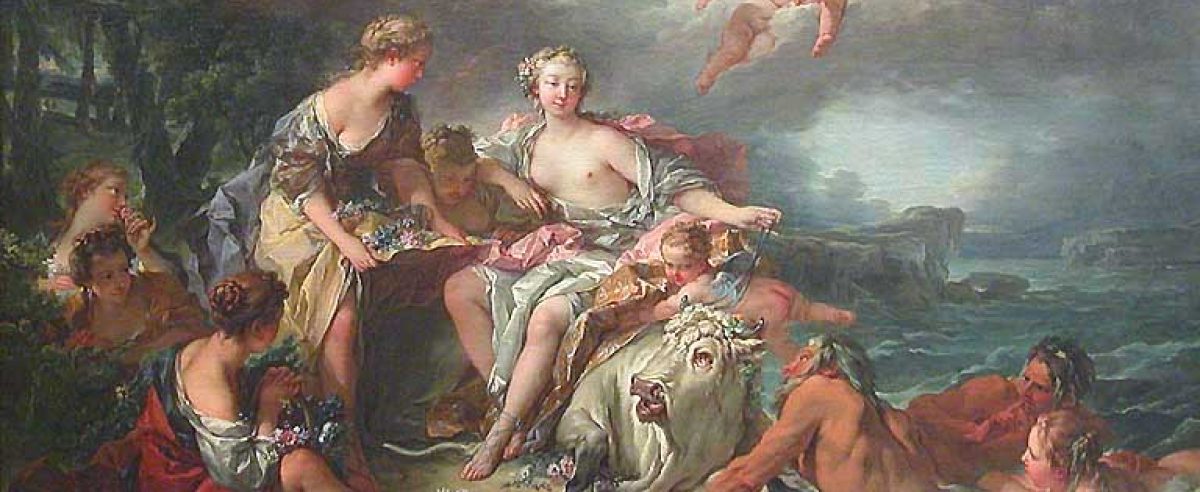
 Well before his death in 1933, Irving Babbitt had been internationally recognized as an American literary scholar and cultural thinker of unusual intellect, learning, and insight. Literature and life, he insisted, are indivisible. The study of literature must, in effect, become a discipline of ideas and imagination: a discipline that must distinguish between the significant and the insignificant, between literature with an ethical or moral center and literature subservient to the flux of relativism.
 “If there is a single thread that runs through these essays, it is the recognition of a universal order that transcends the flux of human life and gives meaning to it. Insofar as men act in accordance with this order, they experience true happiness and are brought into community with others who are similarly motivated. But men are afflicted with contrary impulses that are destructive of universal order. When acted upon, these impulses bring suffering and a sense of meaninglessness and despair; the result is disintegration and conflict – within both the personality and society at large. Yet so tempting are the attactions of these impulses that they frequently prevail and must be taken into account in any realistic assessment of human affairs. This tension within the person between competing desires – the conflict between what Plato called the One and the Many – is the ultimate reality of human experience. To apprehend this reality, and to act in the light of the transcendent purpose with appropriate reverence and restraint, is the essence of wisdom; and to help deepen and strengthen this apprehension – through philosophy, history, literature, and the arts and sciences – is the overarching purpose of any education worthy of the name.”
 A strong and growing intuition in society today is the idea that our thoughts create our own reality. Yet it seems obvious that, try as we might, our lives are not quite what we fantasize. Is the intuition thus wrong? Through a rational, methodic interpretation of meditative insights, the validity of which is substantiated with a compelling scientific literature review, the author constructs hypotheses that reconcile facts with intuition. Mesmerizing narratives of his expeditions into the unconscious suggest an amazing possibility: just as dreams are seemingly autonomous manifestations of our psyche, reality may be an externalized combination of the subconscious dreams of us all, mixed as they are projected onto the fabric of space-time. Perhaps the laws of physics are an emergent by-product of such synchronization of thoughts. Through computer simulations, the author explores the implications of these hypotheses, with conclusions uncannily reminiscent of observed phenomena.
 Kristian Teodor C