
Peter J. Stanlis: Edmund Burke and the Natural Law
Transaction 2003 (1958) Amazon.com
Book Description:
 Today the idea of natural law as the basic ingredient in moral, legal, and political thought presents a challenge not faced for almost two hundred years. On the surface, there would appear to be little room in the contemporary world for a widespread belief in natural law. The basic philosophies of the opposition – the rationalism of the philosophes, the utilitarianism of Bentham, the materialism of Marx – appear to have made prior philosophies irrelevant. Yet these newer philosophies themselves have been overtaken by disillusionment born of conflicts between “might” and “right.” Many thoughtful people who were loyal to secular belief have become dissatisfied with the lack of normative principles and have turned once more to natural law.
This first book-length study of Edmund Burke and his philosophy, originally published in 1958, explores this intellectual giant’s relationship to, and belief in, the natural law. It has long been thought that Edmund Burke was an enemy of the natural law, and was a proponent of conservative utilitarianism. Peter J. Stanlis shows that, on the contrary, Burke was one of the most eloquent and profound defenders of natural law morality and politics in Western civiliation. A philosopher in the classical tradition of Aristotle and Cicero, and in the Scholastic tradition of Aquinas, Burke appealed to natural law in the political problems he encountered in American, Irish, Indian, and British affairs, and in reaction to the French Revolution.
This book is as relevant today as it was when it was first published, and will be mandatory reading for students of philosophy, political science, law, and history.
About the Author:
Peter J. Stanlis (1919-2011) was distinguished professor of humanities emeritus at Rockford College, Rockford, Illinois. His writings have appeared in Modern Age, The Political Science Reviewer, and The Intercollegiate Review and his books include Edmund Burke: The Enlightenment and the Modern World; Robert Frost: The Individual; and Conversations with Robert Frost.
Keith Ward: Concepts of God
Images of the Divine in Five Religious Traditions
Oneworld 1998 (1987) Amazon.co.uk
Book description:
 Is there a universal concept of God? Do all the great faiths of the world share a vision of the same supreme reality? In an attempt to answer these questions, Keith Ward considers the doctrine of an ultimate reality within five world religions – Hinduism, Buddhism, Islam, Judaism and Christianity. He studies closely the works of definitive, orthodox writers from each tradition – Sankara, Ramanuja, Asvaghosa, Maimonides, Al-Ghazzali and Aquinas – to build up a series of ‘images’ of God, a common core of belief. Ward discovers that while the great religious traditions of the world retain their differences, there are convergences of thought at the deepest level, with a broad similarity of structure in concepts of God. He concludes that a recognition of these beliefs, as well as encouraging a clearer acceptance of the mystery of the divine, might also lead to an increase in understanding and tolerance of other faiths, to the enrichment of one’s own.
About the author:
Keith Ward [was] Regius Professor of Divinity at Oxford University and a Canon of Christ Church. Among his influential books are God, Chance and Necessity, his exploration of the compatibility of a scientific worldview and the existence of a creator God, which was published to widespread critical acclaim in 1996. Also published by Oneworld are Ward’s God, Faith and the New Millennium and In Defence of the Soul.
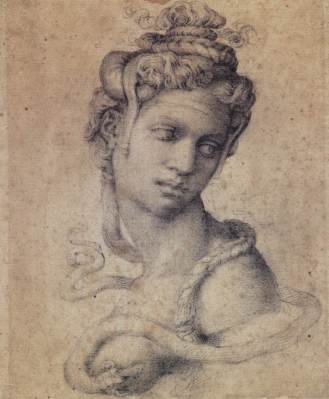
Michelangelo: Cleopatra
Jean-Louis Harouel: Culture et contre-cultures
Presses Universitaires de France 2002 (1992) Amazon.fr Wikipédia
Présentation de l’éditeur:
 Renouer avec la tradition quasi perdue de la culture personnelle, de la cultura animi, est sans doute la plus extraordinaire des aventures individuelles qui puissent être tentées à notre époque. En tout cas, c’est la plus authentique démarche de liberté qui puisse se concevoir. La seule manière d’échapper au despotisme feutré mais réel de l’opinion, à la “pression immense de l’esprit de tous sur l’intelligence de chacun” qui caractérise au plus haut point nos sociétés.
Christine Sourgins: Les mirages de l’art contemporain
La Table Ronde 2005 Amazon.fr
Présentation de l’éditeur:
 L’Art dit “contemporain”, enfant involontaire de Marcel Duchamp, est né au détour des années 60, détrônant l’Art moderne à coups de surenchère progressiste, provocatrice, libertaire. Il n’a pas tardé à se révéler liberticide, vide et officiel. Car, depuis ses débuts, il n’aura consisté qu’en stratégies, manipulations et mirages. C’est le secret de ce nihilisme que dévoile ici, avec érudition et ironie, Christine Sourgins. A tous ceux qui sont perdus dans les dédales de ce labyrinthe, elle offre enfin un fil d’Ariane, en montrant de manière implacable comment une telle entreprise, trop vite qualifiée de farce, menace ceux qui s’en moquent tout autant que ceux qui s’en enchantent. Car l’Art contemporain, qu’il se veuille critique, ludique ou didactique, relève toujours de l’instrumentalisation, de la subversion, et du radicalisme. Quels que soient les prétextes esthétiques, politiques ou moraux qu’il se donne, il attaque en fait l’humanité même de l’homme.
Giovanni Lorenzo Bernini: Apollo e Dafne

Augustinus och den personliga enheten
Augustinus’ mest kända försök att sammankoppla personbegreppet och den inre verkligheten finner vi i hans utläggning av treenighetsläran. Det är ett märkligt försök. I linje med sin hela åskådnings orientering mot interioriteten söker han pejla treenighetens mysterium genom olika analogier med den samtidiga enheten och mångfalden i själen och dess aktivitet.
Denna Augustinus’ trinitetsfilosofi har ofta ansetts ytterst betydelsefull, ja central för senare teism och personlighetsfilosofi. Exemplifierande med “treenigheterna” mens-notitia-amor och memoria-intelligentia-voluntas, infogar Taylor denna filosofi i sin helhetsbild av Augustinus: Gud förstås genom jämförelse med själens inre liv. [Sources of the Self (1989), 136 f.] Drews, med sin kännedom om vad som varit av vikt för senare teism, ger vad jag tror måste vara en av de bättre sammanfattningarna:
“Augustin sucht dies Verhältnis [eine an sich unpersönliche Gottheit (Wesenheit), die sich in drei verschiedenen Weisen, d. h. im Vater, Sohn und heiligen Geist personifiziert] klar zu machen und zugleich einen Anknüpfungspunkt für die Erkenntnis der göttlichen Trinität im menschlichen Geiste nachzuweisen, indem er hierbei von dem Gedanken ausgeht, derselbe müsse als ein Ebenbild des göttlichen Geistes die einzelnen Bestandteile des letzteren gleich einem Spiegel in sich reflektieren. Das Selbstbewusstsein kommt nämlich nach ihm dadurch zustande, dass der menschliche Geist ein ihm völlig gleiches Bild (notitia sui) oder ein Wissen von sich erzeugt, und zwar auf Grund einer ursprünglichen Erkenntnis, die nur bis dahin latent oder gleich einer Erinnerung (memoria) in im geschlummert. Der selbstbewusste Geist ist also wesentlich Erinnerung seiner selbst, indem er durch die eigene memoria gleichsam zur Geburt jenes Bildes befruchtet wird; die memoria verhält sich daher zur notitia wie der Vater zum Sohn. Er will oder liebt aber zugleich auch sich selbst, und eben diese Liebe verbindet ihn selbst als Subjekt mit dem von ihm erzeugten Bilde seiner selbst als Objekt, oder mit anderen Worten, sein Wille oder seine Liebe (amor) verhält sich zu seiner memoria und notitia ganz ebenso, wie sich in der göttlichen Trinität der Geist zum Vater und zum Sohne verhält, und alle drei bilden doch nur ein einziges unteilbares Wesen”. [Die deutsche Spekulation seit Kant mit besonderer Rücksicht auf das Wesen des Absoluten und die Persönlichkeit Gottes (2:a uppl. 1895), 28.]
Här återfinns många framtidsdigra temata. Men såvitt jag kan se ligger den verkliga betydelsen inte i att Augustinus genom jämförelsen med själens inre liv förmår förklara Gudpersonernas treenighet, utan tvärtom i att han uppvisar Guds personliga enhet.
Augustinus gör subtila distinktioner rörande själens “delar” eller aspekter, deras inbördes sammanhang och deras aktivitet, deras enhet i mångfald. Han vägrar att principiellt åtskilja själens fakulteter. Men om han med detta bidrar till att förklara det subjektiva självmedvetandet, verkar det lämpa sig mindre som beskrivning av Gudpersonerna och deras inbördes åtskillnad och förhållande. Om Augustinus lyckas närma sig sitt eget själv och Guds själv som enhetliga om än outgrundliga personer, så är det svårare att se att han förklarar den inomgudiga treenigheten i personliga termer.
Augustinus styrka som psykolog tycks delvis framstå som hans svaghet som trinitolog. Den djupaste innebörden av hans treenighetsfilosofi förefaller vara att den i motsats till kappadokiernas, som förklarade Guds enhet som blott opersonlig essens, förklarar den som personligt vara. Det som benämndes person, kappadokiernas individuellt existerande hypostaser, inbördes restlöst uppdelande det Gudvarat, blir för Augustinus snarast opersonliga delar, i analogi med själens oskiljaktiga fakulteter, inom Gudvarats helhet och enhet. Betydelsen av hans treenighetslära tycks därför ligga i att denna helhet och enhet, i jämförelsen med själen, i sig förstås som personlig.
Det ännu outvecklade personbegreppet förklarar att Augustinus i sina analogier med själen jämför Gudpersonerna med det som är opersonligt, med blott själens innehåll, delar, fakulteter eller aktiviteter. Men samtidigt tycks han förstå eller ana att ordet person måste ha en annan och djupare innebörd än den i treenighetsläran vanliga. Augustinus utgår i sin analogi från enhetens och mångfaldens förhållande och vill, med erfarenhet av det sätt på vilket treenighetsläran sökt förstå mångfalden, prioritera enheten. Men trots att också den egna personen är outgrundlig, som minnets djup, visar redan analogierna med själen, den egna inifrån upplevda personen, att denna enhet inte gärna kan vara blott den allmänna, opersonliga essensens. I det inre ljuset upplever Augustinus också direkt och konkret arten av sitt förhållande till Gud. Det är inte det opersonliga framför det personliga han vill nå fram till eller pejla, utan det enhetligt personliga framför det svårbegripligt trepersonliga som samtidigt ska vara en enhet.
Augustinus jämför Gudpersonerna med det opersonliga själsinnehållet. Men i själen finner han också en enhet som han inte finner i Gudpersonernas trehet. En motsvarande enhet, “das einzige, unteilbare Wesen”, måste emellertid också Gud äga. När Augustinus så skall beskriva Gudsenheten gör han det inte i termer av den opersonliga essensen, utan i termer av det personliga varat. I själen finner han en personlig enhet, om än outgrundlig, som innefattar opersonliga delar, och på grund av denna upplevelses inre karaktär, det i det inre ljuset uppenbarade beroendet och den oupplösliga enheten-i-åtskillnad, finner han detsamma i Gudomen. Augustinus finner alltså i Gudomen en enhet som är personlig, och eventuellt med en trehet som innehåll, som är något annat, något som teologerna kommit att på oklart sätt benämna personer. Utifrån jämförelsen med själserfarenheten, det inre ljuset och insikten att person måste beteckna något mer än relation, förstår Augustinus i sak istället enheten som person.
Hadot förklarar: “Pour lui, la personne se situe dans l’ordre de l’unité substantielle des Trois, et il ne voit pas pourquoi on dit trois personnes divines au lieu d’une seule personne.” [‘De Tertullien à Boèce. Le développement de la notion de personne dans les controverses théologiques’, i I. Meyerson, utg., Problèmes de la personne (1973).] Och han citerar ur en fransk översättning av De trinitate: “Personne est un terme absolu, non un terme relatif au Fils ou au Saint-Esprit, comme sont des termes absolus, Dieu, grand, bon, juste, et tout autre qualificatif de ce genre…Pour Dieu, c’est donc la même chose d’être et d’être une personne”; “Pourquoi donc n’appelons-nous pas les trois une seule personne aussi bien qu’une seule essence et un seul Dieu; pourquoi trois personnes, alors que nous ne parlons de trois Dieux ni de trois essences?” [Ibid., 132 (cit. ur De trinitate VII, 6, 11). Trots att Hadot anför dessa ställen uppmärksammar han här inte explicit vad som framstår som svårförenligheten av Augustinus’ ståndpunkt och den kappadokiska förståelsen av treenigheten.]
Genom den inre erfarenheten av själen förstår Augustinus karaktären av den enhet, som också måste tillkomma Gud. I beaktande av ordets alltfort vaga betydelse har han ingen anledning att benämna denna enhet personlig, vare sig i själen eller i Gud. Men i det han samtidigt förstår att ordet har en absolut betydelse, att det måste uttrycka något annat än relation, finns likafullt en principiell anledning att med ordet person benämna enheten och inte de relativa “delarna”. I Augustinus’ tänkande ligger här i sak latent en sammankoppling av detta “absoluta” personbegrepp och den inre själserfarenhet som nödvändigt måste förstå Gud som i sitt inre liv “lik” själen.
Genomförs denna sammankoppling, förlänas ordet person en betydelse som är avsevärt “modernare” än treenighetslärans. I denna mening är Augustinus’ treenighetslära ingalunda “foncièrement impersonnaliste” i enlighet med Hadots och Bulgakovs beskrivning av de tidigare kyrkofäderna, utan tvärtom markerat personalistisk och teistik. Den relation som Augustinus upplever och som står i centrum av hans filosofi är den mellan själen och Gud, inte den mellan Gudpersonerna. Guddiguddi. Själen och Gud är två enheter och helheter av vara och personlighet, som rymmer en mångfald av delar, delar av deras eget “subjektiva”, “personliga” liv.
Med sina analogier med själens delar och dess objektbild av sig själv tycks Augustinus endast lyckas förklara de tre Gudpersonerna som motsvarande Guds delar. Ty han försöker ju endast förklara det som benämndes personer med det opersonliga, beskriva Gudomens tre självständiga personer med hjälp av den mänskliga själens osjälvständiga delar. Även om självbevetenheten endast uppkommer genom den objektiverade bilden, är ju denna blott ett duplikat, och kan därmed omöjligen ens analogt utsäga någonting överhuvud om Gudpersonernas inbördes differentiering.
Den verkliga betydelsen i “speglingarna” ligger annorstädes: i det förhållandet att de uppvisar Guds personlighet på det övergripande enhetsvarats plan, d.v.s. just där Gud för den kappadokiskt tolkade treenighetsläran tvärtom var opersonlig, den blott generella, abstrakta essensen, naturen, väsendet. Augustinus upplever sin egen subjektiva enhet som själ som beroende av Gud som en motsvarande enhet. I det inre ljuset ser han, lever han, är han ett med denna sanning och verklighet, detta oupplösliga förhållande till Gud. Om själsinnehållet som förklaring av Gudpersonerna är analogier, är upplevelsen av själens personliga enhet och dess intima samband med Guds personliga enhet inte enbart en analogi utan också mer än en analogi: de är en såväl kunskapsmässig som ontologisk direktkontakt med det likhetens liknar. Ännu saknas dock ett språk för att adekvat uttrycka dessa de verkliga enheternas och helheternas karaktär och relation. För detta stod ordet person ännu inte riktigt till förfogande.
Augustinus nådde såvitt jag förstår i sin inre upplevelse tillbaka till enheten på den konkreta verklighetens plan, tillbaka till det varande som Gud hade förståtts som före introduktionen av de aristoteliska formella hjälpmedlen i treenighetslärans utformning. Han nådde tillbaka till Origenes och Justinus, men han nådde också utöver deras kvardröjande opersonliga platonismer, såsom talet om “varats grund”, grunden för τὸ ὄν, som visserligen förstods i enlighet med apofaticismen men som just därigenom var av opersonlig innebörd. Han nådde utöver detta, tillbaka till förlorade moment av bibelns Gud, som i sak var en långt mer “modern” person än de otydligt differentierade som återfanns i den redan utbildade treenighetsläran. Augustinus nådde tillbaka till Exodus’ ὁ ὤν.
Suicide of a Superpower: Pat Buchanan Interview
About his new book.
Radikal reflexivitet
Vad som kan sägas genom på nytt sätt varierad egen inre erfarenhet manifestera sig hos Augustinus är väl aspekter av självmedvetandets faktum och insikter. På annat, icke självbiografiskt uttryckt sätt finns denna förståelse också hos filosoferna. Redan Platons lära om återerinringen av själens glömda kunskap och idéernas transcendenta värld är också inreorienterad mot självbevetenhet. I apokryfen Alkibiades I, som handboksmässigt sammanfattar de typiska platonska lärorna om själen som vår verkliga identitet, endast tillfälligt användande kroppen som instrument, förklaras, som innebörden i Sokrates’ maning till självkännedom, att denna innebär kännedom om själen, och att själen kan “se” sig själv – men, intressant nog, endast genom reflektion i en annan själ eller genom kontemplation av Gud. [A. E. Taylor, Plato: The Man and his Work (1926 (1978)), 525 f.]
I Nichomachiska etiken talar Aristoteles om människans reflektiva varvaro om sina egna förnimmelser. Redan för Platon var “människan” eller den själ som dvaldes i den mänskliga livsformen under den tid den gjorde detta i hög grad bunden av naturens och kosmos’ rationella ordning. Som vi i ett tidigare inlägg sett vill Charles Taylor hävda att dess kunskapsprocess är orienterad mot idéerna via det yttre kosmos’ rationellt-harmoniska totalitet. Det måste väl sägas vara överdrivet; hos den i så hög grad i dialogerna närvarande Sokratesgestaltens interioritetseorienterade återerinring finner vi en motvikt till denna uppfattning. Men den kosmiska orienteringen förstärks i viss mån hos Aristoteles såtillvida som han icke godtager själen i Platons mening. För Aristoteles var ju den individuella människan på ett annat sätt blott människa, och självkännedom bestod därför huvudsakligen i observation, under den moraliska karaktärsutvecklingens ledstjärna, av det egna handlandet. Endast undantagsvis kunde den mest avancerade filosofen genom den givna partiella delaktighet i det högre förnuftet höja sig till det självmedvetande som annars endast den orörde röraren kunde äga – den orörde röraren var ju självtänkande tanke.
Sådan självtänkande tanke var ju också i hög grad Plotinos’ andra hypostas, nous, som därmed kunde förstås som självbeveten i teistisk anda. Men hos Plotinos rymde denna hypostas ju en mångfald intelligenser och förnuftsvarelser, som var och en subjektivt reflekterade helheten. Plotinos förklarar uttryckligen hur människan åtminstone potentiellt har del i detta högsta förnuft, som motsvarar hennes själs natur. Hos Plotinos hade den aristoteliska intelligensen i individualiserad form ingått en förening med den platonska själen. Och i denna förening återfanns väl i fröform en del av den moderna filosofiska förståelsen av självmedvetandet och subjektiviteten.
Hos de flesta av dessa tänkare var emellertid detta självmedvetande avant la lettre, om än i varierande grad, ett exceptionellt och åtminstone huvudsakligen förnuftsmässigt tillstånd. Medel- och i synnerhet nyplatonismen går förvisso långt utöver rationalismen och gör just detta till en central läromässig punkt. Vad vi finner hos Augustinus är alltså i stället en kristen variation, med en nytt självbiografiskt vittnesbörd om den inifrån upplevda självbevetenheten, om minnets, känslans och viljans verkligheter, icke blott det teoretiskt och metafysiskt förklarade, eller de rena andliga övningarnas disciplin. Kunskapen är i själva verket, som vi redan berört, för Augustinus avhängig själva denna det individuella medvetandets subjektivitet. Taylors analys av detta i termer av radikal reflexivitet är värd att med viss utförlighet citeras, trots hans förbiseende av Plotinos och andra sena platonisters likartade bidrag som Augustinus övertog:
“Augustine shifts the focus from the field of objects known to the activity of knowing; God is to be found here. This begins to account for his use of the language of inwardness. For in contrast to the domain of objects, which is public and common, the activity of knowing is particularized; each of us is engaged in ours. To look towards this activity is to look to the self, to take up a reflexive stance…We can…become aware of our awareness, try to experience our experiencing, focus on the way the world is for us. This is what I call taking a stance of radical reflexivity or adopting the first-person standpoint…Radical reflexivity brings to the fore a kind of presence to oneself which is inseparable from one’s being the agent of experience, something to which access by its very nature is asymmetrical: there is a crucial difference between the way I experience my activity, thought, and feeling, and the way that you or anyone else does…The inner light is the one which shines in our presence to ourselves…Augustine makes the step to inwardness…because it is a step towards God…Augustine’s proof of God is a proof from the first-person experience of knowing and reasoning…By going inward, I am drawn upward…his concern was to show that God is to be found…at the very foundations of the person…in the intimacy of self-presence…Augustine, by taking the Platonic notion of memory and cutting it from its roots in the theory of prenatal experience…developed the basis for what later became the doctrine of innate ideas. Deep within us is an implicit understanding, which we have to think hard to bring to explicit and conscious formulation. This is our ‘memoria’. And it is here that our implicit grasp of what we are resides, which guides us as we move from our original self-ignorance and grievous self-misdescription to true self-knowledge…at the basis of this memory itself…constituting this implicit understanding, is the Master within, the source of the light which lights every man coming into the world, God. And so at the end of its search for itself, if it goes to the very end, the soul finds God. The experience of being illumined from another source, of receiving the standards of our reason from beyond ourselves, which the proof of God’s existence already brought to light, is seen to be very much an experience of inwardness. That is, it is in this paradigmatically first-person activity, where I strive to make myself more fully present to myself, to realize to the full the potential which resides in the fact that knower and known are one, that I come most tellingly and convincingly to the awareness that God stands above me…We grasp the intelligible not just because our soul’s eye is directed to it but primarily because we are directed by the Master within.” [Sources of the Self (1989), 130-6.]
I denna radikala reflexivitet finns utan tvekan latent en stor del av det väsentliga i den moderna filosofin, om än i ett annat andligt sammanhang. Vi står delvis redan inför en ny typ av idealism, och i sak i någon mån också en ny typ av personalism. Inom den begränsade ramen av den kristna dogmatik, som av utomfilosofiska, kyrkliga skäl utestängde åskådningsmässiga horisonter som ännu de alexandrinska fäderna kunnat kvarhålla, lyckas Augustinus i alla fall på eget sätt artikulera andra karaktäristiska horisonter i den sena platonismen.
Men Augustinus förmår ännu inte själv på något mer bestämt sätt koppla de nya insikterna till termen person och därmed i större utsträckning begreppsligt-filosofiskt fixera detsamma, trots att han med dessa insikter på ständigt nya dramatiska sätt kretsar kring det. Det nya ordet är ännu svårhanterligt, och det egna inre livet, en central del av den verklighet som med tiden skulle komma att betecknas med just som personlig, är som vi sett för honom lika svårgripbart. Men utan att sammankoppla erfarenheten med termen utforskar Augustinus detta inre liv på ett sätt som skulle bli betydelsefullt för begreppets senare förståelse. Vi närmar oss därmed en av de avgörande förändringarna i personbegreppets betydelseutveckling och förändring, från yttre roll till inre kärna, som vi såg Trendelenburg beskriva i sin uppsats om ordet persons historia.
 Olle Bengtsson