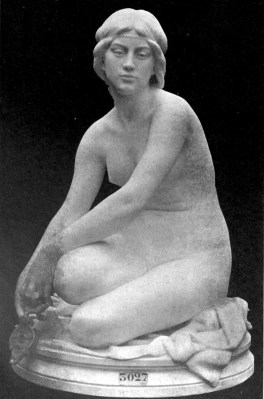
Louis-Émile Decorchemont: Psyché
Selected Essays 1975-2012
Arktos, 2012 Amazon.co.uk
Back Cover:
 War and Democracy presents a selection of essays and reviews by Paul Gottfried written from 1975 to the present. They cover a variety of topics, both historical and contemporary, ranging from Oswald Spengler and the Frankfurt School to the destruction of classical liberalism, the dumbing down of higher education and the increasing dominance of administration in democratic governments. Most crucially, Gottfried sees Western governments as engaged in a messianic fantasy of bringing democracy to the world, an imperialist endeavor that has only brought disaster to all nations concerned, while liberties at home are being gradually curtailed.
A recurring theme is the transformation of the modern West, and how the meanings behind the ideas and concepts which helped to build our civilization have been altered to create a new type of society that bears a connection with that of our forefathers in name only. He points out that the history we are taught and the “Right” that we know today have become signifiers for a very different reality that is in many ways opposed to what they stood for previously. Gottfried remains tenacious in his defense of the original meaning and purpose behind the conservative movement, which favors organic social growth as opposed to imposition through force and an expanding bureaucracy.
“The notion that all countries must be brought – willingly or kicking and screaming – into the democratic fold is an invitation to belligerence. The notion that only democracies such as ours can be peaceful is what Edmund Burke called an ‘armed doctrine.’ … It is simply ridiculous to treat the pursuit of peace based on world democratic conversion as a peaceful enterprise. This is a barely disguised adaptation of the Communist goal of bringing about world harmony through worldwide socialist revolution.”
Paul Gottfried (b. 1941) has been one of America’s leading intellectual historians and paleoconservative thinkers for over 40 years, and is the author of many books, including the landmark Conservatism in America (2007). A critic of the neoconservative movement, he has warned against the growing lack of distinctions between the Democratic and Republican parties and the rise of the managerial state. He has been acquainted with many of the leading American political figures of recent decades, including Richard Nixon and Patrick Buchanan. He is Professor Emeritus of Humanities at Elizabethtown College and a Guggenheim recipient.
JOB’s Comment:
I will publish a separate review of this book.
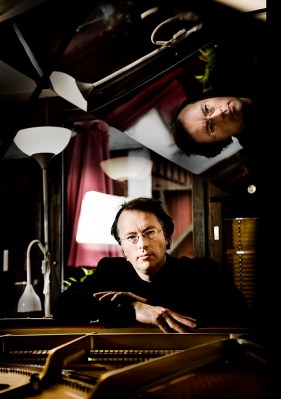
Fredrik Ullén is professor of cognitive neuroscience at Karolinska Institutet in Stockholm, whose Nobel Assembly awards the Nobel Prize in Physiology or Medicine. His research focuses on neurobiological mechanisms of expertise, learning, and creativity, with special emphasis on musical expertise and musicianship. A major current effort is to analyse various questions related to the biology of music from a neurogenetic perspective, in collaboration with the Swedish Twin Registry.
Ullén is also an internationally well-known pianist, whose repertoire includes many of the most complex and demanding works in the piano literature, such as Ligeti’s complete piano études, Reger’s Spezialstudien and Sorabji’s Études transcendantes, but who is also interested in creative programming with couplings of new and traditional literature. His solo CDs have been enthusiastically praised by internationally renowned critics and have received a number of prestigious awards. Ullén is a member of the Royal Swedish Academy of Music.
See also:
Jag har åtskilt vad som ofta kom att åtminstone uppfattas som den klassiskt inspirerade, ahistoriska typ av konservativt tänkande som i USA ofta inspirerats av den exoteriskt förstådde Strauss, från den moderna historicistiska som Ryn formulerar. Inte ens den senare förnekar som vi sett en objektiv, transcendent eller i transcendensen förankrad naturrättslig, moralisk eller värdemässig ordning på det sätt som den romantiska historicistiska konservatismen ibland anses ha gjort. En sådan är inte oförenlig med det historicistiska perspektivet, men den är i sig epistemiskt – förnufts- och erfarenhetsmässigt – oåtkomlig, och såtillvida transcendent i Kants mening. Den historiska fenomenaliteten är det enda vi, som själva uteslutande delaktiga i den, har tillgång till och det enda genom vilken vi kan uppfatta den i och genom den manifesterade moraliska ordningen.
Strauss’ ahistoriska rationalism behandlar i detta sammanhang endast den i förhållande till människan objektiva moraliska och rättsliga naturordningen, inte den i metafysisk mening transcendenta verkligheten. Ryns försvar för historicismen, för den andra huvudströmningen inom konservatismen, är emellertid ett försvar inte endast gentemot denna Strauss’ typ av rationellt grundad moralisk universalitet utan också i vissa avseenden gentemot andra sätt att i en tidlös dimension förankra den normativitet konservatismen vill hävda och upprätthålla. I USA exempelvis i den metafysiska idealismen hos en Richard Weaver eller, helt enkelt, i den teistiska kristna teologin hos exempelvis thomister, filosofer bland kristna “Evangelicals”, och enskilda katolska akademiker som Thomas Molnar eller Stephen Tonsor. [De sistnämnda inkluderas kortfattat i George Nashs översiktsverk The Conservative Intellectual Movement in America since 1945 (1976).] Eller i den strikta andliga ordningen sådan den traditionalistiska skolan och Lindbom förstår den.
I den sistnämnda skolan ser Julius Evola alltför mycket av den moderna naturrätten även i den klassiska, och förkastar hela naturrättsbegreppet. Och inte heller Lindbom talar i dess termer. Liksom de kristna teologerna, men från ett annorlunda, vidare och djupare perspektiv, befattar sig denna skola givetvis med långt mer än vad vår tids amerikanska och andra västerländska konservativa diskuterar i termer av den naturrättsliga ordningen, den moraliska ordningen eller värdeordningen. Det handlar för denna andliga traditionalism om hela tillvarons grundläggande ordningsprinciper och strukturer, från det andliga till det materiella planet.
Min förståelse är att föreställningarna om naturrätten och den moraliska eller värdemässiga ordningen för att bli fullt förståeliga och motsägelsefria egentligen kräver en metafysisk fördjupning via inte bara den klassiska platonska idealismen utan även nyplatonismen, och denna fördjupning i sin tur ytterst en sammankoppling med för den principiellt komparativt och syntetiskt orienterade traditionalismen tillgängliga begrepp som dharma och rita. Problemet med just Evolas position på detta område är emellertid att han i stället för att göra denna koppling till en föreställningsvärld som han med traditionalismen bejakar (om än med ett antal kontroversiella egna tolkningar) väljer att bara avfärda den västerländska traditionens tänkande kring den objektiva högre ordningen utifrån dess distinkt moderna omtolkning. [Paul Furlong jämför Evola med Strauss och även Voegelin (som ju på det sätt jag beskrivit på annat håll går utöver Strauss’ klassiska rationalism i sin kunskaps- och transcendensuppfattning); Social and Poltitical Thought of Julius Evola (2011), 145-8.] I detta avseende är det lättare att förhålla sig till en traditionalist som Lindbom. Men man kan här även påminna sig en C.S. Lewis’ universellt-komparativa försvar för den ordning vi under olika namn här diskuterar i sitt appendix till The Abolition of Man (1943), där han som sammanfattande term för den använder the Tao.
Det finns anledning att här som komplement till diskussionen av den klassiska, moderna och värdecentrerat historicistiska uppfattningen av denna högre ordning citera också en klassisk-idealistisk konservativ som i sin idealism går utöver Strauss’ rationalism. Den ovan nämnde Richard Weaver [Weaver behandlas med relativ utförlighet av Nash, och ett flertal separata studier har senare ägnats honom.] skriver:
“[T]he return which the idealists propose is not a voyage backward through time but a return to center, which must be conceived metaphysically or theologically. They are seeking the one which endures and not the many which change and pass, and this search can be only described as looking for the truth. They are making the ancient affirmation that there is a center of things, and they point out that every feature of modern disintegration is a flight toward periphery. It is expressible, also, as a movement from unity to individualism. In proportion as man approaches the outer rim, he becomes lost in details, and the more he is preoccupied with details, the less he can understand them. A recovery of certain viewpoints associated with the past would be a recovery of understanding as such, and this, unless we admit ourselves to be helpless in the movement of a deterministic march, is possible at any time. In brief, one does not require a particular standpoint to comprehend the timeless.” [Ideas Have Consequences (1948 (1984)), 52 f.]
Och: “…ideas which have their reference to the periphery or the individuum, to the particular in space and time, are false and stand in the way of integration. But to those who believe in transcendentals, progress is without relation to time and space.” [Ibid. 68. I sitt senare, i alltför hög grad förbisedda arbete Visions of Order sammanvägde Weaver signifikativt nog och på mycket intressant och här relevant sätt denna typ av idealism med en mer historicistisk uppfattning.]
Även åtminstone några av dessa formuleringar utsätter sig, som vi ska se, för Ryns kritik. Men det går att gå än längre och djupare i den här relevanta förståelsen och formuleringen av den klassiska idealismen. Eftersom jag skrivit utförligt om Voegelin på annat håll ska jag inte här ta upp hans förståelse av “ordningsmedvetandet” under antiken, och motsvarande gäller om Lindbom och traditionalisterna. Ryn ifrågasätter även dessa utifrån sin historicistiska position, men vi når där en punkt där räckvidden av hans distinkta kritiska analysen i termer av klassisk rationalism respektive romantik utifrån en på visst sätt syntetiserad babbittiansk och croceansk epistemologi upphör, och vi övergår till den nivå som Babbitt i princip, under benämningen meditation, till skillnad från Leander och Ryn erkänner som ej endast postulerat verklig utan även i någon mening epistemiskt accessibel i dess gående utöver den nivå som dock även för Babbitt förblir den centrala, den av etisk mediation, som är den enda även han han trots denna skillnad närmare ingår på och i övrigt uteslutande ägnar sig åt.
Ur den värdecentrerade historicismens perspektiv ter sig alla de här nämnda andra typerna av uppfattning av den objektiva ordningen som blott olika aspekter av en och samma rationalistiska ahistoricitet, en rationalism vars problematiska resultat är av samma slag som romantikens föregivet känslonådda transcendens. Även den idealistiska metafysik som trots all frambrytande naturalism var rikligt representerad i 1800-talets tänkande, och som Ryn som partiell hegelian också måste förhålla sig till i dess andra aspekter, tillhör i vissa allmänna avseenden samma klassiska filosofiska tradition, ståndpunkt och metod, även om den också ofta är en distinkt modern variation av dessa. Den värdecentrerade historicismen vill erbjuda ett alternativ till alla dessa traditionella objektivistiska och transcendentalistiska ståndpunkter, ett alternativ som istället uppställer den gradvis historiskt utvecklade fenomenella värdemanifestationen som – rätt behandlad av våra fakulteter och kategorier som kunskapssubjekt – tillhandahållande den högsta och objektivt giltiga moraliska normen. Givet arten av de uppenbara suprarationalistiska positionerna i de djupaste riktningarna den klassiska idealismen och ofta i dess fortlevnad som filosofisk tradition, för att inte tala om den traditionalistiska skolans komparativt integrerade, innebär detta helt enkelt, trots de viktiga delsanningar som är vad den värdecentrerade historicismen handlar om, en förlorad central dimension.
Den värdecentrerade historicismen vill förena historicism och objektivism, fasthållandet av vad som nominellt betecknas som “man’s transcendent moral purpose” [Will, Imagination and Reason, 21.] tillsammans med den blott historiska epistemologin. Vad som anses saknas hos tänkare som Strauss, Voegelin, Weaver och Lindbom är förståelsen för de modernitetens filosofiska delsanningar som inte bara är förenliga med den objektiva moraliska ordningen och den etiska dualism den implicerar, utan möjliggör en långt djupare uppfattning och realisation av den. De äger samtliga, i vid mening, värdecentreringen, men de saknar historicismen, och detta anses rentav kunna innebära att den förra i praktiken nästan blir en omöjlighet. Transcendensen affirmeras nominellt, men så snart vi hänvisar till den i sig och söker tillträde till den, ägnar vi oss enligt Ryn bara åt förödande verklighetsflykt.
Kritiken av de respektive ahistoriska ståndpunkterna rör som vi ska se också, i samband med allt det vi här diskuterat och lika centralt, det förhållandet att tänkarna av denna typ i motsats till historicismen ska vara oförmögna att filosofiskt förstå den individuella uniciteten, det partikulära, och dess verkliga förhållande till universaliteten. [Ibid. 215.] Vad jag här inledningsvis fokuserar på är emellertid bara ståndpunkten ifråga om den ensidigt intellektualistiska rationalismen och dess oförmåga att överhuvud göra rättvisa åt kunskapens verkliga processer, och oförståelsen för den klassiska idealismens högre intellektivitet. Den sokratisk-platonska traditionens intellektualism, och dess identifikation av kunskap och dygd förstådd i dess termer, var ingalunda helt entydig. Den klassiska traditionen rymmer, som Leander och Ryn själva är medvetna om, komplicerande överväganden och andra dimensioner redan hos de ursprungliga källflödena hos Platon, Aristoteles och stoikerna. [Ibid. 208 f., 218.] Men vad som här åsyftas är inte den högre esometafysiska varanivån och vår delaktighet i den.
Den värdecentrerade historicismens kritiska perspektiv är ofta berättigade, men deras grundantaganden och alternativ som helhet måste obetingat modifieras och kompletteras av just den platonska traditionen i vid mening. Ryn talar ofta om värdena som det sanna, det goda och det sköna, men att principiellt begränsa uppfattningen av dessa till den högre viljan, det moraliska samvetet, och deras uttryck och manifestationer i den historiska erfarenheten, d.v.s. på den exklusivt mänskliga nivån, är ohållbart.
Den andliga kulturen behöver förvisso en humanistisk stödstruktur, och den värdecentrerade historicismen tillhandahåller en rikt utvecklad och allsidig filosofi för en sådan, vars sanning, på den humanistiska nivån, är obestridlig. Men den är otillräcklig. Ytterst innebär den en begränsning av verklighetsuppfattningen, en slutenhet gentemot den metafysiska och andliga verklighetsdimension som på intet sätt ligger bortom människans högre uppfattningsförmåga och den fullständigt utvecklade filosofin – i synnerhet inte om denna komparativt vidgas utöver den västerländska horisonten, i linje med den traditionalistiska skolans egentligt sofiska perennialism, något som naturligt ligger i förlängningen av vad Ryn själv på sin humanistiska nivå talar om som den “högre kosmopolitismen”, som en ytterligare och högre del av denna. Därmed övervinns också lätt den religionens exoteriska literalism som historiskt alienerat större delen av den västerländska moderniteten, men som också inom de stora andliga traditionerna själva alltid redan ägt ett fullt utvecklat komplement, ja ett alternativ i form av ett reellt tänkande som p.g.a. denna exoterism kommit att framstå som en esoterism och med den förras provinsiella dominans alltsedan antiken missförståtts.
I västerlandet har det exoteristiska trycket varit särskilt starkt, beroende på dess specifika religions karaktär. För Guénon framstod rentav det specifika fenomenet religion som ett specifikt västerländskt fenomen, representerande endast en underordnad del av vad han uppfattade som “traditionens” rena metafysik, la métaphysique pure. Det förefaller mig något överdrivet: exoterisk-literalistisk religion finns också i öst i en utsträckning Guénon kanske inte gör full rättvisa. Men till skillnad från i väst är det där denna som är endast en underordnad, närmast sekterisk del av den helhet som är, eller varit, vad Guénon förstår som en traditionell kultur. P.g.a. den specifika exoterismens exceptionella tryck har den västerländska intellektivitetens sofi från ett tidigt stadium deformerats och inte kunnat utvecklas till den dominerande, normativa intellektuella tradition som dess sakliga motsvarighet varit i öst.
Voegelin är en djupgående analytiker av aspekter av vad som i verkligheten är denna deformation och dess historiska utveckling och konsekvenser, trots att denna innebörd av hans verk döljs av hans fokus på västerlandets mot de “kompakta” österländska civilisationerna kontrasterande särkonstitution genom distinkta transcendenserfarenheter i såväl den grekiska filosofin som den abrahamitiska religionen och deras effekt i form av en ny historisk “differentiering”.
Ändå insisterade han också på värdet av de österländska traditionerna, och påpekade som en av den samtida modernitetens fördelar dessa traditioners nya tillgänglighet i väst, inte minst i form av utgåvor av dess klassiska litteratur. Generellt kanske rentav kan sägas att den västerländska moderniteten själv under de senaste århundradena i mycket redan har korrigerat den felaktiga reaktionen mot den exoterisk-religiösa literalismen i from av ateism och materialism genom en process av återtillägnelse av den klassiska idealismen som är parallellt med och inspirerad och understödd av tillägnelsen av de österländska tankeriktningarna, till den grad att för många, i en rörelse mitt i moderniteten mot en ny, hela mänskligheten omfattande ej blott vetenskaplig och teknologisk världskultur, själva distinktionen mellan öst och väst på det åskådningsmässiga planet i flera avseenden börjat bli obsolet.
Den värdecentrerade historicismen är, i linje med Babbitts starka intresse för det österländska tänkandet, en utmärkt filosofisk grundläggning av den humanistiska nivån av en sådan världskulturs nödvändiga kvalificerade universalitet, vad Ryn kallar en “högre kosmopolitism”. Men humanismen måste obetingat kompletteras och därvid på visst sätt modifieras i ljuset av den idealistiska förståelse jag här antytt och dess ytterligare vidareutveckling medels andra traditioners resurser. En komplettering och modifikation som alltså måste bestå i ett kvarhållande och förnyande av allmänna moment av den klassiska idealismen och andliga traditionalismen, och ske i den riktning av den klassiska idealismens egen redan föreliggande, historiskt förverkligade fördjupning som jag här antytt.
Oneworld, 1998 (1992) Amazon.co.uk
Back Cover:
 Is there such a thing as the human soul?
Are we tiny cogs in a vast cosmos, or do we have special value?
In the modern scientific age, questions such as these become more and more difficult to answer. In this book, Keith Ward presents a balanced, strongly argued and convincing case for the existence of the human soul in the context of scientific discovery.
Drawing on a range of disciplines and writers, from Nietzsche, through Darwin, Freud and Marx, to contemporary philosophers and scientists, Ward’s study of the key protagonists in the debate on the soul is authoritative and comprehensive. Covering such thorny issues as individual freedom, morality, the role of religion and the limits of scientific investigation, In Defence of the Soul builds rational bridges between apparent contradictions to shed light on an area we would all like to understand more fully.
JOB’s Comment:
Many of my comments on Ward’s arguments against materialism as set forth in his book The God Conclusion apply to this defence of the soul too. I am inclined to question in important respects, or rather in important areas, the claim accepted by Ward that science is a worldview, and to put forward a more basic argument against the position that the cosmos could be of such a kind as has cogs and in which we are among those cogs. Both positions seem to me to be chimeras, of a closely related kind. But Ward’s argument is important in the major part of the debate on the issues of spirit and matter etc. in which it is accepted, as basic assumptions, that science is a worldview and that it is possible that the universe is a coggy one. And much of it can be retained with only minor conceptual modifications and adjustments in a defence of the soul from a position that does not accept these assumptions.
When and where? Not of decisive importance perhaps.
There are embarrassingly few posts in my category Psychiatry. When I started the blog, I planned to write much more on this subject. I even included on the original About page the following separate section under the heading Psychiatry.
–
Another area of interest – although hardly specialization – has been psychiatry and psychotherapy. Here I have sought to implement certain concrete applications of the restored humanities and humanistic philosophy, as supported by the spiritual teachings. I have provided dialogical advice to people with psychiatric disorders and their relatives, in and out of some organizations for such people, on the basis of my own familiarity with ”abnormal” psychological states gained in connection with some of my early spiritual and mystical experiences.
Having found my own experiences of this kind only occasionally painful and primarily interesting, I have advised against the use of certain antipsychotic drugs or neuroleptics, which I find to be often more destructive than the disorders themselves. As is today well known, such drugs can cause persistent adverse effects, like tardive dyskinesia.
In the last few decades, through the impact of anti-psychiatry psychiatrists like R. D. Laing, Thomas Szasz, and David Cooper, but also through figures like Michel Foucault, Félix Guattari and successful novelists and influential autobiographers, mental illness has become increasingly fashionable, something that confers aesthetic and intellectual status – to the point that some who speak of their illness can now be suspected of trying to exploit it for the purpose of making themselves interesting in the eyes of others.
I see this narcissistic phenomenon as yet another expression of the legacy of problematic forms of romanticism in one side of modernism, and insist on the need for rejecting the implied relativism and defending the existence sound criteria of mental health and disease. I also think the whole ideological and cultural climate of the contemporary West is to a considerable extent such as to contribute to the increase of mental disease and, above all, to make it much harder to cure, since, not least as manifested in the world of psychotherapy, it fails to teach patients how to deal properly with their own suffering and hence bring about their recovery.
But I have come to agree with some analyses of and to understand the problems with the philosophical errors and the ideological abuse (not just in the Soviet Union) represented by mainstream psychiatry, and this has influenced my political and cultural analysis of the contemporary society of which psychiatry is a part. The standards I defend are therefore not at all those of the other, rationalist and scientist side of modernity.
There is real, pathological mental illness; and there is good psychiatry alongside the bad. But I have tried to point to the potential value and deeper meaning of many psychiatric disorders. I have suggested that they can have the function of breaking down lower orders of the mind and the ego, and establishing higher ones of the spirit.
Adequately handled, and refined in accordance with a proper moral and humanistic understanding, experiences in abnormal states can be further developed in the direction of spiritual enlightenment and humane wisdom. I have recommended that they be understood in the perspective of wider historical, cultural, philosophical, and spiritual references than the ones currently available in psychiatric diagnosis and treatment and in psychological therapy and councelling.
–
Somehow I have not been able to mobilize or maintain sufficient interest in the matter to write about it to the extent I hoped to or indeed to write about it at all: the posts in the Psychiatry category do not contain my own writing; the only writing I have produced is this section from the old About page (I have also added some posts with books on psychiatry, and one on tardive dyskinesia, in the References category).
This is one of the several reasons why I have now removed that About page, which contained seprate sections on Spirituality, Humanities, Politics, Psychiatry, and Arts. It is now in the process of being completetly rewritten. On the new About page, the information about me and my work will be presented in three sections only, corresponding to the main themes indicated in the name of the blog: Teaching Spirituality, Restoring the Arts and Humanities, and Saving Europe. New paragraphs on psychiatry will be included under both Teaching Spirituality and Restoring the Arts and Humanities, but they will not be found in a separate section.
The category Psychiatry will be retained, however, since I do have quite a lot more to say about it. I think I am able to identify at least two explanations for the limited number of posts on psychiatry. The first is that it is not really psychiatry as such that I am interested in, but rather the kind of “’abnormal’ states gained in connection with some of my early spiritual and mystical experiences” that I mentioned. While I accept that some of them are part of what is clinically diagnosed in terms of psychiatric illness, I still fail to identify many of the instances I have come across, not only in myself but also in others, as pathological. Indeed, the spiritual experiences that produced these states are still basically what my whole life is about.
The definition of schizophrenia, for instance, always seemed fantastically inadequate to me in its shocking obscurity and amorphousness; much of it was in fact strictly incomprehensible. It had the appearance of an ad hoc, omnium gatherum diagnosis adopted for purely pragmatic reasons. I am not denying that some of those pragmatic reasons could be legitimate, but this has nothing to do with the proper theoretical understanding of the matter. The “abnormal” states in question are indeed to some extent schizophrenia as currently defined. What I suggest is simply that this definition should be revised and that at least some of them are better understood in other terms, namely in terms of spirituality and some forms of idealistic and humanistic philosophy.
What is interesting with psychiatry in itself is, from my perspective, primarily its function as part of contemporary society with its dominant ideologies. As soon as I entered upon the spiritual path long ago, it became evident to me that this society and these ideologies were problematic in central and decisive respects; and as I experienced states that were most definitely statistically “abnormal” in this context and hence came in contact with psychiatry, I soon also perceived clearly that not least the function of psychiatry was questionable. The response in the given social context to my spiritual and mystical experiences and the states they engendered caused me to seek to articulate the alternative worldview in terms of which they became comprehensible and “normal”, and which had so overwhelmingly revealed its truth to me, or at least the truth of some of its main aspects that I could then intellectually grasp.
The other reason for the paucity fo posts, the other thing that is holding me back, is the phenomenon I described of mental illness having become “increasingly fashionable, trendy, something that confers aesthetic and intellectual status – to the point that some who speak of their illness can now be suspected of trying to exploit it for the purpose of making themselves interesting in the eyes of others”. I feel this is something I could be suspected of if I started to write at length about my own distant experiences of abnormal states in connection with spiritual and mystical practices more than thirty years ago, even if I do not and cannot account for them in terms of psychiatry.
It is not that I would prefer the opposite historical situation where people were afraid or ashamed of speaking about psychiatric illness or states defined in such terms and their consequences in their lives. But I simply cannot find the current reversal of that situation sound either. It is “yet another expression of the legacy of romanticism in one side of modernism”; “the need for rejecting the implied relativism and defending the existence sound criteria of mental health and disease” must be insisted on.
The phenomena are what they are, viewed in the right perspective they are interesting, and they are increasingly important; they should be analysed and understood in a sober, objective, and philosophical manner. More generally, there is a frightening increase of psychiatric illness and psychiatric diagnoses in today’s society. While the diagnoses often remain highly spurious – I spoke here of “the philosophical errors and the ideological abuse (not just in the Soviet Union) represented by mainstream psychiatry”, and rejected the standards of health and illness standards “of the other, rationalist and scientist side of modernity” which contemporary psychiatry represents – much of the illness is still real indeed. The reasons for this are quite clear; they are all of course found in the continuous, broader social, cultural, moral, spiritual disintegration and degeneration of Western society: “the whole ideological and cultural climate of the contemporary West is to a considerable extent such as to contribute to the generation of mental disease”. The increase must be humanely dealt with; but it must be dealt with in order to be stopped. Real psychiatric illness should not be normalized and glorified.
Writing about the “abnormal” states of others that I have come in contact with over the years would allow me to avoid the mentioned pitfall of contemporary literary culture. It has been suggested to me several times that because of my own experience of psychiatry, I should write and speak more about these issues in order to help others, and in fact it might not be wholly unrealistic that, on the basis of my own experience, I could do at least some good in this field. Not least the “persistent adverse effects” of “neuroleptics and certain other antipsychotic drugs”, side effects that, early on, I experienced very clearly and complained about, and that I still suffer from, but which have only more recently been adequately understood by neuropsychopharmacologists and others, are something I strongly feel more attention must be drawn to, so that the use of those drugs can be minimized whenever possible. Although there is still much that is unclear to me here, and there may indeed also be, as psychiatrists insist, other factors involved, these precise effects are in fact in many cases the only things I have been able to identify beyond any possibility of doubt as instances of real pathology. I feel psychiatriy in general, and such problematic aspects of it in particular, should be a much more important area of contemporary politics, and would like to help contribute to establishing it as such.
The purpose of the Psychiatry category and the passage on the About page was indeed to focus on psychiatry even though only by means of its problematization, precisely by relating the “abnormal” states to it, by discussing how they are regarded and dealt with by psychiatry. In what I still hope to be able to write on this subject, I will try to keep to an analysis in phenomenological, historical, and social terms distinct from autobiography. Finally, the positive aspect of it all should also be kept in mind – what I called “the potential value and deeper meaning of many psychiatric disorders”, or what is perceived as such. Properly understood and dealt with, as they can be when adequate resources of spiritual, philosophical, moral, humanistic knowledge and experience, of a certain kind of increasingly rare wisdom are available, they can, as I suggested, even “have the effect of breaking down lower orders of the mind and the ego, and establishing higher ones of the spirit”.


