
Silvio Poma: Lago di Lecco

Jag är upprörd över det här. Det tycks vara i samband med att det nya statliga företaget Swedavia tog över de svenska flygplatserna från Luftfartsverket, eller det senare ombildades till det förra, som Arlanda – och, visar det sig, inte bara Arlanda, utan även alla andra svenska flygplatser – officiellt blev “airports” i stället för flygplatser i svenskspråkiga sammanhang.
Arlanda och alla andra flygplatser omnämns konsekvent som “airports” på Swedavias svenskspråkiga sidor. Även i Swedavias tidskrift Nya Arlanda omtalas Arlanda från början som “airport”, även om det i de tidiga numren finns ett och annat återfall till “flygplats” inne i artiklarna.
Därmed måste misstanken riktas mot Swedavias första vd och Arlanda-chef Kerstin Lindberg Göransson, numera vd för Akademiska Hus. Fortfarande ifrågasätter såvitt jag kan se ingen de nya namnen och det nya språkbruket. Jag tror därför att man måste gå vidare och individualisera den här kritiken, peka på de personer som är direkt ansvariga för och själva har initierat pinsamheten.
Om Lindberg Göransson med all sannolikhet personligen fattade eller åtminstone var centralt involverad i beslutet att Arlanda m.fl. flygplatser officiellt på svenska ska kallas “airports”, har hennes efterträdare, nuvarande vdn Torborg Chetkovich, synbarligen inte gjort något för att upphäva det. Styrelseordföranden Ingemar Skogö måste också uppmärksammas.
Ställ dessa personer till svars. Eventuell kompetens på andra områden kan naturligtvis inte uppväga kulturell och social analfabetism på så centrala områden som detta.
För övrigt är alla svenska företagsnamn som börjar på “Swe” och “Swed” töntiga, av samma skäl som Arlanda Airport, och Ronneby Airport, är töntiga som svenska namn.
Catoméris is one of my yoga teachers. I practiced with him for at least a year in the early 90s.
He says a few strange things here. But so do all yoga teachers.
The Traditional Teachings of Sri Shyam Sundar Goswami
Inner Traditions, 2012 Amazon.com
From the Back Cover:
 Foundations of Yoga presents the full and rigorous yogic training of traditional Hatha Yoga as taught by renowned Indian Yoga master the late Sri Shyam Sundar Goswami. Written by his disciple and spiritual heir, the book emphasizes metaphysical, spiritual, and psychological cultivation in addition to physical practice. It offers Yoga practitioners and teachers a way to enrich and advance their physical Yoga practice through a deeper understanding of physiology, psychology, philosophy, and spirituality centered on Vedic and Tantric principles.
Woven together with stories from Sri Shyam Sundar Goswami’s life, the book explains pratyahara (control of the senses), charana (yogic bodybuilding), mental concentration exercises, and the energy-focusing and purifying muscular-control movements known as mudras, including the metabolism-boosting mahamudra and advanced pelvic mudras and sexual practices to transcend the ego. The book explores methods of internal purification such as dhauti (cleansing of the stomach with air or water), vasti (intestinal cleansing), neti (nasal cleansing), trataka (visual concentration exercises), and kapalabhati (diaphragmatic hyperventilation) and shows how these purifications are necessary before beginning the advanced breathing practices of pranayama to eradicate deep internal impurities and strengthen the immune system. Exploring the philosophy of Yoga, the book shares meditative exercises for introspection, expanding consciousness, and seeking your true divine nature.
As the teachings and life of Sri S. S. Goswami show, by strengthening the body, vital force, and mind, one can master all three for a long, healthy, harmonious life.
Reviews:
“A profound and lucid study of yoga in the deeper sense of the term, covering both practice and philosophy. Foundations of Yoga is an important book for those who are interested in how Hatha Yoga relates to the greater transformation of body, mind, and heart.” David Frawley, author of Yoga & Ayurveda and founder of the American Institute for Vedic Studies
About the Author:
Basile P. Catoméris is the disciple and spiritual heir of Sri Shyam Sundar Goswami. Devoting his life to the study and practice of yogic traditions, he studied under Sri S. S. Goswami from 1956 until Goswami’s death in 1978, whereupon he took over Sri S. S. Goswami’s teaching duties at the Goswami Yoga Institute in Sweden. In December 1983, he was granted yogic final initiation (brahma mantra diksha) by Ma Santi Dei, Sri Goswami’s “spiritual mother.” He lives in southern France.

The Maharaja is wearing the mantle of the Order of the Star of India, of which he was Knight Grand Commander (GCSI).
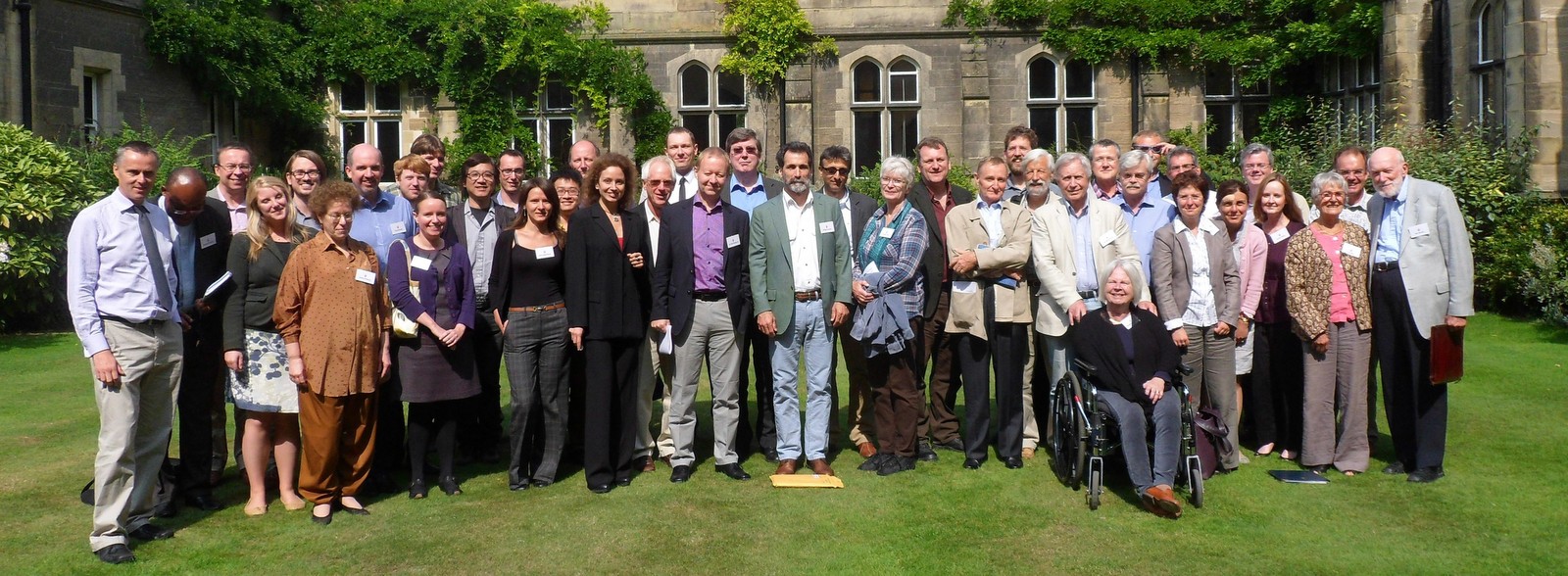
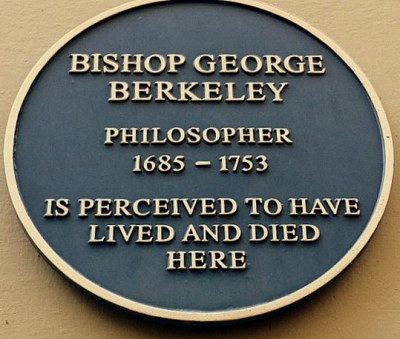
Another conference, in Harris Manchester College, Oxford, 27th-30th August, organized by William Mander and Stamatoula Panagakou. Many of the leading figures in the revival and renewal of British Idealism in the last few decades attended, as well as philosophers in younger generations who build on their work.
Click to enlarge

Click to enlarge
From Birth to Rebirth
The Notebooks of Paul Brunton
Volume Six
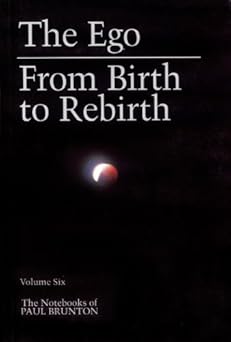
Larson, 1987
Back Cover:
The ego is just as powerful whether it is condoned or condemned, for in both cases it keeps the man engaged ona self-centered quest.
We must understand that heaven and hell are deep inside the heart and not places to which we go…the true heart of man is deathless.
– Paul Brunton
Part 1, The Ego, is a unique and uprecedented contribution to the literature of self-realization. It exposes, at an existential rather than merely psychological level, the most fundamental problem obstructing the life of unfailing self-integrity.
Part 2, From Birth to Rebirth, shows the role of death in the ongoing cycle of life, clarifies beliefs about reincarnation, and explores the creative relationships between fate, destiny, and free will.
God and the Western Philosophical Tradition
Darton, Longman and Todd, 2009 Amazon.co.uk
Back Cover:
 Discover why…
…Plato was not a world-hating totalitarian
…Aquinas’s Five Ways are not so bad after all
…Kicking stones cannot refute Bishop Berkeley
…Schopenhauer was not quite an atheist
…and other refreshing new perspectives on spiritual thinking in western philosophy
This entertaining book posits the theory that philosophy, far from being the enemy of religion, has more often than not supported a non-materialist view of the universe. Keith Ward re-examines the works of western philosophy’s greatest thinkers – from Plato to Aquinas to Kant and Hegel – and suggests that the majority accepted “the God conclusion”: that there is a supreme spiritual reality which is the cause or underlying nature of the physical universe.
Keith Ward was Professor of the History and Philosophy of Religion in the University of London, and Regius Professor of Divinity at Oxford. He is a Fellow of the British Academy, and a member of the council of the Royal Institute of Philosophy. The God Conclusion is a revised and expanded version of his 2008 Sarum Lectures and 2007-8 Gresham College Lectures.

