
Author: Jan Olof Bengtsson
Spirituality - Arts & Humanities - Europe
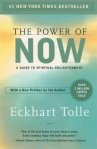
Eckhart Tolle: The Power of Now
A Guide to Spiritual Enlightenment
New World Library, 1997 Amazon.com (2004, with new preface)
Front Flap:
 To make the journey into The Power of Now we will need to leave our analytical mind and its false created self, the ego, behind. From the beginning of the first chapter we move rapidly into a significantly higher altitude where on breathes a lighter air, the air of the spiritual. Although the journey is challenging, Eckhart Tolle offers simple language and a question-and-answer format to guide us. The words themselves are the signposts.
For many of us there are new discoveries to be made along the way: we are not our mind; we can find our way out of psychological pain; authentic human power is found by surrendering to the Now. We also find out that the body is actually one of the keys to entry into a state of inner peace, as are the silence and space all around us. Indeed, access is available everywhere. These access points, or portals, can all be used to bring us into the Now, the present moment, where problems do not exist. It is here we find our joy and are able to embrace our true selves. It is here we discover that we are already complete and perfect.
Many of us will find that our biggest obstacle to this realization is our relationships, especially our intimate relationships. But again, we are in “new territory” and all is not what it had seemed before. We come to see that our relationships are yet another doorway into spiritual enlightenment if we use them wisely, meaning if we use them to become more conscious and therefore more loving human beings. The result? Real communion betwen self and others.
If we are able to be fully present and take each step in the Now, if we are able to feel the reality of such things as the “inner-body”, “surrender”, “forgiveness”, and the “Unmanifested”, we will be opening ourselves to the transforming experience of The Power of Now.
Blurbs:
“I heartily recoomend this profoundly inspiring book to all seekers today.” Lama Surya Das, author of Awakening the Buddha Within
“A reminder to be truly present in our own lives and liberated from our past and future. It can transform your thinking. The result? More joy, right now!” O: The OPRAH Magazine
“Tolle has succeeded on two fronts: synthesizing the teachings of masters such as Jesus and the Buddha into an easily accessible guide to achieveing spiritual consciousness and making a strong case that the inability of humans to free themselves from dominance by the mind and live in the present is the root cause for misery in the world…He makes enlightenment seem attainable and necessary for both individual peace and the health of the planet.” ForeWord Magazine
“Fresh, revealing, current, new inspiration. Out of the many spiritual books that cross my desk this one stands out from the flock…If you are considering getting back in touch with your soul, thsi book is a great companion.” Common Ground
“With intense and compelling clarity, Tolle’s guidance holds the promise of leading us to our own best and highest place within, to resonate with and reflect the energy of true transformation.” Spirit of Change
“This seems to be the ‘right book’ for many people at this point in time. The writing is clear as a bell; the words ring true. Truly an exceptional book that promises to make a real difference in people’s lives.” Tom Oakley, Banyen Books
Back Flap:
Eckhart Tolle is a contemproary spiritual teacher who is not aligned with any particular religion or tradition. In his writings and seminars, he conveys a simple yet profound message with the timeless and uncomplicated clarity of the ancient spiritual masters: There is a way out of suffering and into peace. Eckhart travels extensively, taking his teachings throughout the world. He lives in Vancouver, British Columbia.
JOB’s Comment:
See my posts with comments on Tolle in the Spirituality category.
Liceu, Barcelona
Uppsalaidealismen och samhällsutvecklingen, 4
Uppsalaidealismen och samhällsutvecklingen, 1
Uppsalaidealismen och samhällsutvecklingen, 2
Uppsalaidealismen och samhällsutvecklingen, 3
Biberg, till större delen Atterbom och till viss del även Grubbe representerade en modernitet som så att säga ännu inte alltid riktigt var eller ville vara medveten om sig själv som sådan. Med vissa tyska romantiker indelade de historien i den forntid som kulminerade i den klassiska grekiska och romerska kulturen, [Åtminstone Grubbe och Atterbom räknade, med romantikerna, dock som vi skall se med ett kulturens ursprung i ett orientaliskt samhälle präglad av en religiös uruppenbarelse eller ”intellektualreligion”.] och den samtid, som började med kristendomens seger; det kan ibland se ut att ha gått mycket snabbt att övervinna upplysningens mer distinkt sekulärt-moderna självförståelse, och framstegstanken fortlevde ofta endast i väsentligt förändrad form som idealismens etisk-estetiska bildningsprocess mot det metafysisk-religiösa perspektivets bakgrund.
Fastän tydligt igenkännbara moment från upplysningen och den helt nya, samtida romantiken upptagits, var det tvivelsutan så att forntidens alexandrinska teologers frågor åter i väsentlig utsträckning stod på dagordningen. Och så skulle det förbli i den svenska personlighetsfilosofiska traditionen ända till de sista boströmianerna och i övrigt åtminstone till och med Rydberg och Wikner.
Detta hindrade emellertid inte att distinkta nya tankeferment tillfördes under tiden. Vad som skiljer Rydbergs och Wikners brottning med frågan om det rätta förhållandet mellan kristendom och platonism från Bibergs och Grubbes är att på de förras tid den moderna liberalismen i långt större utsträckning och i nya aspekter är accepterad, och att därmed också ett mått av ny, modern självförståelse är tillagd. Rydberg och Wikner representerar tillsammans med Nyblaeus vad jag ovan betecknade som den fjärde huvudperiod, som kan läggas till Nordins tre.
Men denna liberalism återknöt i viss utsträckning till den tidiga revolutionära idealism som i sina politiska aspekter en gång utmanade den absoluta furstemakten delvis under åberopande av historisk sanktion. Nu var det dock inte längre främst den romerska republiken och dess medborgardygd som var aktuell; den hellenska nyklassicismens liberalism hade blivit alltmer dominerande, och det är just denna förädlade liberalism vid vilken Rydberg söker klamra sig fast. Efter den konservativa mellanperioden förenas åter den klassiska idealismen med politisk radikalism.
Men samtidigt kan Rydberg i längden inte undgå att se den förädlade liberalismens svårigheter att överleva i Grottekvarnens värld. Det är här vi finner den främsta skillnaden mellan Rydberg och Nyblaeus. Men även om Rydberg av dessa skäl mot slutet måste ompröva sitt optimistiska förhållningssätt är han under hela tiden, till skillnad från Biberg och Grubbe, tydligt medveten om modernitetens specifika realitet. Rydbergs reaktion inför Grottekvarnens nya verklighet är signifiktativ. Hans radikalism blir inte bara en reaktion mot de gamla politiska formerna, utan också mot de nya industriella intressena. Men bekämpande såväl ”manchesterliberalismen” som socialismen ser inte ens den sene Rydberg hur trots allt också hans egen typ av radikal liberalism bidragit till att släppa fria de krafter som med nödvändighet frambringat Grottekvarnen. Rydberg ser inte att förädlingen går under i den otyglade radikala liberalismens värld.
De tidiga, konservativa svenska personlighetsfilosoferna kan inte sägas illustrera någon tidig europeisk version av vad den amerikanske sociologen David Riesman kallade den “traditionsorienterade” människan, emedan deras konservatism var just frihetligt-personalistisk; icke heller kan de senare, liberala personlighetsfilosoferna sägas exemplifiera en motsvarande version av Riesmans “inre-orienterade” människa, den amerikanska uppebarelseformen av den viktorianske liberalen av John Stuart Mills typ, eftersom deras individualism i högre grad var balanserad av det klassiskt-humanistiska och religiösa arv i och genom vars kontinuerliga tolkning själva deras liberalism ännu i den sena fasen tog form.
Men 1900-talet vittnar om hur snabbt detta arv kunde glömmas. Även efter den kris som markeras av Pontus Wikners metafysiska och Vitalis Norströms kunskapsteoretiska nyorientering fortsätter i den svenska personlighetsfilosofiska traditionen till och med den tidige Alf Ahlberg att liksom flera sena boströmianer försvara ett slags balans av det kulturellt konservativa arvet och den liberala individualismen, som, menar han, skall låta sig förenas med en Hans Larssons liberala krav och även, på visst sätt, arbetarrörelsens. Men inte heller han kan, uppväxt med och i grunden formad av Rydberg, undgå att uppleva en begynnelse av den verklighet Riesman skulle beskriva som de “andraorienterades” (och även vad han kallar de “autonomas”) som en verklighet som helt enkelt icke låter sig förenas med personlighetsfilosofins ideal. [Riesmans typologi återfinns i The Lonely Crowd (1952).]
Som alltmer principiellt radikalmodernistiska, utan vissa av de distinkt konservativa principer som kännetecknade den ursprungliga personlighetsidealistiska synopsen, kunde liberalismen och socialismen helt enkelt inte – i Sverige lika litet som i de andra länder med vilka Sveriges politik och ekonomi var sammanvävd – motstå att ur de krafter som de själva urskillningslöst släppt fria utvecklades vad Norström tidigt kallade ”masskulturen”.
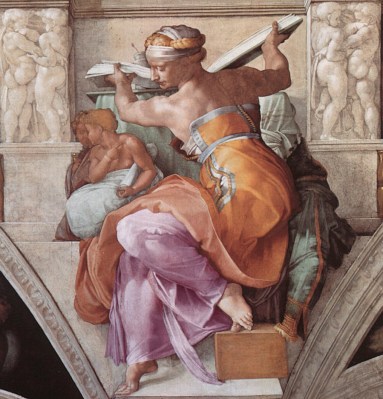
Michelangelo: Sibilla Libica
Övergång till den rationalistiska panteismen
Redan Leibniz invände att hos Descartes’ Gud återfanns drag av Spinozas, hur paradoxalt detta än kan synas i ljuset av den samtidiga absoluta viljefriheten. [Gillespie, Nihilism Before Nietzsche (1995), 54, not 42.] Men hos hans närmaste rationalistiska efterföljare försvinner den viljemässiga ansatsen i Descartes’ system.
Modernitetens subjektsidealistiska strömning som med utgångspunkt från renässansens självskapande och Descartes’ cogitometafysik vidareutvecklas via Kant och kanske i vissa avseenden kan sägas kulminera i den tidige Fichte, balanseras, som Schulz på flera ställen framhåller, av en motsatt tendens till upphävande av den viljefria självbestämningen, ja av subjektets primat och individualiteten och personligheten överhuvud, i en strikt rationalistisk panteism.
De svårigheter som den cartesianska dualismen och dess s.k. occasionalistiska efterföljare gav upphov till ledde hos Spinoza till att de panteistiska ansatserna i renässansens naturspekulation dialektiskt utvecklades till en genomförd metafysisk, monistisk panteism av exklusivt rationalistiskt-intellektualistiskt snitt. I denna panteism försvinner personkategorin, och inte bara den cartesianska dualismen mellan kropp och själ, utan också dualismen mellan den transcendente Guden och den “skapade” naturen upphävs: Gud är naturen och vice versa. Kroppar och själar är i striktaste mening endast två aspekter av samma sak, två modifikationer av den enda substansen. Deras individualitet är förgänglig, endast de två substansmodifikationerna, utsträckningens och tänkandets attribut, är bestående. [Om individuationen hos Spinoza, Don Garrett, ’Spinoza’s Theory of Metaphysical Individuation’, i Kenneth F. Barber & Jorge J. E. Gracia, utg., Individuation and Identity in Early Modern Philosophy: Descartes to Kant (1994).]
Det mänskliga medvetandet är bundet till denna förgängliga tid-rumsliga individualitet och upphör med den. Kroppens och själens åtskillnad och olika substantialitet är därför endast en det subjektiva medvetandets illusion: den mänskliga individualiteten existerar objektivt endast som en temporär partikulariserad enhet av dessa två attribut. Människan, inklusive hennes själ, är helt underkastad den materiella naturens strikta lagar, är blott en del av naturen. [Detta framlyfts med karaktäristiskt aktuellt perspektiv av Geneviève Lloyd, författaren till The Man of Reason: “Male” and “Female” in Western Philosophy (1984), i Part of Nature: Self-Knowledge in Spinoza’s Ethics (1994); vilket man kunde föreslå att alla fortfarande, dragande sina egna slutsatser, borde jämföra med de oftast schablonmässigt avfärdade ståndpunkter som uttrycks exempelvis i en karaktäristisk, traditionell katolsk diatrib som Paul Siweks Spinoza et le panthéisme religieux (1937).]
Filonkännaren Wolfson, som även skrivit ett motsvarande verk om Spinoza, anser intressant nog att det är just Spinoza som markerar slutet på en hel, och oerhört lång, epok i filosofihistorian som han helt enkelt benämner den “filonska”. Först Spinoza inleder, med sin panteism, en ny epok. Wolfson visar emellertid hur inom de angivna nya filosofiska ramarna Spinoza ändå på ett delvis oklart sätt vill tänka sig ett själens personliga liv, ja en dess personliga odödlighet. Spinoza förkastade givetvis hela den världsåskådning som de traditionella lärorna om själens personliga odödlighet byggde på, men hans syfte var samtidigt etiskt, och i det han ville förklara hur etiken kunde undvara denna världsåskådning bibehåller han alltså utifrån sina egna premisser en föreställning om själens personliga odödlighet: det är enligt Wolfson ytterst inte fråga om att försvara en etik utan en sådan. Hans syfte var att först förkasta den filonska erans åskådning (“all the main premises of traditional religious philosophy which had been held valid since the time of Philo”), och att sedan visa att hans egen filosofi “may not only be as good a guide in life as the old philosophy but may also offer as good a consolation for the after-life as the old philosophy”. [Philo (1948), I, 422.]
Detta blir möjligt genom en komplex utveckling (och – måste man betona – förändring) av vissa temata som han hämtar ur den epok som föregår den filonska, närmare bestämt ur en typ av platoniserad aristotelianism. [Ibid., II, 459.] Liksom Averroes och Avicenna och deras efterföljare försöker han visa att
“the human mind, though in its origin it is only a part of the absolutely infinite intellect, becomes individualized during the lifetime of man…Then this individualized human mind, on its reunion with the absolutely infinite intellect whence it originally came, somehow, in some inexplicable manner, retains its acquired individuality. The human soul is thus immortal, or eternal, as he usually calls it, and its immortality is in a certain sense personal and individual.” [Ibid., I, 422 f.]
Spinoza ligger emellertid ibland också, av andra skäl, i sitt sätt att uttrycka sig ofta förvillande nära den filonska åskådningen; Drews kommenterar exempelvis Spinozas förklaringar rörande idea omnium som alla ändliga modifikationers ickemanifesterade förebild, föreliggande som evigt innehåll i Guds intellekt, och hur denna idé “konstituiert…als der ‘eingeborene Sohn Gottes’ die Persönlichkeit (personalitas), wie Spinoza dies ausdrücklich einmal bemerkt, wenn er sich wegen der Schwierigkeit dieses Begriffes über denselben auch nicht weiter auslässt.” [Ibid., I, 42.]
Som vi skall se skulle icke heller denna aspekt av Spinozas panteism, dess variant av den personliga odödligheten, vara utan betydelse för framtiden. Men ingenting av detta får dölja det faktum att vi nu snabbt rört oss från Descartes distinkt nytida men friheten o.s.v. på sitt sätt kvarhållande rationalism till den lika distinkt moderna rationalistiska panteismen. Skiftet blir, på ett mycket allmänt plan, möjligt genom Spinozas distinkta användning av det nya rationalistiska momentet i tillägnelsen och omtolkningen av de klassiska för-filonska temata såväl som av element i den esoteriska traditionen.
Tänkandet rymmer en idéernas ordning som motsvarar utsträckningens ting. Spinoza anammar den cartesianska användningen av idébegreppet och tillmäter likaledes de “klara och tydliga” idéerna en särskild kunskapsfunktion. Själen definieras utifrån tänkandets attribut, men i själens temporära individualitet är detta attribut bundet till de individuella affekterna, och genom kalkylerande förstånd söker den i nödvändig lydnad under den främsta naturlagen, självbevarelsens, att tillvarata sina intressen.
Och med läran om självbevarelsen som den främsta naturlagen uppkommer en konflikt mellan individens och den politiska ordningens, den samhälleliga allmännelighetens, intressen. I England var den s.a.s. redan akut, och Hobbes hävdar nödvändigheten av statens tvångsmakt för att i samma självbevarelses intresse undertrycka individernas affekter. Det var en lösning som dock föga motsvarade andan i Spinozas eget land, som bättre studeras i Grotius’ ävenledes ytterst på det verklighetsfrämmande nya kontraktstänkandet byggande men omtolkade naturrättsliga försök att komma till rätta med den individualiserade mångfalden sådan denna tog sig uttryck i den absoluta furstemaktens tid, i följderna av de territoriella monarkernas och de konsoliderade nationalstaternas konflikter. Den “lägre empirismen” även hos Grotius gör emellertid att den nu framväxande rationalistiska panteismens förändrade och försvagade individualitets- och personuppfattning ändå på olika sätt äger en motsvarighet inte bara i Hobbes’ utan också i hans variant av den nya statsläran.
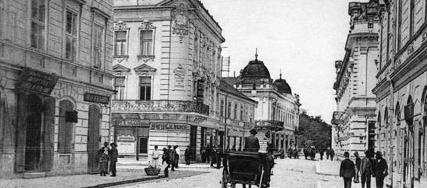
Prince Mihailo Street, Belgrade
Manfred Spreng & Harald Seubert: Vergewaltigung der menschlichen Identität
Über die Irrtümer der Gender-Ideologie
Andreas Späth, Hg.
Logos, 2011 Amazon.de
Kurzbeschreibung:
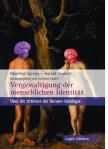 “Gender Mainstreaming” – ein Schlagwort ist in aller Munde und doch kaum fassbar. Uneingeweihte meinen, dies sei nichts anderes als die Gleichstellung von Mann und Frau. Der Journalist Volker Zastrow warnte schon 2006, dahinter verberge sich nichts anderes als eine “politische Geschlechtsumwandlung”. Worum es tatsächlich geht, will das vorliegende Buch durchleuchten und auf den Punkt bringen. In einer bisher einzigartigen Zusammenschau von Natur- und Geisteswissenschaft zerlegen der Gehirnforscher Manfred Spreng und der Religionsphilosoph Harald Seubert, das Konstrukt des Gender Mainstreaming in seine Bestandteile. Sie zeigen die geistesgeschichtlich trüben Quellen ebenso auf wie die verheerenden Folgen, denen der Mensch durch die Vergewaltigung seines natürlichen Wesens durch eine Ideologie ausgesetzt ist, die schon seine grundlegenden Anlagen im Gehirn missachtet. Was einst durch die rot-grüne Bundesregierung zur politischen “Querschnittsaufgabe” erklärt wurde, wird als nicht umsetzbar enttarnt. Jenseits ideologischer Flügelkämpfe entfernt das Buch alle Tarnkappen. Zum Vorschein kommen vor allem die Irrationalität und physiologische Unmöglichkeit des Menschen, so zu sein, wie es die Gender-Ideologie postuliert. Wer dieses Buch gelesen hat, erkennt, dass den Gender-Apologeten nicht gefolgt werden darf, wenn der Mensch nicht seiner Identität beraubt werden soll. Denn unter der Gender-Ideologie fällt seine Geschlechtsidentität wie der Kopf auf einer Guillotine.
Dominik Klenk, Hg.: Gender Mainstreaming – Das Ende von Mann und Frau?
Brunnen-Verlag, 2009 Amazon.de
Kurzbeschreibung:
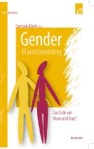 Wie groß ist der “kleine Unterschied” wirklich? Sind die Unterschiede zwischen Männern und Frauen natürlich gegeben oder kulturell erworben? Und zieht Ungleichheit unweigerlich Ungerechtigkeit nach sich? Aus der “Gender-Perspektive” betrachtet, ist alles eine Frage der Konstruktion. Durch “Gender-Maintreaming” soll der Misstand im Verhältnis der Geschlechter überwunden werden. “Gender Mainstreaming” das ist seit dem Amsterdamer Vertrag von 1997/1999 das offizielle Konzept und Ziel der Gleichstellungspolitik der Europäischen Union. Erklärte Maxime ist die Auflösung der Zwei-Geschlechter-Ordnung und die “Vervielfältigung der Geschlechter”. Eine lautlose Revolution stellt die Grundlagen unserer Kultur auf den Kopf. Müssen Christen ihr Bild von Mann und Frau und ihre traditionellen Ehevorstellungen über Bord werfen, wenn sie politisch korrekt bleiben wollen? Welche konstruktiven Alternativen gibt es, die Gerechtigkeit und Chancengleichheit fördern? Was befähigt Frauen und Männer zu einem versöhnten und schöpferischen Miteinander? Mit Beiträgen von Dr. Dominik Klenk, Markus Hoffmann, Konstantin Mascher, Dr. Christl Vonholdt u.a.
RT on Syria
Some Recent Reports and Commentary
–
–
–
–
–
–
–
–

