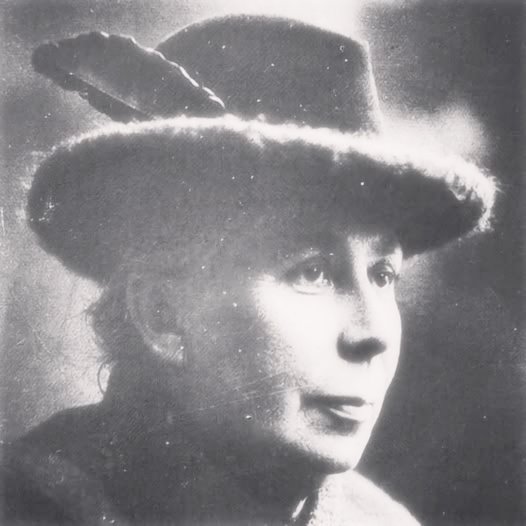
Socialisten, men också brahmaisten, buddhisten och teosofen.
Det kristna dogmsystemet och vår tid (1914)
Brahmaismen, buddhismen och teosofin: Tre föreläsningar vintern 1922 (1923)
Socialisten, men också brahmaisten, buddhisten och teosofen.
Det kristna dogmsystemet och vår tid (1914)
Brahmaismen, buddhismen och teosofin: Tre föreläsningar vintern 1922 (1923)
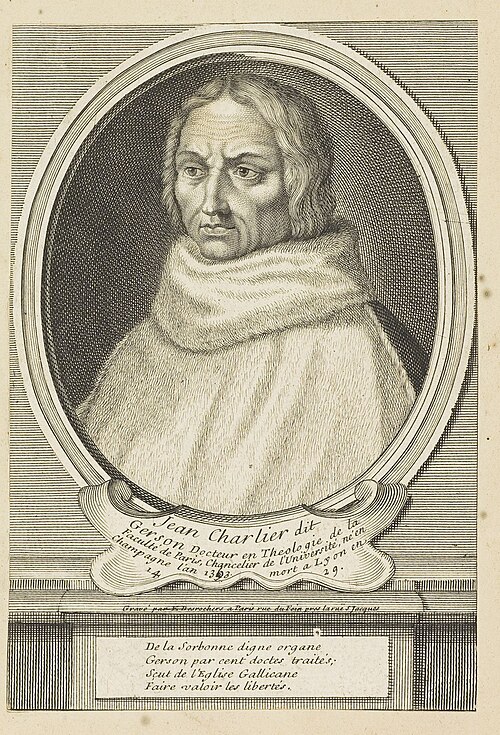
Viktig kännare av den mystiska (eller mystika) teologins tradition, som under sin tid som kansler för Parisuniversitetet konsoliderade det av Dionysios Areopagita lanserade begreppets användning och formaliserade traditionen som en akademisk disciplin skild från den rationellt-spekulativa skolastiken.
The Single Transcendental Truth Taught by the Great Sages of Buddhism and Advaitism – As Revealed by The Avataric Great Sage, Adi Da Samraj
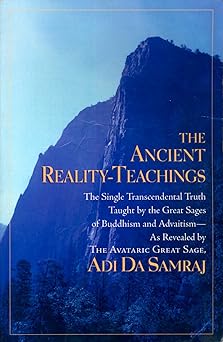
Dawn Horse Press, 2006
Below the subtitle on the Title Page:
The Quintessential Wisdom of Gotama Sakyamuni, Nagarjuna, Shankara, and the Sages of the Devikalottara and the Ribhu Gita
From the Back Cover:
The writings of Adi Da Samraj is the most doctrinally thorough, the most philosophically sophisticated, the most culturally challenging, and the most creatively original literature on radical nonduality currently available in the English language.
Jeffrey J. Kripal, J. Newton Rayzor Professor of Religious Studies, Rice University, Author, Kali’s Child: The Mystical and the Erotic in the Life and Teachings of Ramakrishna
The traditional texts presented by Me in this Book are only a few in number, but they are outstanding among the most important texts ever written. They are so much to the point that they are profoundly Illuminating – not sufficient for the Awakening of Transcendental Realization Itself, but potentially sufficient to bring anyone to practice at the feet of a true Master.
The Avataric Great Sage, Adi Da Samraj
To understand the great religions in a new light, one has only to read Adi Da Samraj. Anyone who has an open mind cannot help feeling that His description of the Supreme Yoga of the seventh stage of life is true. Intuitively you will be convinced that Adi Da Samraj knows what He is talking about because of His unique Realization.
Roger Savoie, PhD, Philosopher, writer and translator, Author, La Vipère et le Lion: La Voie radicale de la Spiritualité
JOB’s Comment:
Jones
Contemplative Science, Philosophy, Literature, and Art
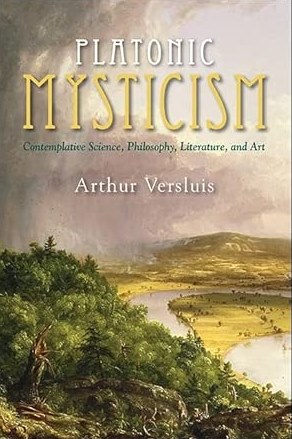
State University of New York Press, 2017
Publisher’s Description:
Restores the Platonic history and context of mysticism and shows how mysticism helps us understand more deeply the humanities as a whole, from philosophy and literature to art.
In Platonic Mysticism, Arthur Versluis clearly and tautly argues that mysticism must be properly understood as belonging to the great tradition of Platonism. He demonstrates how mysticism was historically understood in Western philosophical and religious traditions and emphatically rejects externalist approaches to esoteric religion. Instead he develops a new theoretical-critical model for understanding mystical literature and the humanities as a whole, from philosophy and literature to art. A sequel to his Restoring Paradise, this is an audacious book that places Platonic mysticism in the context of contemporary cognitive and other approaches to the study of religion, and presents an emerging model for the new field of contemplative science.
Reviews:
“Arthur Versluis’ latest book seeks to reinstate the critical importance of Platonic and Neo-Platonic thought within multiple fields of academic study: literature, painting and fine art, philosophy, religious studies and, importantly, consciousness studies. In pursuit of this central agenda, Versluis provides the reader with an interesting overview of the current state of academia in regard to these fields.”
Nova Religio
“Arthur Versluis’ brief but powerful, comprehensive and very accessible book is a major contribution to the history and interpretation of Platonic mysticism and a much needed corrective to the tendency to dismiss Platonism in all its forms that has been growing steadily over the past 100-200 years … But overall, this is a beautifully produced book, written by a master scholar who brings a vast amount of knowledge from different traditions to bear upon a really important subject.”
International Journal of the Platonic Tradition
“In Platonic Mysticism, Arthur Versluis clearly and tautly argues that mysticism must be properly understood as belonging to the great tradition of Platonism … this is an audacious book that places Platonic mysticism in the context of contemporary cognitive and other approaches to the study of religion, and presents an emerging model for the new field of contemplative science.”
Magonia Book News
“An important work on the mystical experience delving deep into its history, particularly from the Platonic perspective. An essential text for anyone interested in mysticism and its relationship to philosophy and creative expression.”
Andrew Newberg, author of How Enlightenment Changes Your Brain: The New Science of Transformation
“The present work, the latest from the pen of Arthur Versluis, provides a trenchant, learned, and illuminating analysis of the origins of Western mysticism in the Platonist tradition, relayed through such figures as Plotinus and Dionysius the Areopagite, down through Meister Eckhart and others, while suitably excoriating the attempts of certain modern philosophers and sociologists of religion to ‘deconstruct’ it from a materialist perspective. I found it a rattling good read!”
John Dillon, author of The Heirs of Plato: A Study of the Old Academy (347–274 BC)
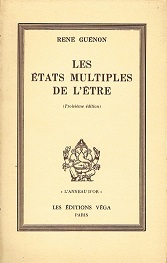
Guy Trédaniel/Éditions Véga, 1984 (1932)
Toutes les doctrines ésotériques insistent sur les différents états spirituels au travers desquels, par l’initiation, l’être individuel va vers l’Être absolu, origine et fin de la manifestation.
Cet ouvrage est avec Le Symbolisme de la Croix et l’Homme et son devenir selon le Vêdânta, le troisième que René Guénon consacre essentiellement à la métaphysique et notamment à la théorie des états multiples dont il avait fait une démonstration géométrique dans son précédent ouvrage.
Il en est le complément approfondi pour ce qui est de l’Être envisagé sous son aspect humain, tout en rappelant à cet égard que “l’état humain n’est qu’un état de manifestation comme tous les autres et parmi une indéfinité d’autres. Il se situe dans la hiérarchie des degrés de l’Être à la place qu’il lui est assigné par sa nature même (…) sans qu’il soit supérieur ou inférieur aux autres états de l’Être.”
By Theodore Nottingham