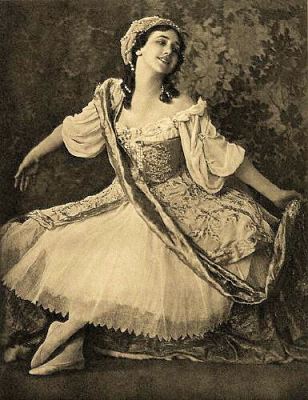
Russian ballerina, 1885-1978.
Russian ballerina, 1885-1978.
En här viktig dimension av Babbitts analys är hans framhållande av den betydelse Rousseaus naturuppfattning och idylliska fantasi kom att få för den förändrade innebörden av begreppet idealism. Det är nödvändigt att ständigt hålla denna nya betydelsedimension i minnet när man studerar romantikens, nyklassicismens, nyhumanismens och idealismens idévärld: utan att helt ersätta de äldre betydelserna av idealism, som ofta delvis återuppväcks, kommer den nämligen att på subtila sätt modifiera och samexistera med dessa. Vad vi har att göra med är inte minst åter vad Babbitt kallade Rousseaus pseudoplatonism.
Alla oskyldiga arkadiska drömmare blev visserligen inte farliga utopister efter Rousseau. Några fortsatte bara att drömma i mer outrerade former och med mer melodramatiskt känslomättade lamentationer över verklighetens avstånd från drömmen. Men många blev förvisso också farliga utopister. Gemensamt hade de dock alla just avståndet mellan drömmen och verkligheten – motsatsen blev snart ofta terminologiskt till den mellan idealet och verkligheten. “Where the Rousseauist goes beyond the ordinary dreamer is in his proneness to regard his retirement into some land of chimeras as a proof of his nobility and distinction. Poetry and life he feels are irreconcilably opposed to each other, and he for his part is on the side of poetry and the ‘ideal’.” [Rousseau and Romanticism, 84 f.]
Här är icke blott fråga om den egna väsenskärnans natur contra de civilisationens konventioner som hindrar dess autentiska livsuttryck, utan också om ett drömt samhälle som står i skarp kontrast mot det förhandenvarande och som utmålas som naturligt och idealt. Vi finner här en term och ett begrepp, idealet, som skiljer sig såväl från Platons icke blott universella utan också transcendenta idéer som från Berkeleys förnumna medvetandeinnehåll under samma benämning. Det nya idealet skiljer sig från dessa icke minst genom att huvudsakligen hänföra sig till den nya ursprungliga, goda naturens tillstånd i dess kontrast mot civilisationens artificiella förfall.
Klassicistens etiskt centrerade idealism bestod i en förmåga att urskilja, uppfatta och, om konstnär, gestalta det sant normativa och därmed i högre grad verkliga – med eller utan transcendent sanktion – i den förhandenvarande aktualitetens förbiflimrande multiplicitet. Den bestod med andra ord just i det den sanna klassicismens program som Babbitt vill sammanfatta som “the imaginative perception of the universal”.
Babbitt betonar dock inte alltid med tillräcklig tydlighet hur det universella, enligt vad vi ovan antytt, också enligt klassicismen måste vara riktat mot det högre och förebildliga som den egentliga idealismen i mer traditionell mening förstår som det ideella, för att också äga den etiska normativitet han räknar med. Här synes exempelvis Eduard Sprangers definition av “bildningsideal” behöva mobiliseras som komplement: “die anschauliche Phantasievorstellung von einem Menschen, in dem die allgemein menschlichen Merkmale so verwirklicht sind, dass nicht nur das Normale, sondern auch das teleologisch Wertwolle desselben in der höchsten denkbaren Form ausgeprägt ist.” [Cit. i Historisches Wörterbuch der Philosophie, ’Bildung’.] Här finns också det viktiga fokus på den personliga bäraren eller manifestationen, även om man bör lägga märke till att icke heller denna formulering fångar den betydelse den “högre romantiken” tillägger det individuella i bildningens resultat. Utöver universalitetens konkreta manifestationer i allmänhet ägnar Leander och Ryn just detta större uppmärksamhet, utan att för den skull bygga på en strikt personalistisk filosofi.
För Rousseau finns emellertid inte på något uppenbart sätt en μέθεξις, den aktuella realiteten har knappast någon direkt, partiell delaktighet ens i det drömda, “naturliga” idealet: förhållandena kan bara förändras till det bättre medels de mest drastiska och radikala pedagogiska och politiska åtgärder. Mot den klassiske idealistens μέθεξις ställs därför hos Rousseau en mer radikal dikotomi mellan hans annorartade motsatser.
Men detta innebär också att Rousseau kan vara något annat än verklighetsfrämmande drömmare, att han också kan vara något annat som är motsatt drömmandet, men som lika mycket som detta står i motsats till den klassiska idealismens hållning. Babbitt återger Schillers omdöme att Rousseau antingen skildrar naturens behag eller agerar som dess hämnare – d.v.s. Rousseau är antingen idyllisk eller satirisk: [Rousseau and Romanticism, 102 f.] “Rousseau oscillates between an Arcadian vision that is radiant but unreal, and a photographic and literal and often sordid reality. He does not so use his imagination as to disengage the real from the welter of the actual and so achieve something that strikes one still as nature but a selected and ennobled nature”. [Ibid. 102 f.; Babbitt söker här uttrycka, men återger också direkt, Goethes “very classical definition of genius: Du nur, Genius, mehrst in der Natur die Natur”; 103, not 2.]
En central typ av romantik utvecklar således en pseudoidealism som istället för att fånga det verkliga i det halvverkliga kontrasterar det halvverkliga mot det overkliga. Och mer: samtidigt som det sanna ideal klassicismen urskiljer i och extraherar ur den halvverkliga aktualiteten ersätts med drömmen, uppstår en den radikala dikotomins pendling mellan ytterligheter, i vilken även det halvverkligas återstående mått av verklighet prisgives till en på drömmen motsatt sätt overklig ”realism”. Liksom den empiriska vetenskapens gradvis utvecklade naturalism genom modernitetens hela historia på olika sätt växelverkar med och stödjer den till synes motsatta sentimentala romantikens naturalism, finns här ursprunget till den ofrånkomliga dialektik mellan romantik av detta slag å ena sidan och realism och naturalism å den andra som skulle synliggöras inte minst hos 1800-talets med tiden trötta cyniker av Flauberts typ: “realism of this type is, as has been said, only romanticism going on all fours”. [Ibid. 128.]
What Ricoeur called “les hermeneutiques du soupçon” cannot of course be dismissed simply of an assortment of extreme, radical theoretical positions, unfounded speculations, ideological (in the non-Marxist or partly non-Marxist sense) strategies, or as some kind of conspiracy theory. In revealing hidden motivations, forces, and interests of various kinds behind the surface of articulated ideas, philosophies, figures of thought, they have sometimes added considerably to our historical understanding. This is one of the reasons why I am against the tendency of some historians to simply reject theory.
What has always been obvious to many scholars, however, is the extent to which the advocates and practitioners of the hermeneutics of suspicion are themselves unaware of or deliberately hide the motivations, forces and interests behind the hermeneutics of suspicion. The hermeneutics of suspicion as they were understood by Ricoeur – the Marxist, the Nietzschean, the Freudian – need to be applied to Marxism, Nietzscheanism and Freudianism themselves. But beyond that, what is also needed is further versions of such hermeneutics; other theoretical – or philosophical – as well as historical perspectives and dimensions must be applied in order for us to be able to understand their hidden dimensions.
The motives, forces, and interests behind the demasking of motives, forces and interests as it has long been practiced in academia, with much support of the media, need to be demasked. It is, as it were, absurdly, grotesquely evident to many who are not Marxists, Nietzscheans and Freudians that there are such motives, forces and interests at work also in Marx, Nietzsche and Freud, as well as in the countless variations, combinations, and further developments of their work. And that, unbelievable as it may seem after over a century, it is still a vital scholarly interest to unveil them, or rather, to make their unveiling better known.
Justice internationale, gouvernement mondial, guerre juste…
La Table Ronde, 2004 Amazon.fr
Présentation de l’éditeur:
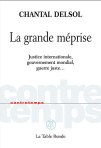 Idée séduisante après les crimes massifs du XXe siècle, la justice internationale ne trouve pas de légitimité théorique, en tout cas au regard de nos propres références. Faire justice, est-ce toujours prioritaire pour restaurer le vivre-ensemble après une catastrophe? Pouvons-nous imposer à tous les peuples la même hiérarchie des malheurs et la même hiérarchie des priorités? Aucune justice ne peut s’exercer sans la reconnaissance. Il faudrait donc, auparavant, convaincre. Peut-on juger de loin et hors contexte? Peut-on faire si bon marché de l’autorité politique, en plaçant directement les citoyens sous une loi mondiale? La loi naturelle, qui préside à la justice internationale, peut-elle s’instaurer en loi positive? Et, dans ce cas, dans quel recoin peut encore se loger l’esprit d’Antigone? La justice internationale ne pourra exister que sous un gouvernement mondial. Elle porte en elle la tare rédhibitoire de l’uniformité et du despotisme. En invoquant Montesquieu, Grotius, Kant, on défendra ici, face aux crimes d’État, la guerre d’ingérence comme décision politique.
Biographie de l’auteur:
Chantal Delsol est professeur de philosophie à l’Université Paris-Est. Auteur d’ouvrages de philosophie, d’essais, de romans, traduits en treize langues. Lauréate du prix Mousquetaire, du prix de l’Académie des sciences morales et politiques et du prix de l’Académie française.
Rousseau och romantikerna framlyfter fantasin gentemot såväl pseudoklassicismens som den kalkylerande rationalismens förnekande av densamma. Men fantasi kan vara av olika slag, och Babbitt vill visa att även den sanne klassicisten erkänner och själv bygger på fantasin. Ett av Babbitts huvudtemata är därför analysen av vilket slags fantasi vi återfinner hos Rousseau och romantikerna.
Han finner att den – initialt och hos Rousseau – är idyllisk och pastoral. Därmed är den befryndad med den preciösernas och d’Urfés fantasi, som på sina håll var dominerande i just de pseudoklassicitetens salonger vars artificialitet annars var måltavlan för Rousseaus huvudsakliga kritik. De bukoliska drömmarna var självfallet en del av det ursprungliga antika arvet. Även i den moderna klassicismen var de ofta underordnade eller behärskade av klassicismens moraliska realism och genuina idealitet, men som Babbitt framhåller var de med Rousseau samtida salongernas oändliga kärleksdiskurs en fortsättning av den “intellektuella” romantik som blomstrat innan Boileau och övriga satte in sin kritik.
Vi finner således en romantik draperad i former, loci och rekvisita lånade från ett isolerat moment av det antika litterära arvet. Ensidigheten förlänar övningarna ett drag av overklighet – endast i salongerna och i slottsparkernas avskildhet kan Arkadien framdrömmas. Men det är först med Rousseau som den avgörande förändringen sker: på basis av den nya naturförståelsen ersätts nu på allvar den intellektuella romantiken med den känslomässiga, med passionernas romantik. Den nya naturfilosofin sväller till en helt ny lära om historien, kulturen och samhället: naturtillståndet övergår från poesins värld till en historisk verklighet: “The more or less innocent Arcadian dreamer is being transformed into the dangerous Utopist.” [Rousseau and Romanticism, 79.]
Leander och Ryn framhåller att Babbitt icke fullt uppfattar de väsentliga insikterna i den tyska filosofin alltifrån Baumgarten och Kant. [Ryn, Will, Imagination and Reason: Babbitt, Croce and the Problem of Reality (1997 (1986)).] Babbitt har överhuvudtaget enligt Ryn en skev uppfattning av den tyska lärda och historiska kulturen alltifrån denna tid, delvis på grund av att den under en period efter idealismens nedgång under inflytande från bl.a. positivismen faktiskt förfallit till vad som benämndes “die strengwissenschaftliche Methode” (detta var just den period då USA politiskt stod Tyskland nära och några av dess filosofer och andra akademiker tillbringade avgörande läroår där). Han förbiser idealismens huvudsakliga giltiga insikter från Kant till Hegel. Till dessa hör enligt Ryn förståelsen av den skapande fantasin, syntes- och helhetstänkandet, det filosofiska förnuftets (die Vernunft) egenart och den dialektiska logiken – även om han menar att Babbitts uppfattning av fantasin är indirekt påverkad av just dess tyska förståelse under denna tid.
Men till detta skulle kunna läggas ett ytterligare tema, som i mycket har sin upprinnelse hos Rousseau men som också har andra och självständiga rötter och som filosofiskt utvecklas och förfinas först i Tyskland och andra länder. Nämligen den betydligt striktare, filosofiskt väl elaborerade, och delvis också metafysiskt fördjupade utveckling av personlighetstänkandet som där ägde rum. Självfallet har Babbitt inte förbisett den förädlingsprocess som dessa idéer genomgår inte minst hos Goethe i hans väg från Sturm und Drang till klassicism: denne nämns därför av Babbitt som exempel på en allsidig kulturpersonlighet av första rang som i mycket frigör sig från den typ av romantik som han kritiskt analyserar.
Hos Babbitt återfinnes dock också allmänna formuleringar om att han självklart ingalunda tar avstånd från allt i romantiken. [Ibid. LXX.] Tyvärr får vi inte tillräckliga uppgifter om vilka andra aspekter av romantiken Babbitt inte bara räknar med faktiskt finns, utan också bejakar. Det är alltså här Leander är på rätt spår med begreppet “den högre romantiken”. Denna romantik kan sägas ha ett personlighetsideal som skiljer sig från klassicismens, sådant Babbitt försvarar det, däri att det entydigt hyllar den personliga uniciteten som ett värde i sig. Den skiljer sig från den lägre romantiken genom att bejaka och, i den ideala bildningsgång den tecknar för individen, konvergera i riktning mot klassicismens fördjupat uppfattade etiska och värdemässiga universalitet och centralitet. Men den förblir “romantik”, eller rättare, kvarhåller romantikens reaktion mot den ensidiga klassicismens generalism (och upplysningens empirism och rationalism) i det att den räknar med en unikt-personlig väsenskärna på någon nivå. Den fråga vi måste ställa oss rörande Rousseau är hur han bidrar även till denna den högre romantikens förståelse.
Frågan om hur denna väsenskärna skulle förstås och på vilken nivå av eller mellan det psykofysiska och det andliga den skulle anses belägen skulle tematiseras i vissa riktningar av den idealistiska filosofi med vilken romantiken i vissa stycken var nära förenad. Men belägen mitt i modernitetens distinkta, duala immanentiserande idédynamik kvarstår alltid en närmast konstitutiv oklarhet. Rousseau åkallar klassiska auktorer för en ofta nog från deras egen vitt skild människosyn och samhällsfilosofi, och Babbitt återkommer ofta till hur han på ett motsvarande, försåtligt sätt bibehåller ett religiöst eller metafysiskt språkbruk.
Men när det gäller oklarheten i förhållandet mellan det andliga och själen å ena sidan och naturen (à la Rousseau) å den andra står vi ofta nog helt enkelt inför ytterligare en variant av det gamla komplexa västerländska kärntemat: förhållandet mellan kropps- och själspersonligheten, det psykofysiska komplexet och vad som eventuellt ligger bortom och över detta. Själen är för Rousseau och romantikerna i högsta grad del av den rena, ursprungliga, egna natur, vars frihet och autenticitet förkonstlingen, regel- och konvenanstvånget och den kalkylerande mekaniseringen hotar. Naturen kommer därmed stundom hos mer religiöst sinnade romantiker att betyda både den “skapade”, fysiska naturen, och en från den materiella naturen fristående och döden överlevande del av vårt äkta jag. Även Savoyardprästen i Émile tror på själens odödlighet.
Weintraub återger H. F. Amiels sammanfattning av motsättningen mellan Rousseau och philosopherna: Rousseau var för Guddie mot Holbach, för försynen mot Voltaire, för själen mot La Mettrie, för den moraliska friheten mot Diderot, för osjälvisk dygd mot Helvétius, för spontaniteten mot Condillac, för hjärtats rätt mot Maupertuis, och mot Morellys kommunism. [The Value of the Individual, 304.] Här ser vi både Rousseuas tidsenliga nyheter, men också hur nära han ibland kan synas komma ett egentligt försvar för den västtraditionella rellijoonen. Och handlar det här delvis faktiskt om en saklig överensstämmelse, finns också, ifråga om de först uppräknade ämnena, bakom den terminologiska likheten de subtila innehållsliga förskjutningarna och förvandlingarna.
Ofta är själen och det själsliga blott ett romantikernas honnörsord för den sublima renhet och känslighet de hyllar och gärna menar sig själva äga, och de ontologiska och metafysiska distinktionerna förblir oklara. Babbitt talar om “The mingling of sense and spirit that pervades Rousseau”, om Rousseaus “pseudo-Platonism”. [Rousseau and Romanticism, 158.] Senare utlägger han skillnaden mellan Platons och Rousseaus uppfattning av kärleken. För Platon är varje sinnlig kärlek som bäst blott ett steg på vägen mot den översinnliga, mot den uraniska Afrodite. Slutsatsen för Rousseaus del blir däremot att “[w]e are not to suppose that Rousseau’s love even when most ideal is really exalted above the fleshly level”; essensen av hans kärlekssyn är en “blending” av “[t]he terrestrial and the heavenly loves”; han hade enligt Joubert “‘a voluptuous mind. In his writings the soul is always mingled with the body and never distinct from it. No one has ever rendered more vividly the impression of the flesh touching the spirit and the delights of their marriage.'” Med madonnakulten engagerades det sinnliga i det andligas tjänst på ett nytt sätt, och med den höviska riddarkärleken riskerade processen att bli den omvända. Det är emellertid först med Rousseau som det senare verkligen sker: “spirit is pressed into the service of sense in such wise as to give to sense a sort of infinitude”. [Ibid. 220 ff.; Babbitt hänvisar också till sin längre utredning rörande “this confusion of the planes of being” i The New Laokoon (1910), kap. 5.]
Dessa oklarheter vidlåder även Leanders högre romantik. Leander tar – naturligtvis – Goethe som ett av exemplen på denna, men de panteistisk-naturalistiska dragen hos honom accentuerar därmed just denna oklarhet. [Nya synpunkter på romantiken (1944), omtryckt under titeln Romantik och moral (1980); ämnet behandlas också i sak i andra verk av Leander.] De romantiker och idealister som strängare betonar spänningen, såväl etiskt som metafysiskt, mellan “sense” och “spirit” borde med större rätt ses som representanterför den högre romantiken.
Men uthärdar vi denna oklarhet måste vi konstatera att till det personlighetsideal den högre romantiken uppställer hör åtminstone ett väsentligt moment av Rousseaus naturuppfattning, nämligen läran att det gives en “naturlig” väsenskärna, andlig och/eller materiell, som utgör “människans” sanna identitet, och vars aktualisation och fria uttryck är bildningsprocessens mål. Även om en klassicist, upptagande Sokrates’ lära om l’âme-daimon, eller bejakande den romantiska lära som åtminstone när den vederbörligen disciplinerats delvis kan ses som en modern motsvarighet till denna, ser denna process som möjlig endast genom en strikt etisk disciplin under de objektiva normernas restringerande och centrerande ledstjärnor, skiljer han sig från Babbitts klassicism i det han därmed bejakat ett starkare egenvärde hos väsenskärnans unicitet som sådan. Hur mycket han än är benägen att godtaga Babbitts kritik av den lägre romantikens urskillningslöshet skulle han därför likafullt finna hans karaktäristik av Rousseau ofullständig och delvis missvisande:
“He puts the blame of the conflict and division of which he is conscious in himself upon the social conventions that set bounds to his temperament and impulses; once get rid of these purely artificial restrictions and he feels that he will again be at one with himself and ‘nature’. With such a vision of nature as this it is not surprising that every constraint is unendurable to Rousseau, that he likes, as Berlioz was to say of himself later, to ‘make all barriers crack’. He is ready to shatter all the forms of civilized life in favor of something that never existed, of a state of nature that is only the projection of his own temperament and its dominant desires upon the void. His programme amounts in practice to the indulgence of infinite indeterminate desire, to an endless and aimless vagabondage of the emotions with the imagination as their free accomplice… This longing of the highly sophisticated person to get back to the primitive and naïve and unconscious, or what amounts to the same thing, to shake off the trammels of tradition and reason in favor of free and passionate self-expression, underlies…the conception of original genius which itself underlies the whole modern movement.” [Ibid. 79 f.]
Även om detta eventuellt kan accepteras som en beskrivning av Rousseau, är det inte hållbart som en beskrivning av den högre romantik och personalistiska idealism som senare utvecklas delvis på basis av Rousseaus idéer. Ty denna senare romantik och idealism, utvecklad också ur andra källflöden, uppvisar i sina främsta former den naturliga väsenskärnan, den unika personligheten, i sitt aktualiserade självuttryck som överensstämmande med de civilisationens normer och värden som klassicismen uppställer, även om den sedliga ordningen uppfattas i en delvis annan anda än klassicismens. Skillnaden gentemot Babbitts form av klassicism är att den naturliga väsenskärnan ingalunda är någon tomhet eller något icke-existerande, utan en essentiell, levande, konkret personligt-unik verklighet som är lika väsentlig som de gemensamma, generella, etiskt centrerade normerna.
En del av rötterna till denna utveckling återfinns också hos den Rousseau som i övrigt uppvisar så många typiska, tidiga drag av den “lägre romantik” som den högre romantikern tar avstånd från eller i sin bildningsmässiga utveckling gradvis lyckas övervinna. För Rousseau förverkligar människan sin sanna natur snarast genom direkt, formlöst, känslomässigt uttryck för sitt ordinära, instinktmässiga själv. För den högre romantikern och för klassicisten når människan sin sanna natur endast genom den etiska och formella disciplin som ensam kan framfostra allsidighet, proportionerlighet och harmoni, och övervinna de vildheter och ensidigheter som kännetecknar vad rousseauanen kallar natur men som de är benägna att betrakta som onatur. Människans sanna natur är hennes högre själv – men denna natur är inte bara den allmänmänskliga normaliteten, icke ens stegrad till etisk idealitet. Hennes egentliga natur, hennes högre själv, är också ett i själva denna bildningsprocess, samtidigt med och förutsättande det ideala normnärmandet, allt klarare framträdande, avhöljt, utmejslat eller framdestillerat verkligt själv av individuell natur, en unik personlighetskärna.