Hur görs pengar? Varför beter sig börsen som en galning? Hur kommer det sig att direktörerna tjänar mer och mer och varför kan banker fortsätta spela hasard med skattebetalarnas pengar? Och varför fortsätter skuldkrisen att plåga Europa trots alla räddningspaket?
Andreas Cervenka, hyllad och prisbelönt ekonomikrönikör i Svenska Dagbladet, förklarar hur allt hänger ihop i vår allt mer komplicerade och snabbrörliga världsekonomi. Pedagogiskt och rakt på sak behandlas de stora frågor som dominerat de senaste åren, och som avgör vår framtid.
Det här är boken för dig som fortfarande tror att ekonomi måste vara svårt. Och tråkigt.
“En av de få saker som skänker hopp i ett sådant här mörkt läge är att läsa en skribent som Svenska Dagbladets Andreas Cervenka” Peter Englund
Från förlagets sida:
”Oroande och slagkraftiga krönikor om världsekonomin. Vad är det som pågår? Cervenka granskar finansvärldens tjusiga fraser och tomma löften.” Jan Eklund, Dagens Nyheter
“I en läckande båt vill man inte höra lugnande ord från övre däck, utan sanningen. Medan andra mumlar och tiger är Andreas Cervenka närmast profetiskt klarsynt … I korta, pedagogiskt kritiska texter visar Cervenka just hur den kris som nu skuggar hela den globala ekonomin varit inbyggd i den monetära grund alla tagit för självklar i snart ett halvt sekel…Hans bok är full av uppiggande iakttagelser och ahaupplevelser om stora och små samband i de nyheter som skakat världen de senaste åren.” Dagens Nyheter
“Cervenka är hyllad och belönad som en nyskapande propagandist för en mer solidarisk kapitalism med mänskliga drag. Nu finns hans krönikor i en liten diagrampedagogisk, men uppkäftig, pocket. En underhållande lärobok i nyttigt tänkande för oss som knappt förstår våra egna utdrag på lönekontot. … Med inspiration av en komplicerad verklighet, med stöd i små faktauppgifter samt en berättarglad polemisk tradition formulerar han sig ofta sylvasst och humoristiskt. Krönikorna belyser med skärpa de stora globala sammanhangens betydelse för medborgarnas småskaligt nationella verklighet.” Östgöta Correspondenten
“Synen på nationalekonomi håller på att förvandlas i takt med att de gamla tänkesätten krisar. Ledande kritiker är Svenska Dagbladets Andreas Cervenka, vars bästa artiklar nu samlats i pocketboken Vad är pengar? Hans insikter är djupa, men framför allt är hans förmåga att hitta drastiska jämförelser rent poetisk.” Tidningen Arbetet
“…såväl de styrande som vi andra bör se till att lära oss så mycket som möjligt om de processer som styr ekonomin, så att vi bättre kan förstå vad som bör göras. Det går att göra på många sätt, men Cervenkas bok är en bra början.” Borås tidning, ledarredaktionen
“Cervenkas onådiga kritik av det monetära och finansiella systemets svagheter tål att tänkas på. I grunden är budskapet sunt. Det handlar om att människor, inte bara vanliga löntagare utan också bankdirektörer och verkställande direktörer, behöver få en nyktrare syn på pengars egentliga värde.” Sydsvenskan, ledarredaktionen
JOB:s kommentar:
Även detta är en relevant ingång till kapitalismkritiken.
Tidskriften Contextus – Forum för konservatism utgavs under 1990-talets sista år men är idag tyvärr förbisedd och sällan nämnd. Den förtjänar, tycker jag, att nämnas oftare.
I den medverkade Johan Sundeen, Carl Johan Ljungberg, Patric Rylander, Hans Wallmark, Per-Olof Bolander, Fredrik Haage, Per Landgren, Halil Magnus Karaveli, Stig Strömholm, Alexander Andrée, Tobias Harding, Carin Stenström, Per Dahl, Erik Kristow, Stig Lundgren, Peter J. Olsson, Lennart Sacrédeus, Christian Braw, Peter Norberg, Claes G. Ryn, Bo Frank, Jonas De Geer, Emil Uddhammar, Lars F. Eklund, Martin Tunström och andra svenska skribenter i olika generationer som gjort sig kända som i åtminstone någon mening och i någon grad konservativa. Redaktörer var Rylander, Anders Broberg, Sundeen, Haage och Tunström.
Tidskriften upphörde ungefär samtidigt som De Geer och Bolander började utge Samtidsmagasinet Salt. Det hade, tror jag, varit bra om de två redaktionerna och grupperna av skribenter kunnat förenas till en gemensam satsning.
Contextus hade behövt en skärpning, fördjupning och vidareutveckling i vissa frågor, och även en vidgning, inte minst på kulturens område, bortom ett ibland alltför begränsat och förutsägbart “borgerligt” (jag är trött på över- och idag närmast rena felanvändningen av detta begrepp i Sverige) perspektiv – något som vad som blev Salt-gruppen med dess delvis annorlunda inriktning i åtminstone någon utsträckning skulle ha kunnat bidra till. Samtidigt hade Salt i hög grad och i flera avseenden behövt Contextus-redaktionens balans och moderation.
Antingen skulle Salt-kretsen i stället för att starta en ny tidskrift ha kunnat stanna kvar hos – och de nytillkomna ansluta sig till – Contextus och bidra till att utveckla och förstärka den med sina nya resurser, eller så skulle Contextus-redaktörerna ha kunnat lägga ned sin tidskrift och övergå till Salt.
Någon sådan förening kom inte till stånd. Jag är rädd att fortfarande, och just på grund av de respektive brister och svagheter jag antytt, tyvärr varken de gamla Contextus- eller Salt-redaktörerna delar min uppfattning att den hade varit önskvärd. Men vad de inte kan förneka är att båda tidskriftssatsningarna havererade och att vi ännu saknar den konservativa kulturtidskrift med samhällsperspektiv som så väl skulle behövas (Axess håller, som jag tvingats konstatera, inte längre måttet). Tradition & Fason var en förtjänstfull senare motsvarighet på nätet, men förutom att uppvisa samma typ av begränsningar som Contextus blev även den kortlivad.
Jag rekommenderar hursomhelst ett besök i det arkiv med ett urval artiklar från Contextus som Konservativt Forum tillhandahåller.
In my post Renaming the New Right, I wrote: “On a general level, it must be said that both the term conservatism and the term Right are philosophically and historically inadequate. Insofar as the term Right is ever associated with the French National Assembly during the revolution, there is, at the very least, something disproportionate even in an Evola’s use of the term ‘the true Right’ for the uncompromising, integral ‘traditionalist’ position as he conceives it.”
This gave the wrong impression that Evola was not himself aware of this problem. I would therefore like to cite a passage from Il fascismo: Saggio di un’analisi critica dal punto di vista della Destra (1964) in French translation (see my comment on my use of French translations of Evola here; in this case, there is to my knowledge not yet any English translation), where he identifies precisely the problem I had in mind:
“En toute rigueur, par rapport à ce que nous avons en vue et qui constituera notre point de référence, le terme de ’Droite’ est impropre. Ce terme, en effet, suppose une dualité: la Droite, pratiquement, se définit dans le cadre du régime démo-parlementaire des partis, par opposition à une ‘gauche’, donc dans un cadre différent du cadre traditionnel des régimes précédents. Ces régimes connurent tout au plus un système sur le modèle anglais dans ses formes originelles pré-victoriennes, c’est-à-dire avec un parti qui représentait le gouvernement (et celui-ci était, d’une certaine façon, la Droite), et une opposition, non pas comprise comme une opposition idéologique ou de principe, une opposition au système, mais comme une opposition dans le système (ou la structure) avec des fonctions de critique rectificatrice et intégratrice, sans que fût mise en question, de toute namière, l’idée, en quelque sorte transcendante et intangible, de l’État. Une telle opposition ‘fonctionelle’, bien délimité dans un contexte organique et toujours loyaliste, n’a rien à voir avec l’opposition que peut exercer tel ou tel des multiples partis, chacun pour son propre compte et voué à la conquête du pouvoir et de l’État, si ce n’est à l’institution de l’anti-État…Il faut donc concevoir la Droite, prise dans son meilleur sens, politique et non économique, comme quelque chose de lié à une phase déja involutive, à la phase marquée par l’avènement du parlementarisme démocratique avec le régime des nombreux partis. Dans cette phase, la Droite se présente fatalement comme l’antithèse des différentes gauches, pratiquement en compétition avec elles sur le même plan. Mais elle représente en principe, ou devrait représenter, une exigence plus élevée, elle devrait être la dépositaire et l’affirmatrice de valeurs directement rattachées à l’idée de l’État vrai: valeurs d’une certaine manière centrales, c’est-á-dire supérieures à toute opposition de partis, selon la supériorité comprise dans le comcept même d’autorité ou de souveraineté pris dans son sens le plus complet.” (Le fascisme vu de droite suivi de Notes sur le Troisième Reich (1993 (1981)), 15-16.)
What Evola has “en vue”, his “point de référence”, i.e. what I called “the uncompromising, integral ‘traditionalist’ position as he conceives it”, he considers it legitimate to describe in this context in terms of “la grande tradition politique européenne, non en pensant à un régime particulier comme modèle, mais bien à certaines idées fondamentales qui, en mode varié mais constant, ont été à la base de différents États”. (15)
It is likely – I cannot remember right now – that he has remarked on the inadequacy of the term Right and even true Right for this tradition and these “idées fondamentales” in other works too, most likely perhaps in Gli uomini e le rovine (one of the many works now published in English translation by Inner Traditions, Men Among the Ruins), to which he makes reference in this same chapter in Il fascismo for a systematic exposition of his doctrine of the state. I happened to find it now in the latter book, and the passage cited gives a sufficient account of his perception of the problem.
Having thus clearly explained the inadequacy of the term Right, Evola still chooses to use the term the true Right, and concludes by saying that “idéalement le concept de la vraie Droite, de la Droite telle que nous l’entendons, doit être défini en fonction des forces et des traditions qui agirent d’une maniére formatrice dans un groupe de nations et parfois aussi dans des unité supranationales, avant la Révolution française, avant l’avènement du tiers état et du monde des masses, avant la civilisation bourgeoise et industrielle, avec toutes leurs conséquences et les jeux d’actions et de réactions concordantes qui ont conduit au marasme actuel et à ce qui menace d’une destruction définitive le peu qui reste encore de la civilisation européenne et du prestige européen”. (17)
It might be said that speaking of the true Right does not remove the problem, when Evola has correctly defined the Right in historical terms. There is, it could be said, nothing “false” about the Right thus defined, since it simply is what the Right is. It is the true Right. En toute rigueur, the term true Right is therefore also impropre. What could at the most be said, it might seem, is that what Evola means to say is that there ought to be another Right, distinct from the real, historical Right, an alternative Right which truly defends and upholds the pre-right order which Evola calls the true Right.
But then it appears Evola does think there has been at least periodically in the historical Right, and, it would seem, even within “le cadre du régime démo-parlementaire des partis”, something similar to his true Right, something that has in fact not been exhaustively defined by that cadre and the “opposition à une ‘gauche’” in substantial terms by, most fundamentally, simply accepting their legitimacy. The “false” Right is then for Evola that which allows itself to be defined by the new duality of the “régime démo-parlementaire”, while the true Right is that which somehow resists or tries to resist it and to defend the pre-Right regime and its principles.
Much needs to be said of course about the relation between the “true right” thus defined and modernity, and not least what I prefer to speak of as an “alternative modernity”, an area where, as I have explained elsewhere, my understanding is in some important respects different from that of what Mark Sedgwick, introducing an important distinction, calls the “hard” traditionalists. But here the question is only the very limited one of the appropriateness of the terms Right and true Right; I wanted to do justice to Evola’s own reasoning and his awareness of the problem I mentioned in my earlier post.
I recently posted a public debate between Roger Scruton and Terry Eagleton at the Royal Institution in London last year. It seemed to me Eagleton had changed. Scruton himself hinted at this in the debate.
This was also confirmed when I read his recent, short book Why Marx Was Right (2011). It is the first book I have read about Marxism – including Marx’s own – which did not immediately strike me as presenting a system of thought and historical analysis that, while containing important partial truths, is almost absurd in its onesidedness and reductionism. It seems to me this is not Eagleton’s own Marxism as I first encountered it long ago.
Karl Marx
Eagleton sets out to refute what he claims are the misunderstandings of the critics of Marxism. What he overlooks is that these misunderstandings are quite as much those of the Marxists themselves, of Marx’s own followers. But it is clear that what we have to do with here is a Marxist who has actually understood and absorbed criticism of Marxism from positions that used to be ignored and dismissed a priori. And this seems to be the result of a process of development of personal maturity, including deepened historical reflection. The nature of Eagleton’s defence of Marx strongly suggests that this could not have been achieved without his primary scholarly orientation, namely literature and the history of literature. As he says in the debate with Scruton, he has taught Shakespeare all of his life – and he has also of course written about him. Living with the classics during a long career does have its effects, even, in many cases, when that career is devoted to ideological reinterpretation.
It is highly significant that, in the book, Eagleton uses Scruton’s own formulation – several times repeated in his works – about the Communist Manifesto and Marx’s philosophy of history as there expressed. Eagleton does in fact also criticize Marx on a few points.
But it could, it seems to me, be argued that although he often does succeed in defending Marx against both critics and Marxists, what he primarily does is to present his own, more tenable version of Marxism, rather than defend Marx as he is. And he does it at least partly because he has finally realized the weight of and the need to assimilate kinds of criticism which were previously for the most part simply not understood at all among Marxists. One after another, most of the main points are taken up, in the way one always thought Marxists should have had the intelligence to do it long ago.
All of them are not taken up, and the defence is in many cases far from sufficient with regard to the ones that are. And quite apart from philosophical considerations, it seems far too late to save Marxism as such in a new and more reasonable form. Moreover, he still does not seem to have fully absorbed the Hegelian and phenomenological versions of Marxism, culminating perhaps in the work of Karel Kosík, which I always found to be philosophically the most important and tenable, although it was important and tenable not because of its specifically Marxist content but because of its retention, partly inspired by the early, “pre-Marxist” Marx (Kosík emphatically denied that this Marx was pre-Marxist), of central elements of idealism. As I said, all presentations of Marxism struck me as absurd in its basic philosophical premises, and although post-Marxism and postmodernism had already for a long time been overshadowing and even replacing it, at the time I started my academic studies one still, at least in the historically oriented humanities, had to go through and thoroughly familiarize oneself with most of its main currents.
Eagleton’s book is not a good introduction to Marx. He is still far too deeply absorbed in the erroneous positions of Marx and the general radical main current of modernity to be able to see clearly the nature of Marx’s thought and the currents in which he too was caught up. Most of the vast and fundamental issues here involved are still simply ignored, or, more precisely, simply not perceived by Eagleton.
But in some respects it is a better introduction to Marx than any other I have read (I should emphasize that it is not an extensive, scholarly work but only a brief essay presenting the outline of a defence). I remember how, when I was a young student, Marxists used to praise certain introductions to Marxism as brilliant, and how they seemed to think they must almost of necessity convince the reader. I found this totally incomprehensible. The effect they had on me was the opposite: they immediately made me see the monumental untruth of Marxism, and this impression was not changed by deeper familiarity with Marxism. They said all the things Eagleton now says Marx does not say, and often in a studiedly provocative manner which revealed everything about the true nature and motivation of their authors.
Many decades after the heyday of Marxism, Eagleton seems in these respects different indeed. With him, it is clearly possible to have an intelligent and meaningful discussion – which is what Scruton does, albeit somewhat awkwardly, having in the past had reason to sharply criticize his interlocutor.
If time allows, I will develop my argument here into a series of posts, in which I go through Eagleton’s main arguments in defence of Marx and emphasize what is new and important in them. Defending almost the entirety of Marx’s work or his positions is an impossible task, and Eagleton of course does not succeed in this. But what could be regarded as the in reality most important contribution Eagleton makes in Why Marx Was Right is that he facilitates the rescue, as it were, of Marx’s important partial truths. These seem, it seems to me, in some cases more easily assimilable by non-Marxists in the form in which they are here presented than in most other Marxists, and indeed Marx himself.
This rescue is not least important in the face of post-Marxism. For the partial truths of Marx, truths to some extent dissociable from his system as a whole, are the ones often found in his many-layered criticism of capitalism, and what characterizes post-Marxism is not least their loss. Even a (paleo)conservative critic of post-Marxism like Paul Gottfried, who does not focus on Marx’s criticism of capitalism, clearly perceives that post-Marxism is in important respects more problematic than Marxism and far less intellectually rigorous.
We find here a general tendency of convergence between paleoconservative and more or less paleomarxist analyses of post-Marxism. Like Fredric Jameson, Eagleton has, it seems, long criticized the development of post-Marxism (Why Marx Was Right prompted me to read also The Illusions of Postmodernism from 1996), whereby the relative theoretical strength of Marxism is clearly demonstrated and several overlappings with certain kinds of conservative analyses become visible, although at the same time the weaknesses in comparison with such analyses become obvious. Eagleton is always, like Jameson, for many reasons compelled to accept much in post-Marxism in a way a Gottfried is not. Eagleton and Jameson are simply part of the general, broader and deeper dynamic of modernity, the nature of which cannot be properly grasped from inside of it.
Of course, some branches of Marxism were always supported by capitalists, since the effects of the general cultural radicalism promoted by such branches and indeed in many cases socialism itself are in the interests of capitalists. But in post-Marxism, we tend to see a wholesale adoption on the part of the left of the long-standing schemes of global capitalism. With only few remaining exceptions, the left has become its faithful supporters and promoters, and not least much more openly funded by it. With Obama, the transformation described by Gottfried of the the anti-Americanism of the European Left into “extreme affection” during the Clinton years has only been intensified.
Unfortunately, Eagleton does not sufficiently distance himself from the current post-Marxist left, the global capitalist left, the American imperialist left, the war left. It remains unclear to me where exactly he stands with regard to the issues I have here briefly indicated. He cannot see things as clearly as Gottfried, a representative of the only real alternative America. But he also cannot see them as clearly as his fellow leftist Jean Bricmont – who wrote Impostures intellectuelles with Alan Sokal and who collaborates with the Chomsky who is now of course increasingly rejected by the left – in this recent mise au point.
Scruton too, being more attached to the old cold-war controversies between left and right (as he understood them) than Gottfried, unfortunately fails to perceive these things. He is, as it were, right in the Royal Institution debate that the left still dominates the universities, while at the same time Eagleton is right that they have been taken over by capitalism. None of them sees, or wants to see, the whole picture.
The Strange Death of Marxism seeks to refute certain misconceptions about the current European Left and its relation to Marxist and Marxist-Leninist parties that existed in the recent past. Among the misconceptions that the book treats critically and in detail is that the Post-Marxist Left (a term the book uses to describe this phenomenon) springs from a distinctly Marxist tradition of thought and that it represents an unqualified rejection of American capitalist values and practices.
Three distinctive features of the book are the attempts to dissociate the present European Left from Marxism, the presentation of this Left as something that developed independently of the fall of the Soviet empire, and the emphasis on the specifically American roots of the European Left. Gottfried examines the multicultural orientation of this Left and concludes that it has little or nothing to do with Marxism as an economic-historical theory. It does, however, owe a great deal to American social engineering and pluralist ideology and to the spread of American thought and political culture to Europe.
American culture and American political reform have foreshadowed related developments in Europe by years or even whole decades. Contrary to the impression that the United States has taken antibourgeois attitudes from Europeans, the author argues exactly the opposite. Since the end of World War II, Europe has lived in the shadow of an American empire that has affected the Old World, including its self-described anti-Americans. Gottfried believes that this influence goes back to who reads or watches whom more than to economic and military disparities. It is the awareness of American cultural as well as material dominance that fuels the anti-Americanism that is particularly strong on the European Left. That part of the European spectrum has, however, reproduced in a more extreme form what began as an American leap into multiculturalism. Hostility toward America, however, can be transformed quickly into extreme affection for the United States, which occurred during the Clinton administration and during the international efforts to bring a multicultural society to the Balkans.
Clearly written and well conceived, The Strange Death of Marxism will be of special interest to political scientists, historians of contemporary Europe, and those critical of multicultural trends, particularly among Euro-American conservatives.
About the Author:
Paul Edward Gottfried was Raffensperger Professor of Humanities at Elizabethtown College (now Emeritus), and is the leading paleoconservative thinker in America.
Pourquoi Nicolas Sarkozy et Angela Merkel considèrent-ils le “capitalisme de l’ombre” comme la plus grave menace à laquelle nous sommes confrontés?
Comment BP s’est-il organisé pour se protéger des catastrophes pétrolières? Comment le lobby des grandes banques arrive-t-il à ses fins? Les agences de notation vont-elles tuer l’euro en mettant de l’huile sur le feu?
Un capitalisme opaque et spéculatif s’oppose désormais au capitalisme réglementé.
Ce système retient en otages États et consommateurs, sans parler des salariés et des petits actionnaires.
Mais ce capitalisme-là s’est émancipé : entre contournement massif des règles par le “hors-bilan” et paradis fiscaux, les interdits ont explosé. Est-on impuissant face à ce pouvoir occulte que la classe politique n’ose pas affronter ?
Une extraordinaire enquête, de Paris à Hong Kong, de Genève à Washington, aux conclusions inquiétantes. Car si le système reste globalement assez efficace, il multiplie néanmoins les risques. Pour tout le monde.
Auteur d’un livre très remarqué sur l’empire Goldman Sachs (La Banque), Marc Roche nous révèle avec effarement les dérives d’un système qui a échappé à tout contrôle.
Civitas: Institute for the Study of Civil Society, 2004 Amazon.co.uk
Back Cover:
Second edition, with the title England and the Need for Nations
The nation state provides us with the surest model for peace, prosperity, and the defence of human rights. In spite of this, the idea of the nation state is under attack, derided as a cause of conflict, and destined to be replaced by more “enlightened” forms of jurisdiction. This is in spite of the fact that all recent attempts to transcend the nation state into some kind of transnational political order have ended up either as totalitarian dictatorships like the former Soviet Union or as unaccountable bureaucracies like the European Union.
Attempts to change the nature of the European Union in ways that will expropriate our sovereignty and annihilate the boundaries between jurisdictions have brought us to a turning point in our history. Roger Scruton writes:
“I believe that we are on the brink of decisions that could prove disastrous for Europe and for the world, and that we have only a few years in which to take stock of our inheritance and to reassume it. Now more than ever do those lines from Goethe’s Faust ring true for us: Was du ererbt von deinen Vätern hast, Erwirb es, um es zu besitzen. What you have inherited from your forefathers, earn it, that you might own it. We in the nation states of Europe need to earn again the sovereignty that previous generations so laboriously shaped from the inheritance of Christianity, imperial government and Roman law. Earning it, we will own it, and owning it, we will be at peace within our borders.”
Contents:
1 Introduction
2 Citizenship
3 Membership and Nationality
4 Nations and Nationalism
5 Britain and Its Constituent Nations
6 The Virtues of the Nation State
7 Panglossian Universalism
8 Oikophobia
9 The New World Order
10 Threats to the Nation
11 Overcoming the Threats
JOB’s Comment:
Scruton is more of a “nationalist” than I am, although he does not defend nationalism and, in this book, clearly distinguishes it from the “national loyalty” that is what he does defend. But his arguments about nations etc. are important and often essential for all who believe, like me, in a truly European union.
“When I was invited to give this talk by my old friend Paul Belien, my first reaction was one of pleasure that a political party in Belgium should be interested in my ideas. I have never been asked to address a political party in Western Europe, and I long ago concluded that a voice like mine is irrelevant to the practice of European politics, and must be regarded merely as a vague murmur in the stratosphere of thinking, with no clear application in the realm of political facts. I had heard of the Vlaams Belang, and its predecessor, the Vlaams Blok, as a controversial party, with widespread support among the Flemish population of Belgium. I knew that the party had been targeted by the liberal establishment, had been accused of ‘racism and xenophobia’, and had been disbanded, in its previous incarnation, by a Belgian court. On the other hand, there were plenty of explanations of the accusations apart from their truth, and it seemed likely to me that the true offence of the Vlaams Belang had been to threaten the vested interests of the European Union.” Read more
Décilivilisation est le livre frère de La Grande Déculturation. Comme il faut espérer que tous les lecteurs du nouveau volume n’auront pas lu le précédent, il commence par le reprendre, sous des angles nouveaux, avant de le prolonger, mais vers l’amont, si l’on peut dire, d’aller en deçà, de s’interroger sur des problèmes qui sont antérieurs et, si l’on veut, plus fondamentaux encore que ceux qui étaient abordés dans le premier de ces deux essais.
Si La Grande Déculturation se penchait sur les questions relatives à l’école, Décivilisation fait porter la réflexion sur un amont de l’école, sur l’éternelle distinction entre instruction et éducation, sur les obstacles à la transmission – des connaissances, mais aussi des aptitudes à la vie en société – tels qu’ils se manifestent dans les nouveaux rapports entre les générations, à l’intérieur des familles, au sein d’une société où l’exigence d’égalité, s’étant imposée entre les sexes, prétend triompher aussi entre les âges, à présent, entre les niveaux d’expériences, entre ce qui surgit et ce qui est consacré par le temps (et du coup ne l’est plus).
Y a-t-il des limites à l’égalité, y a-t-il des champs où la démocratie soit hors-champ, et, si oui, lesquels: la famille, la culture, l’art, l’art de vivre? Et, si non, quelle société nous est promise?
Biographie de l’auteur:
Né en 1946, Renaud Camus, ancien pensionnaire de la Villa Médicis, est fait Officier des Arts et des Lettres en 1995. En 1996, il reçoit de l’Unesco la médaille Picasso en vermeil pour son action culturelle et l’ensemble de son œuvre; l’Académie française lui décerne le prix Amic. Son œuvre est publiée aux éditions P.O.L. et aux éditions Fayard où il publie régulièrement son journal.
Spawned by the Cold War, the North Atlantic Treaty Organization’s existence was justified as a guarantee against any Soviet threats towards Western Europe. That raison d’être is long gone with the collapse of the Soviet Union and the end of the Cold War. Nevertheless NATO has expanded relentlessly eastward towards its former enemy, even though Communism has disappeared. Yugoslavia marked a turning point for the Atlantic Alliance and its mandate. The organization moved from a defensive posture to an offensive one under the pretexts of humanitarianism. Starting from Yugoslavia, NATO began its journey towards globalization, taking on a broader area of operations outside of the European continent, leading to NATO missions in East Africa, Afghanistan, Pakistan, and most strikingly, Libya. Increasingly symbolic of U.S. militarism and missile diplomacy, NATO has acted as an arm of the Pentagon and formally or informally moved into combat zones where the US and its allies have been combatants, as the world increasingly militarizes through the globalization of NATO and the formation of new military counter-alliance.
Back Cover:
“Nazemroaya’s book is a must-read for any European or other NATO state citizen who wants to understand the danger the American-driven Alliance presents to world harmony and peace…Reading this book may be the first step to finding ourselves before it is too late.” Denis J. Halliday, former UN Assistant Secretary-General, 1994-1998
“The Globalization of NATO by Mahdi Darius Nazemroaya is simply magnificent, erudite and devoid of the ethnocentrism to which one has become so accustomed from Western authors…There is no other book that, at this particular time, I would more heartily endorse. I think Africans, Near Eastern peoples, Iranians, Russians, Chinese, Asians and Europeans generally and all the progressive Latin American countries of today will find a much needed reinforcement and support for their peaceful ideals in this excellent must-read book.” Miguel d’Escoto Brockmann, Former President, United Nations General Assembly
“Nazemroaya’s book, in addition to reminding us that the role of the United Nations has been confiscated by NATO, elaborates in the danger the North Atlantic Treaty represents to world peace.” José L. Gómez del Prado, Chairman, United Nations Working Group on the Use of Mercenaries (2005-2011)
“This book is a must-read for those committed to reversing the tide of war and imperial conquest by the world’s foremost military machine.” Michel Chossudovsky, Professor Emeritus, Univ. Ottawa
“I hope this book will be read by very, very many who can turn this morbid fascination with violence into constructive conflict-resolution.” Johan Galtung, Professor Emeritus, Peace Studies and Sociology, University of Oslo
“[Nazemroaya] is one of the prescient thinkers and writers of contemporary times who deserves to be read and acted upon by people with a conscience and concern for humanity’s future.” Vishnu Bhagwat, Admiral and former Chief of the Naval Staff of India
“What amazes many of us in other parts of the world are his seemingly limitless depth, breadth and the thoroughness of his knowledge.” Kiyul Chung, Editor-in-Chief of The 4th Media and Visiting Professor, Tsinghua University, Beijing
About the Author (Amazon):
Canadian sociologist, award-winning author, and internationally noted geopolitical analyst. He spent two months in Libya reporting for Flashpoints during the war with NATO. His work has been translated into more than twenty languages including Spanish, Portuguese, Arabic, Russian, Turkish, Persian, German, Italian, and Chinese.
About the Author (Back Cover):
Mahdi Darius Nazemroaya is an interdisciplinary sociologist, award-winning author and noted geopolitical analyst. He is a researcher at the Centre for Research on Globalization in Montreal, Canada, an expert contributor at the Strategic Culture Foundation in Moscow, Russia, and a member of the Scientific Committee of Geopolitica, a peer-reviewed journal of geopolitics in Italy.
 Hur görs pengar? Varför beter sig börsen som en galning? Hur kommer det sig att direktörerna tjänar mer och mer och varför kan banker fortsätta spela hasard med skattebetalarnas pengar? Och varför fortsätter skuldkrisen att plåga Europa trots alla räddningspaket?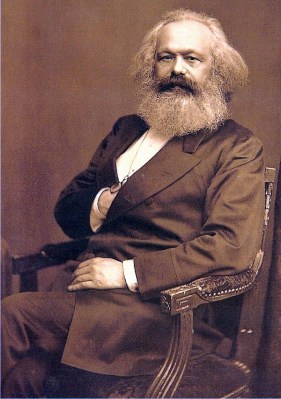
 The Strange Death of Marxism seeks to refute certain misconceptions about the current European Left and its relation to Marxist and Marxist-Leninist parties that existed in the recent past. Among the misconceptions that the book treats critically and in detail is that the Post-Marxist Left (a term the book uses to describe this phenomenon) springs from a distinctly Marxist tradition of thought and that it represents an unqualified rejection of American capitalist values and practices.
 Pourquoi Nicolas Sarkozy et Angela Merkel considèrent-ils le “capitalisme de l’ombre” comme la plus grave menace à laquelle nous sommes confrontés?
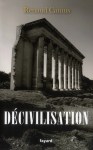 Décilivilisation est le livre frère de La Grande Déculturation. Comme il faut espérer que tous les lecteurs du nouveau volume n’auront pas lu le précédent, il commence par le reprendre, sous des angles nouveaux, avant de le prolonger, mais vers l’amont, si l’on peut dire, d’aller en deçà, de s’interroger sur des problèmes qui sont antérieurs et, si l’on veut, plus fondamentaux encore que ceux qui étaient abordés dans le premier de ces deux essais.
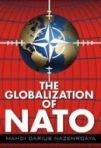 Spawned by the Cold War, the North Atlantic Treaty Organization’s existence was justified as a guarantee against any Soviet threats towards Western Europe. That raison d’être is long gone with the collapse of the Soviet Union and the end of the Cold War. Nevertheless NATO has expanded relentlessly eastward towards its former enemy, even though Communism has disappeared. Yugoslavia marked a turning point for the Atlantic Alliance and its mandate. The organization moved from a defensive posture to an offensive one under the pretexts of humanitarianism. Starting from Yugoslavia, NATO began its journey towards globalization, taking on a broader area of operations outside of the European continent, leading to NATO missions in East Africa, Afghanistan, Pakistan, and most strikingly, Libya. Increasingly symbolic of U.S. militarism and missile diplomacy, NATO has acted as an arm of the Pentagon and formally or informally moved into combat zones where the US and its allies have been combatants, as the world increasingly militarizes through the globalization of NATO and the formation of new military counter-alliance.
