Einblicke in die Schattenwelt der internationalen Finanzkriminalität
Ullstein, 2007 Amazon.de
Kurzbeschreibung:
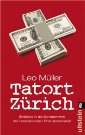
An der Zürcher Bahnhofstraße wird ein Drittel des Weltprivatvermögens verwaltet. In seiner Reportage deckt Leo Müller die geheimen Geschäfte und Machenschaften prominenter Geldtouristen auf und erklärt, wie das System von der mächtigen Kundschaft geschützt wird. Beim Ausflug in die Welt des modernen Corporate Crime begegnet man nicht nur gewieften Gehilfen in Geldhäusern und Anwaltskanzleien mit ihren raffinierten Steuertricks, sondern auch machtlosen Strafverfolgern – und bekannten Gestalten…
Pressestimmen:
“Der Wirtschaftsjournalist Leo Müller, der früher für den Stern arbeitete und heute für das Schweizer Wirtschaftsblatt Cash schreibt, hat sich viel vorgenommen und bewältigt sein Mammutprogramm mit handwerklichem und erzählerischem Geschick. Die juristischen und technischen Passagen sind knapp und verständlich, die Schilderungen der zahlreichen Affären mit einer Fülle von Details gespickt. Vor allem aber beschreibt Müller die dunkle Seite von Alpenkapitalismus und Bankgheimnis ohne den penetrant anklagenden Unterton vieler anderer Autoren.” Manager Magazin
“… bietet sein Buch Tatort Zürich genügend Stoff zum Staunen oder zur Empörung – je nach Gemütslage…Dass Banker Schlitzohren sein können – dafür liefert Müller krimigerecht servierte Beispiele, die oft so aktuell sind, dass sie von den Beteiligten noch immer als schwebendes Verfahren behandelt werden…Spannend wird das Werk dort, wo Schlüsse gezogen werden. Einer lautet, dass das mitunter nicht ganz sauberer System der Schweizer Finanzindustrie nur deswegen läuft wie geschmiert, weil es genügend Potentaten auf der Welt gibt, die daran ein Interesse haben.” Handelsblatt
“In dem Buch Tatort Zürich deckt Wirtschaftsjournalist Leo Müller die geheimen Geschäfte prominenter Geldtouristen auf, entlarvt die Machenschaften korrupter Finanzjongleure und schildert die Ohnmacht der Justiz.” Die Welt
“Der Banker gibt den Komplizen der Räuber: Leo Müller hat ein hochmoralisches Buch geschrieben.” Financial Times Deutschland
“Locker, jedoch präzise formuliert, mit einem mitunter leicht ironischen Unterton, liest sich Müllers Insiderreport wie ein Kriminalroman.” Rheinischer Merkur
“Spannend und gut verständlich beschreibt Müller zahlreiche Fälle von Finanzkriminalität der jüngeren Vergangenheit…Das Buch des ehemaligen Stern- und heutigen Cash-Reporters liest sich gut und lebt vom Talent des Autors, Situationen detailliert zu beschreiben.” Facts
“Leo Müller, eine Koryphäe des investigativen Journalismus, hat sich auf die Spur des Geldes gemacht. Mit viel Biss, Witz und feiner Ironie erzählt er von großen Skandalen und skizziert die Methoden korrupter Manager und Finanzjongleure. In großen Fallreportagen legt er lebendig und kenntnisreich dar, wie das Schweizer Finanzsystem funktioniert. Gespickt mit amüsanten Anekdoten, berichtet er vom Versagen der Justiz, dem Entstehen einer neuen privaten Anti-Geldwäsche-Industrie und den neuen Ausweichquartieren der Geldwäscher. Das Buch ist ausgestattet mit einem hilfreichen Glossar zu den Tricks und Kniffen im Corporate Crime.” Der Treckbote
“Müller zeigt in seinem Buch, daß die kriminelle Energie in der Wirtschaftswelt größer ist, als brave Bürger denken.” Süddeutsche Zeitung
“Leo Müller…demonstriert in diesem Buch…wie man höchst komplexe Themen ohne Substanz gefährdende Vereinfachung spannend vermitteln kann. Ein umfangreicher Anmerkungsapparat läßt die immense Energie und Fantasie des Rechercheurs erahnen… Seine Reportagen sind präzise erzählte, mit Anekdoten, Slice of (High) life-Techniken und feiner Ironie veredelte, investigative Storys, die durch handwerkliche und schreiberische Qualitäten beeindrucken.” Message
Über den Autor:
Leo Müller hat als Reporter (WDR, Stern-TV, Stern) seit Anfang der neunziger Jahre zahlreiche politische Affären und Wirtschaftsskandale begleitet. Seit vier Jahren schreibt er bei der Schweizer Wirtschaftszeitung CASH über Finanz- und Wirtschaftskriminalität. Seine Recherchen wurden international beachtet. Leo Müller lebt in Zürich.
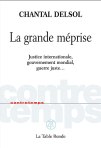 Idée séduisante après les crimes massifs du XXe siècle, la justice internationale ne trouve pas de légitimité théorique, en tout cas au regard de nos propres références. Faire justice, est-ce toujours prioritaire pour restaurer le vivre-ensemble après une catastrophe? Pouvons-nous imposer à tous les peuples la même hiérarchie des malheurs et la même hiérarchie des priorités? Aucune justice ne peut s’exercer sans la reconnaissance. Il faudrait donc, auparavant, convaincre. Peut-on juger de loin et hors contexte? Peut-on faire si bon marché de l’autorité politique, en plaçant directement les citoyens sous une loi mondiale? La loi naturelle, qui préside à la justice internationale, peut-elle s’instaurer en loi positive? Et, dans ce cas, dans quel recoin peut encore se loger l’esprit d’Antigone? La justice internationale ne pourra exister que sous un gouvernement mondial. Elle porte en elle la tare rédhibitoire de l’uniformité et du despotisme. En invoquant Montesquieu, Grotius, Kant, on défendra ici, face aux crimes d’État, la guerre d’ingérence comme décision politique.
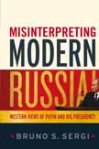 When President Vladimir Putin ascended to the Kremlin at the end of the 1990s, he had to struggle with the after-effects of Boris Yeltsin’s political agenda: outrageous corruption, endless social injustice, and deeply entrenched interests dating back to Gorbachev and beyond. From the outset, Putin saw his task as leveling out the political scenery. Discontent had been building up among ordinary Russians on these consequences of the dramatically unstable 1990s. Stabilization of the political system and cleaning up the widespread corruption were Putin’s aims, and the Russian people supported him wholeheartedly. Many observers in the West were quick to condemn Putin and depict him as an authoritarian, dishonest leader who was still linked to the KGB. When asked why Russians were supporting the new Kremlin, many experts explained that it was a paradox that combined the country’s supposed history of tyranny and its people’s inclination towards it. These explanations shaped the West’s understanding of modern Russia and they appear to be unshakeable in cultural circles today. Bruno Sergi argues, in this new study, that the way to know the complete story behind how Putin’s presidency has been viewed in Russia, is to examine closely the hard realities that conditioned Putin’s policies and responses. Misinterpreting Modern Russia: Western Views of Putin and his Presidency looks beyond the stereotypes to the hard logic of the 1990s, and asks a range of provocative questions about the disintegration of the old Soviet empire and the extraordinary riches that have caused so much opportunity and turmoil in recent years.
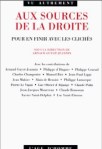 Avec contributions de Arnaud Guyot-Jeannin, Philippe d’Hugues, Philippe Conrad, Charles Champetier, Manuel Rici, Jean-Paul Lippi, Jean Mabire, Alain de Benoist, Philippe Lamarque, Pierre Le Vigan, Luc-Olivier d’Algange, Claude Polin, Jean-Jacques Mourreau, Claude Rousseau, Xavier Saint-Delphin, Luc Saint-Etienne
 Was läuft in unserer Gesellschaft, in den Familien, bei den einzelnen Menschen wirklich ab? Wir haben ein unbehagliches Gefühl, dass manches nicht mehr stimmt und aus dem Lot geraten ist. Aber die Ursachen, von Einzelnen häufig gut erkannt, sind in der Öffentlichkeit tabuisiert. Ist – wie vor 50 Jahren – erst die nachfolgende Generation in der Lage, die gegenwärtige Situation zu erfassen? Lassen sich die heutigen Erscheinungen eines kulturellen, wirtschaftlichen und politischen Niedergangs, des Sinnverlustes und der Orientierungslosigkeit vieler Menschen, allein als urtypische Dekadenz eines schlaff gewordenen Schlaraffenlandes umschreiben? Nein. Ist es auch Wahnsinn, so hat es doch Methode: Kollektiverziehung wird unbeeindruckt durch die verheerenden Misserfolge dennoch als Modell der Zukunft installiert, die Männer werden feministisch abgehalftert und die Frauen zu Männinnen aufgeplustert. Sex und Perversionen werden Kindern als Lebensziel angepriesen, statt sie vor der Zerstörung ihrer Persönlichkeit, die mit dem vermeintlich gewonnenen Lustgewinn einhergeht, zu warnen und zu schützen. Die bekannte Psychotherapeutin Christa Meves beschreibt in ihrem neuesten Buch “Verführt, Manipuliert, Pervertiert” Hintergründe dieser modischen Irrlehren und wartet mit konstruktiven Vorschlägen auf. Sie analysiert das heute gängige Bild, dass von dem Mann, der Frau, der Familie, der Jugend und der Erziehung, vermittelt wird. Deutlich zeigt sie die Ursachen der Fehlentwicklungen auf. Sie bestätigen die Richtigkeit ihres Ansatzes. Denn vor mehr als 30 Jahren hat sie die sich heute abzeichnende Situation prognostiziert. Dem Leser werden verständlich die Folgen verdeutlicht, weil die Ursachen aufgedeckt und beschrieben werden. Die Autorin bleibt aber nicht stehen, im Aufzeigen der Fehlentwicklungen, sondern sie zeigt auch auf, was getan werden kann, um dieser Entwicklung Herr zu werden. So stellt dieses Buch einen wertvollen Diskussionsbeitrag dar, wenn wir nicht ratlos vor all den Phänomenen, der gescheiterten Familien, der Aggressivität und Orientierungslosigkeit kapitulieren wollen.
 According to Alexander Dugin, what is needed to break through this morass is a fourth ideology – one that will sift through the debris of the first three to look for elements that might be useful, but that remains innovative and unique in itself. Dugin does not offer a point-by-point program for this new theory, but rather outlines the parameters within which it might develop and the issues which it must address. Dugin foresees that the Fourth Political Theory will use the tools and concepts of modernity against itself, to bring about a return of cultural diversity against commercialisation, as well as the traditional worldview of all the peoples of the world – albeit within an entirely new context. Written by a scholar who is actively influencing the direction of Russian geopolitical strategy today, The Fourth Political Theory is an introduction to an idea that may well shape the course of the world’s political future.
 Un quarteron de journalistes félons menace la République. Ils s’appellent Éric Zemmour, Robert Ménard, Ivan Rioufol, Élisabeth Lévy. Ils ont le mauvais goût de ne pas se prosterner devant toutes les lubies de l’époque: la culture réduite à l’écran, l’art dévoyé en marketing, la disparition de l’autorité des salles de classe, l’effacement des frontières. Ce sont les “nouveaux réactionnaires”.
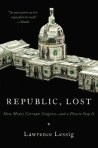 In an era when special interests funnel huge amounts of money into our government – driven by shifts in campaign-finance rules and brought to new levels by the Supreme Court in Citizens United v. Federal Election Commission – trust in our government has reached an all-time low. More than ever before, Americans believe that money buys results in Congress, and that business interests wield control over our legislature.

