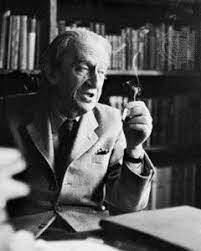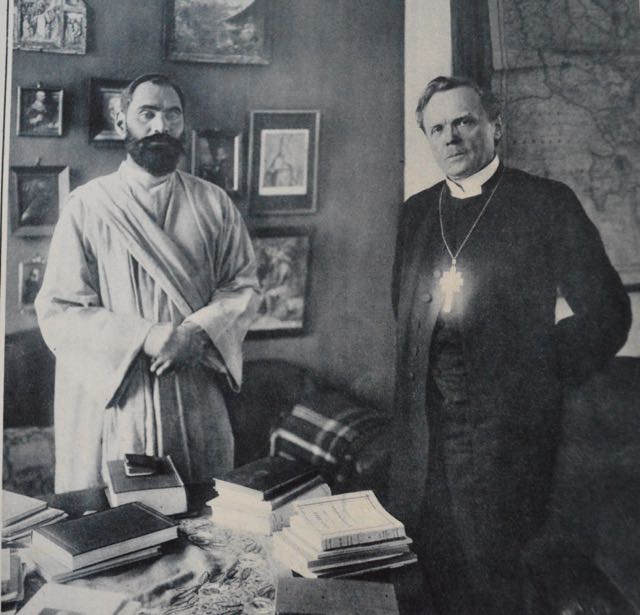
Sadhu Sundar Singh och Nathan Söderblom
Norstedts, 1981
Baksida:
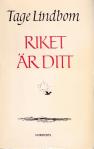 Människan lever som jordevarelse under dubbla villkor: hon besitter en odödlig själ och därför är hon en evighetsvarelse, men samtidigt är hon med händer och fötter bunden till det jordiska. Detta är utgångspunkten för Tage Lindboms nya bok. Hur skall vi kunna leva under dessa dubbla villkor? – Det är den fråga som boken vill besvara.
Vi möter samhället framför allt på tre plan: i familjen, i arbetslivet och som medborgare. Vad är familjelivets djupaste mening? Är arbetet en börda, ett nödvändigt ont eller en källa till glädje? Vem har makten på jorden, Skaparen eller människan, Gud eller folket?
Nutidsmänniskan inbillar sig gärna att hon är jordens härskare och att hon skall kunna förvandla världen i enlighet med sina drömmar och önskningar. Vetenskap och teknik, ideologier och jämlikhetssträvanden är därvid mäktiga vapen i hennes hand. Här sätter författaren in en skoningslös kritik. Bokens titel antyder det svar han vill ge: människan är ingen självhärskare utan en förvaltare under de gudomliga buden.
JOBs kommentar:
I stället för “Gud eller folket” kan man säga – som förtydligande, utan att avvika från Lindboms ståndpunkt – “Gud eller de revolutionära ledare som utövar makten i folkets namn”.
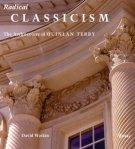 Often described as Prince Charles’s favorite architect, Quinlan Terry is at home in every traditional style, from Classical Greek to Roman, Gothic to Renaissance, and Baroque to Neo-classical. With intense new interest in classical design, there is a high demand for a compilation of Terry’s work, a volume that showcases the ideas and creations of one of the world’s most daring traditionalist designers. At the pinnacle of his career – this year’s winner of the Driehaus Prize, classical architecture’s highest honor – Quinlan Terry is one of the most celebrated practitioners of the form and also perhaps the most radical. Radical Classicism contains hundreds of lavish color illustrations and thirty of Terry’s designs, including state rooms at #10 Downing Street, a library and residential building at Cambridge University, a cathedral in Essex, a church in Bishopsgate, four buildings in Williamsburg, Va., townhouses in London, and ten large country houses in England, Germany, and the U.S. Buildings featured include Juniper Hill in Buckinghamshire; Ionic Villa, Corinthian Villa, and Regency Villa in Regents Park, London; Abercrombie House in Kentucky; Latourette Farm, New Jersey; Highland Park House, Dallas, Texas.
Live version on the album Viva! (1976). From their debut album Roxy Music (1972).
Jag har inte närmare satt mig in i Björn Söders och den sverigedemokratiska partistyrelsens grunder för uteslutningen tidigare i år av partiets gruppledare i Göteborg och Västra Götaland, Patrik Ehn, eller i dennes försvar mot anklagelserna, och känner mig därför inte kunna rättvist bedöma det hela. Inte minst äger jag bristande förtrogenhet med partiets kriterier i fall som dessa.
Till skillnad från Erik Almqvists fall var det i Ehns inte fråga om något mediadrev efter någon “skandal” rörande hans beteende. Ehn uteslöts på grund av vad partiledningen på eget initiativ bedömde som ideologisk avvikelse – och uteslutningen var en mer långtgående åtgärd än den som vidtogs mot Almqvist, som endast fråntogs sina specifika uppdrag i partiet.
Utan att ta ställning i denna fråga, och oavsett frågan om Ehn gör rätt i att sitta kvar som politisk vilde i kommunen och regionen, måste dock konstateras att Ehns allmänna inriktning som politiker, vad som tycks vara hans huvudsakliga intresseområden, som sådana, gör att han framstår som en politiker av den typ som partiet i själva verket behöver många fler av. Jag har visserligen inte följt Ehns arbete i Göteborg, men på senare tid, och inte minst i samband med uteslutningen, har det tydligt framgått att han åtminstone delvis är fokuserad på de nära sammanhängande områdena kulturen och Europa.
I den här bloggen har jag försökt framföra uppfattningen att SDs politik på båda områdena behöver revideras. Kulturpolitiken, och inte minst den för partiet helt centrala frågan om vad som är svensk kultur, måste omdefinieras i europeiska termer. Det hotande populistiska och thatcherska misstaget att helt enkelt lägga ned eller dra in stödet till kultur- och forskningsinstitutioner enbart på grund av deras nuvarande innehåll och problematiska ideologiska ledning, i stället för att välja den svårare, långsiktiga lösningen att arbeta för deras förändring i dessa avseenden, måste undvikas. Ett nära samarbete med motsvarande europeiska politiska partier för en Europagemensam politik, syftande inte minst till etableringen av ett konstruktivt alternativ till det nuvarande EU, och på grundval av den gemensamma europeiska kulturtraditionen, måste inledas.
SDs nya principprogram antogs såvitt jag förstår mycket snabbt vid landsdagarna 2011 eftersom man – eller en majoritet – snabbt ville etablera socialkonservatismen som huvudsaklig ideologisk inriktning och beteckning i stället för nationalismen. Brådskan var såtillvida begriplig, och det är naturligt att produkten inte blev optimal. Men det är viktigt att inte försumma det arbete med fortsatt revision av programmet som av dessa skäl är nödvändigt. Just när socialkonservatismen skulle lyftas fram i stället för nationalismen, blev resultatet i stället på den helt avgörande kulturpolitikens område att intrycket av nationalism, i problematisk mening, snarare förstärktes.
Jag vet inte vilka som är ansvariga för just det kulturpolitiska avsnittet (som, liksom alla avsnitt i jämförelse med det tidigare programmet, är mycket kort). I själva verket är det två avsnitt – ett allmänt om kulturpolitiken, och ett separat om frågan om vad som är svensk kultur. Mattias Karlsson ansågs såvitt jag minns ha haft något slags övergripande ansvar för programmets helhet, men naturligtvis måste rimligen många i partiet ha bidragit som medförfattare.
Mitt intryck är att Karlsson är ideologiskt kunnig och har historiska intressen. Det föreslogs exempelvis att det var han som låg bakom webbplatsen Socialkonservativa tankar, som innehåller citat från några kända och okända politiska tänkare. Den är visserligen högst rudimentär och begränsad i sitt urval, och den har inte uppdaterats sedan februari 2012, men signalerar ändå, om Karlsson är upphovsmannen, en god vilja till fördjupad ideologisk diskussion från partiledningens sida. Bland de citerade filosoferna finner vi Roger Scruton, en av vår tids ledande kulturfilosofer. Ja, vi finner till och med T. S. Eliot! Inte minst mot denna bakgrund är det svårt att tro att Karlsson står bakom just de otillräckliga och delvis ohållbara kulturavsnitten. Deras svagheter måste vara tillfälliga misstag åtminstone främst från andras sida, olyckshändelser som förklaras av tidsbristen.
Oavsett frågan om riktigheten av Ehns uteslutning var det högst olyckligt att det för många kom att framstå som att den, på ett allmänt plan, berodde just på hans intresse för vissa tänkare och för viss litteratur och konst, och på hans engagemang för och kontakter i Europa: den som uteslöts var en av de alltför få hittillsvarande ledande sverigedemokraterna med verkligt relevant utbildning, betydande och uppenbara kulturella intressen, och europeisk utblick. Fastän detta självklart inte var avsikten (man fann i allt detta innehållsmässigt den ideologiska avvikelsen), förstärkte det tyvärr det missvisande intryck av inskränkt, provinsiell kulturell nationalism som också principprogrammet kan ge.
Ehn har nu, som utesluten, på Facebook gjort en insats som jag tycker förtjänar erkännande från partimedlemmar, oaktat var han nu ska anses stå ideologiskt. Han har fäst uppmärksamheten på att SD på sin webbplats, i avdelningen SD-Butiken, säljer endast en enda bok: Ian Wachtmeisters Rebellerna!
Inte heller detta kan naturligtvis vara något annat än ett misstag. Boken måste ha lagts till i Butiken i en egen kategori, Litteratur, som en gest av välvilja i samband med att Wachtmeister talade på SDs kommunkonferens i Älvsjö 2010, och därefter har detta glömts bort av de ansvariga för webbplatsen.
Säkert var Wachtmeister en mycket kompetent industri- och företagsledare, utan tvekan har han alltid haft flera viktiga poänger om Sverige och svensk politik, och han är förvisso ofta rolig. Om före detta nydemokrater nu inser att det är SDs politik som behövs måste de naturligtvis välkomnas. Självklart var Wachtmeister en lämplig talare (trots hans undantagslöst hemska slipsar). Men att SD marknadsför en bok av honom som den enda boken överhuvudtaget på sin egen webbplats sänder ju av flera skäl helt fel signaler.
Wachtmeisters parti Ny Demokrati var verkligen i alldeles för hög grad ett populistiskt pajasparti, utan verklig historisk, ideologisk och kulturell grund, även om detta var Bert Karlssons – som bl.a. fick en tillsägelse av talmannen när han uppträdde utan skor i riksdagens talarstol – och andras fel i långt högre grad än hans eget (skillnaden mellan Wachtmeisters och Karlssons åsikter om SD, idag, är stor). Wachtmeister själv framstod som detta partis nästan enda styrka. Inte minst viktigt för SD har ju länge varit att visa just att man inte är ett nytt Ny Demokrati som snart kommer upplösas av sig själv genom inre strider producerade av bristande seriositet, att man inte är ett populistiskt parti i den lägre meningen eller bara ett missnöjesparti. Även om Wachtmeisters bok skulle vara bra (jag har inte läst den) vore det bättre för SD att inte sälja någon bok alls genom sin webbplats än att sälja bara den. Sådan är nu en gång politiken, och det vet ju egentligen partiledningen. Wachtmeister – som också själv mycket väl vet detta – får ursäkta här.
Det finns mängder av lämplig litteratur som Mattias Karlsson och andra borde kunna instruera de för webbplatsen ansvariga att sälja, litteratur som verkligen representerar SDs ståndpunkter och värderingar och vad som s.a.s. bör vara partiets allmänna väsen. SD har ju egentligen, i jämförelse med de övriga riksdagspartierna som låst fast sig i ofruktbar, oframkomlig, temporalt provinsiell ideologi, i det närmaste outtömliga intellektuella resurser till sitt förfogande. Vad som krävs är bara att partiet aktivt tillägnar sig och tillämpar dem.
För detta syfte räcker självfallet inte litteraturavdelningen i nätbutiken. Partiets publikationer, och partiet närstående publikationer, är långt viktigare. Nyligen utslystes tjänsten som redaktör för SD-Kuriren, samtidigt som medarbetare söktes till den nya tidskriften Samtiden. Här finns nu alltså en möjlighet att knyta till sig nya kvalificerade personer med inte bara allmän publicistisk erfarenhet utan de nödvändiga allmänintellektuella och kulturella meriterna och det rätta europeiska perspektivet.
Tidskriften Samtiden, som ska rikta sig till den läsande allmänheten, är naturligtvis viktigare än det interna partiorganet SD-Kuriren. Det är såvitt jag förstår Samtiden som det i flera år talats om att Erik Almqvist ska ansvara för grundandet av. Även om han kanske inte själv ska bli dess redaktör tycks det vara han som på något sätt ska administrera de tillgängliga ekonomiska resurserna – och det är därför det är så viktigt att han omedelbart räddas undan “järnrörsskandalen” och kommer hem till Sverige.
Här har man möjlighet att skapa ett från partiet fristående men sympatiserande organ som förutom seriös “avpixlad” nyhetsförmedling kan rymma mer fördjupad kommentar, ideologisk analys och kultur än övriga alternativmedia. Ett organ som på hög intellektuell nivå kan levandegöra och visa aktualiteten och relevansen hos de tanketraditioner – ja vad som på ett plan faktiskt idag ytterst kan sammanfattas som den stora europeiska, i klassisk mening humanistiska kulturtraditionen med dess nationella variationer – som åtminstone potentiellt ligger i linje med partiet som det enda nyskapande traditionalistiska eller social-, kultur- och värdekonservativa i landet, och som under alla omständigheter övriga partier i radikalmodernistisk förblindelse effektivt och till synes definitivt avskurit sig från. Tidskriften Samtiden kan bli vad Samtidsmagasinet Salt för drygt 10 år sedan kunde ha blivit men inte blev.
Click to enlarge
The Crisis of Democracy and the Quest for Empire
Transaction, 2003 Amazon.com
Front and Back Flaps:

Urged on by intellectuals and political activists, the president of the United States has committed America to a quest for empire. In his view, American values are universal and should guide a remaking of the world. The United States has a right to strike preemptively and unilaterally against any potential threat and should have sufficient military might to discourage any nation from challenging its will. Claes Ryn explains this drive for virtuous empire as the culmination of an ideological movement that has taken shape in the last several decades. Still virtually unknown to the American people, it represents a profound change relative to the worldview of America’s founders.
Ryn relates the ideology of empire to a crisis of American and Western civilization. The ideology both expresses and aggravates a general moral, cultural, and political decline, including an erosion of constitutionalism. The ideology is about far more than America’s role in the world: it encompasses a view of human nature and society and sets forth its own notion of virtue. It sees in America not a historically evolved and culturally distinctive nation but a regime based on universal principles that is uniquely called on and equipped to transform the world. Numerous prominent commentators, such as William Bennett, Charles Krauthammer, William Kristol, Michael Novak, and Normal Podhoretz, argue passionately for having the United States bring “democracy”, “freedom”, and “capitalism” to the rest of the world.
America the Virtuous argues that a transformation of moral, cultural, and political beliefs is making America shed an older sense of the need for restraints on power. Checks provided by the U.S. Constitution are greatly weakened. Influential policymakers and intellectuals want American leaders to have virtually unrestricted power in the world. America the Virtuous explains the ideological underpinnings of the quest for empire, setting them in the larger context of the crisis of Western civilization and subjects them to in-depth analysis and criticism.
Back Cover:
Advance Comments
“Claes Ryn’s new book, America the Virtuous, is an important contribution for those interested in the intense post 9/11 debate on U.S. foreign policy. Ryn raises deep theoretical concerns about the U.S. global promotion of democracy and finds no classical U.S. foundations for the desirability of a new American Empire. Whether or not one fully agrees with his genealogy, diagnosis, or critique of neo-Jacobin democratic imperialism, his study is a significant addition to that controversy which has reached the national and international stage with the Iraq war and occupation.” David C. Jordan, professor, Woodrow Wilson Department of Politics at the University of Virginia and former United States ambassador to Peru
“Claes Ryn paints a truly alarming portrait of the new Jacobinism that now constitutes a powerful ideological force among our nation’s elites. Its utopianism and arrogance, spawned by its ahistorical foundations, threaten the constitutionalism bequeathed to us by the Founders, and lead its ambitioius adherents, seemingly blind to the past and the realities of the modern world, to pursue the dream of an ‘American empire’. Ryn’s splendid work is a warning of things to come if we fail to recognize the dangers inherent in this ideology that has already corroded the American mind.” George W. Carey, professor of government, Georgetown University
Reviews:
“Ryn (Catholic Univ.) does not like neoconservatives. He does not even like the term. Instead, he refers to the conservative intellectuals who have secured prominent positions in the media and in the Pentagon as the “new Jacobins.” Like the Jacobins of old, they possess a dangerous arrogance that will lead their nation to disaster… Recommended. Upper-division undergraduates and above.” R. A. Strong, Choice
“There is much wisdom in Ryn’s book, and the moral realism he calls for and explicates commands respect…Ryn is onto deep truths about the nature of politics.” David C. Henderickson, World Policy Journal
“America the Virtuous diagnosed our contemporary maladies in both foreign policy and domestic Life…We Americans pretend we’re a peace-loving people and that our wars have all been foisted upon us. But the United States, as Ryn explains, is an Enlightened or Ideological Republic that has slipped its constitutional moorings, and become a Fighting Faith.” Walter A. McDougall, Humanitas
JOB’s Comment:
Ryn’s most extensive critical analysis of neoconservatism and, more generally, “the new Jacobinism”. For those who want a clear understanding of these currents, the shorter book, The New Jacobinism, is an excellent introduction. This one is for those who wish to go deeper. Ryn’s criticism is almost certainly the deepest that has been produced in terms of philosophical analysis. This might lead the reader to go further still and explore the full expositions of Ryn’s philosophy in itself, both the distinctive philosophical defense of constitutionalism in Democracy and the Ethical Life, and the value-centered historicism on which it is based, as set forth in Will, Imagination and Reason.
In view of my recent comment on Irving Kristol’s collection of essays, Neoconservatism: The Autobiography of an Idea, it might be of interest for readers to compare Ryn’s explanation in this book (p. 29) that neoconservatism cannot simply be identified with the new Jacobinism:
“Like liberals of the ordinary type, neoconservatives can be more or less prone to a neo-Jacobin outlook. A number of them will be quoted and discussed…who express neo-Jacobin sentiments in a particularly clear-cut and illustrative way. This is not to say that neoconservatism equals neo-Jacobinism. Neoconservatism, as the term is ordinarily used, is too loose a constellation of individuals, is intellectually too diverse, and too much of a composite to make such a simple connection. In fact, the person who is often called the ‘god-father’ of American neoconservatism, Irving Kristol, is not only not a very typical neoconservative but is not among those with the most pronounced neo-Jacobin leanings. But Kristol’s son, William, clearly is…though, like many other neoconservatives, he attempts to combine that strong ideological disposition with ideas less inimical to traditional conservatism.”