Catoméris is one of my yoga teachers. I practiced with him for at least a year in the early 90s.
He says a few strange things here. But so do all yoga teachers.
Catoméris is one of my yoga teachers. I practiced with him for at least a year in the early 90s.
He says a few strange things here. But so do all yoga teachers.
The Traditional Teachings of Sri Shyam Sundar Goswami
Inner Traditions, 2012 Amazon.com
From the Back Cover:
 Foundations of Yoga presents the full and rigorous yogic training of traditional Hatha Yoga as taught by renowned Indian Yoga master the late Sri Shyam Sundar Goswami. Written by his disciple and spiritual heir, the book emphasizes metaphysical, spiritual, and psychological cultivation in addition to physical practice. It offers Yoga practitioners and teachers a way to enrich and advance their physical Yoga practice through a deeper understanding of physiology, psychology, philosophy, and spirituality centered on Vedic and Tantric principles.
Woven together with stories from Sri Shyam Sundar Goswami’s life, the book explains pratyahara (control of the senses), charana (yogic bodybuilding), mental concentration exercises, and the energy-focusing and purifying muscular-control movements known as mudras, including the metabolism-boosting mahamudra and advanced pelvic mudras and sexual practices to transcend the ego. The book explores methods of internal purification such as dhauti (cleansing of the stomach with air or water), vasti (intestinal cleansing), neti (nasal cleansing), trataka (visual concentration exercises), and kapalabhati (diaphragmatic hyperventilation) and shows how these purifications are necessary before beginning the advanced breathing practices of pranayama to eradicate deep internal impurities and strengthen the immune system. Exploring the philosophy of Yoga, the book shares meditative exercises for introspection, expanding consciousness, and seeking your true divine nature.
As the teachings and life of Sri S. S. Goswami show, by strengthening the body, vital force, and mind, one can master all three for a long, healthy, harmonious life.
Reviews:
“A profound and lucid study of yoga in the deeper sense of the term, covering both practice and philosophy. Foundations of Yoga is an important book for those who are interested in how Hatha Yoga relates to the greater transformation of body, mind, and heart.” David Frawley, author of Yoga & Ayurveda and founder of the American Institute for Vedic Studies
About the Author:
Basile P. Catoméris is the disciple and spiritual heir of Sri Shyam Sundar Goswami. Devoting his life to the study and practice of yogic traditions, he studied under Sri S. S. Goswami from 1956 until Goswami’s death in 1978, whereupon he took over Sri S. S. Goswami’s teaching duties at the Goswami Yoga Institute in Sweden. In December 1983, he was granted yogic final initiation (brahma mantra diksha) by Ma Santi Dei, Sri Goswami’s “spiritual mother.” He lives in southern France.
From Birth to Rebirth
The Notebooks of Paul Brunton
Volume Six
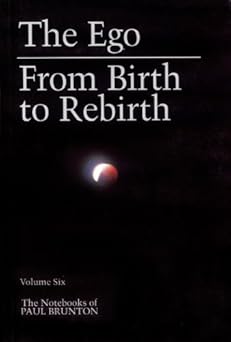
Larson, 1987
Back Cover:
The ego is just as powerful whether it is condoned or condemned, for in both cases it keeps the man engaged ona self-centered quest.
We must understand that heaven and hell are deep inside the heart and not places to which we go…the true heart of man is deathless.
– Paul Brunton
Part 1, The Ego, is a unique and uprecedented contribution to the literature of self-realization. It exposes, at an existential rather than merely psychological level, the most fundamental problem obstructing the life of unfailing self-integrity.
Part 2, From Birth to Rebirth, shows the role of death in the ongoing cycle of life, clarifies beliefs about reincarnation, and explores the creative relationships between fate, destiny, and free will.
Maharishi Mahesh Yogi Speaks about the Full Development of Human Consciousness
Volume 1
Maharishi University of Management Press, 2011 Amazon.com
From the Back Cover:
 The majestic panoramas of Lake Tahoe in California and the Kashmir Valley in the Himalayas provided the ideal settings for the conversations in this book. It was there in 1968 and 1969 that Maharishi began his as-yet-unpublished commentary on the Brahma Sutra, a key text of the timeless wisdom of Vedanta. The penetrating questions asked by Dr. Katz inspired deep insights from Maharishi on the nature and development of higher states of consciousness. Through Maharishi’s words, the ultimate reality of life becomes meaningful and practical for people living today: anyone can awaken the wholeness of consciousness within. These conversations are suffused with bliss and serve as a tribute to Maharishi’s legacy of knowledge for full development of the human heart and mind.
From the Back Flap:
“The ‘Everest’ of spiritual teachings is found in these conversations – the highest pinnacle of human development explained with utter simplicity, clarity, and practicality – a pure delight.” Dr. Judy Booth, creator and teacher of an on line Distance Education course on the Bhagavad-Gita
About the Author (from the Front Flap):
Vernon Katz is a trustee and a visiting professor at Maharishi University of Management, Fairfield, Iowa, U.S.A. He earned a first class honours degree and a doctorate in philosophy from Oxford University. His thesis on Indian philosophy was supervised by Dr. Sarvepalli Radhakrishnan, the eminent philosopher who became India’s second president. In the early 1960s Vernon assisted Maharishi Mahesh Yogi with his translation of and commentary on the Bhagavad-Gita, which has sold over one million copies. He is currently working on another volume of conversations with Maharishi and on a translation of the Upanishads.
JOB’s Comment:
The cover design of this book is impeccable. See the Spirituality category and the books under Spirituality on the References page for my general comments on Maharishi.
Livsfrågor, psykoterapi och själavård
Natur & Kultur, 1998 (1991)
Baksida:
 Samtidens intresse för new age, mystik, etik och existentiella frågor i kombination med en utbredd skepsis mot kyrkor och färdiga svar har skapat en vilsenhet inom såväl kyrka som socialvård och psykiatri. Med stor öppenhet och med många praktiska exempel från samtal och skönlitteratur utforskar Owe Wikström här den inomkristna traditionens resurser i gränslandet mellan religion, andlighet, psykologi och själavård.
I centrum står religionens psykologiska funktion. Varför är människan religiös? Hur skall man förstå och professionellt bemöta människans andliga behov? Wikström föreslår en modell för själavård som bygger på den kristna mystiska andliga vägledningstraditionen. Ambitionen är att integrera tre stora perspektiv: ett psykoanalytiskt, ett existentialfilosofiskt och ett kulturteoretiskt. Särskilt betonas symbolernas funktion.
Bokens avslutande del handlar om Dostojevskijs psykologi. Skönlitteraturen ser Wikström som en allt för lite nyttjad möjlighet att närma sig den outgrundliga människan med ett språk där ord som godhet, barmhärtighet och kärlek inte är bortrationaliserade.
Denna nya utgåva har redigerats om och kompletterats, bl a med nya avsnitt om objektrelationsteori, förhållandet mellan narcissism och religion, och om tystnadspliktens problem. Den innehåller en helt ny bibliografi med hänvisningar till den senaste forskningen inom området.
Första upplagans baksida:
Det finns terapeuter som i sitt behandlingsarbete – av personliga och/eller i den vetenskapliga objektivitetens namn – väjer för de stora livsfrågorna. Men förr eller senare hinner frågan om livets yttersta mening upp oss alla, däri består en del av storheten och förbannelsen med att vara människa.
Att i människovård lära sig urskilja och handskas med religiösa och existentiella orsaker till konflikter bidrar både till personlig utveckling och fördjupning av det terapeutiska arbetet. Själavården har ibland okritiskt anammat psykologisk teori och förlorat sin religiösa egenart.
I denna bok ställs bl. a. frågorna: kan man se på religion och livsåskådning ur ett vetenskapligt perspektiv? Kan man integrera dynamisk psykologi och mystik i själavården? Vari skiljer sig psykologers och prästers roller? Hur skall man bestämma själavårdens identitet? Hur bör en psykoterapeut förhålla sig till religiös problematik?
Framställningen är förankrad i en religionspsykologisk ram med belägg och kliniska exempel hämtade från såväl psykoterapeutiska samtalsbehandlingar som själavård och – inte minst – skönlitteratur. Ett längre avsnitt handlar om Dostojevskij, en författare som kanske mer än någon annan genom sina odödliga romanfigurer givit gestalt och uttryck åt de stora livsfrågorna om Ansvar, Skuld, Frihet och Mening.
Om författaren:
Owe Wikström är teol. dr. och professor i religionspsykologi vid Uppsala universitet. Han medverkar ofta i radio och är en efterfrågad föreläsare. Han är författare till ett tiotal böcker, bl a Om heligheten (1993), Det bländande mörkret (1994) och Aljosjas leende (1997). Han är också redaktör för antologin Att se det dolda. Om new age och ockultism inför millennieskiftet (1998).
JOBs kommentar:
Trots vissa brister och begränsningar, bland annat ifråga om de filosofiska resurser som skulle behövts inte minst för definitionen och förståelsen av vetenskaplighet i detta sammanhang, tyckte jag när första upplagan kom ut att denna bok markerade ett oerhört historiskt framsteg på sitt område i Sverige.
Talks and Essays on the Transcendence of Scientific Materialism through Radical Understanding
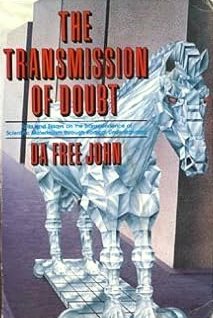
Dawn Horse Press, 1984
Back Cover:
In this remarkable volume, Master Da Free John invites the reader to consider a radical alternative to both materialistic scientism, which is fast becoming a global Church, and religious provincialism, which is today’s other great ideological force. He shows that there is a third possibility: self-transcending understandig as the means of participating in all dimensions of existence. His comprehensive critique of scientific materialism and its destructive consequences is based not on mere intellectual learning or speculation, nor on mere belief or faith, but on an Adept’s Enlightenment or Realization of That Which is Real.
Master Da Free John points a realistic Way to a future in which Enlightened human beings transform life by a benign science that is the product not of anxious and merely clever minds but of the creative intelligence that flows freely in the Enlightened or God-Realized Disposition, which he is here to Communicate.
“This extraordinary book is a mirror of truth.”
John Halifax, Founder, The Ojai Foundation
“The Transmission of Doubt is a profound work that, when it is understood, may shake science completely off its classic foundation and raise it to a new plateau encompassing all reality.”
Guy Murchie, Author of Music of the Spheres
“With penetrating insight into the timeless wisdom of self-transcendence, Da Free John puts the Soul back into science. A most valuable and important book, once again encouraging us to step beyond our beliefs and explore Reality as it is.”
Peter Russell, Author of The Global Brain
“The Transmission of Doubt is the most profound examination of the scientific enterprise from a spiritual point of view that I have ever read. I consider it must reading for anyone who cares about science and who is mature enough to recognize that the development of the heart is just as important as the development of the head.”
Charles T. Tart, Professor of Psychology, University of California, Davis
“The Adept’s argument is radical, logical, pervasive, coherent, and certainly consistent with my view of the new physics. It even offers the chance of fu rther scientific enquiry – a new physics of the Spirit is within our grasp now.”
Fred Alan Wolf, Author of Taking the Quantum Leap
“It is becoming quite obvious that no one in the fields of psychology, religion, philosophy, or sociology can afford not to be at least a student of Da Free John.”
Ken Wilber, Editor of Re-Vision and author of Up from Eden, A Sociable God, etc.
JOB’s Comment:
Norma, 1982
Från baksidan:
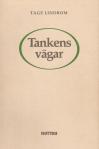 “I det andliga spänningsfält, som vi kallar Västerlandet, intager dialogen mellan teologi och profanvetenskap, mellan det intellektiva och det rationella, mellan ‘tro’ och ‘vetande’ en rangplats. Under det att profanvetenskapen observerar, systematiserar, analyserar det som är tillgängligt för våra sinnesorgan, påtager sig teologin den svåra uppgiften att fatta det ofattbara, att utsäga det outsägliga. Teologin skall i jordiska termer, i jordiska begreppsformer, söka uttolka de gudomliga sanningar, som ej är tillgängliga för rationell prövning. Men vi kan inte ‘bevisa’ Gud vetenskapligt – men är detta en brist hos teologin? Är det inte en brist hos vetenskapen?”
Så inleder Tage Lindbom sin skrift Tankens vägar. Han vill här anvisa en väg, som gör det möjligt att “fatta det ofattbara” utan att vi skall behöva göra våld på det som står i överensstämmelse med vårt förstånd. Tankens vägar har tidigare publicerats i Jakobs Stege.
JOBs kommentar:
Jakobs Stege var förläggaren René Coeckelberghs’ kulturtidskrift som utgavs 1977-83.
2012?
1910
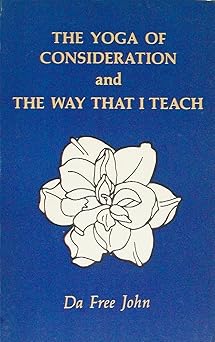
The Dawn Horse Press, 1982
From the Back Cover:
This book is a great help to all who would understand the Mystery of our existence. Our passage through the “yoga of consideration” transcends time, experience, and knowledge. With the fulfillment of this unique “yoga”, we realize Enlightenment. Only then does the Enlightened Way of the translation of Man into Transcendental Divine begin. This is what Master Da Free John calls “the Way that I Teach”.

