Rassemblement Nationals nya, 23-åriga förstanamn till Europaparlamentet:
Frithjof Schuon: Regards sur les mondes anciens
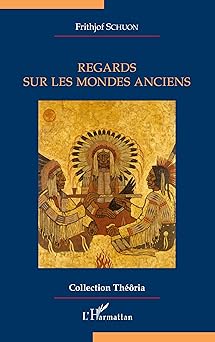
L’Harmattan, 2016 (1968)
Résumé:
Dans cet ouvrage, Fritjhof Schuon retrace la chute progressive de l’homme moderne, et “la glissade vers le bas”” des chrétiens révoltés contre leur tradition. Il traite également de la polémique – ou du dialogue truffé de malentendus – qui opposa hellénistes et chrétiens, du chamanisme peau-rouge et des peuples mongoloïdes en général, ainsi que de la signification particulière et universelle du monachisme. Il conclut avec l’essai “Religio perennis”, la “religion invisible” ou “sous-jacente”, qui résume ce qui est au coeur de toutes religions et qui est l’essence de la religion en tant que telle, le temps lui-même n’étant “qu’un mouvement spiroïdal autour d’un Centre immuable”.
SD – Europapartiet
Åkessons vårtal på Långholmen i lördags tydliggjorde hur SD sedan det förra Europaparlamentsvalet tagit ett stort steg mot att bli det sanna svenska Europapartiet.
Det allmänna, inrikespolitiska innehållet i talet begränsades till ett angrepp på Socialdemokraterna och en komprimerad sammanfattning av den egna parlamentariska positionen idag: “en offensiv socialkonservativ opposition mot de vänsterliberala i majoritet”. Mer än så fick naturligt nog inte plats i ett tal som i år markerade inledningen till en ny Europavalrörelse.
Tonvikten låg i stället naturligtvis på en argumentation i linje med förra årets nya vägval ifråga om förhållandet till EU. “Det handlar inte om vi ska ha samarbete eller inte samarbete, det handlar inte om ja till Europa eller nej till Europa, utan det handlar om hur vi ska samarbeta och i vilket Europa vi ska samarbeta”, hette det. “Det får inte råda någon tvekan om att vi förstår vikten av samarbete, att vi förstår vikten av en ansvarsfull öppenhet mot omvärlden, att vi förstår hur vi, som ett litet exportberoende land, har nytta av goda handelsförbindelser med länder i vårt närområde, att vi uppskattar Europa och vill fortsatt vara en del av Europa.”
“Vi älskar vårt Europa”, och “vi har massor av gemensamma intressen och gemensamma värden och värderingar att försvara, vi ska fortsätta underlätta handel mellan våra länder, vi ska fortsätta arbeta tillsammans för att lösa gemensamma problem, allt det där är självklarheter som vi alla gynnas av att bejaka.” “För oss som är Europavänner så är det en självklarhet att vi måste arbeta tillsammans för att ta oss an gemensamma utmaningar. Det är en självklarhet att varje enskilt land inte på egen hand kan bekämpa internationell brottslighet. Det är en självklarhet att varje enskilt land inte på egen hand kan lösa globala miljöproblem. Det är en självklarhet att vi ska fortsätta underlätta för och utveckla handel mellan Europas länder. Det där är självklarheter som ett europeiskt samarbete ska ta sig an.” “Sveriges och Europas folk” ska “fortsätta lösa gemensamma problem tillsammans.” Upprepningarna är varmt välkomna!
Försvararna av det nuvarande EU är “Europafientliga krafter”, sådana som “avskyr det riktiga Europa, som avskyr Europas mångfald, som avskyr de olikheter som genom århundradena har byggt just det Europa som de flesta av oss uppskattar, som vi till och med älskar”. Åkesson kan “som Europavän” aldrig acceptera deras likriktande, centraliserande ordning. Publiken, partivännerna, tilltalades inte längre bara som “Sverigevänner”, utan också som “Europavänner”. Och “det är vi som är Europavänner”. Det gäller att “kämpa för att Europa förblir just Europa”, vilket är liktydigt med att försvara “de olikheter och den mångfald som utgör det verkliga Europa”, “det riktiga Europa som varje sann Europavän vill slå vakt om och bevara”. “Jag älskar Europa, vi älskar Europa.”
Det mesta av detta sades väl egentligen också inför det förra Europaparlamentsvalet för fem år sedan, om än mer kortfattat och mindre emfatiskt; grundinställningen är oförändrad.
Men förutom att allt accentuerades starkare denna gång, kopplades det alltså nu också till det nya ställningstagandet för samarbete inom ramen för EU i stället för krav på utträde ur och upplösning av unionen. Det “finns inget stöd för utträde”, konstaterade Åkesson riktigt, och det gäller därför att “välja den mest framkomliga vägen”: “Låt oss sluta oss samman med andra EU-kritiska krafter över hela Europa och ta chansen att långsiktigt bygga det europeiska samarbete vi vill ha i stället. För första gången ser vi denna möjlighet. För första gången ser vi en reell möjlighet att faktiskt inifrån själva hjärtat av monsterstaten förändra, förändra det europeiska samarbetet i grunden och på riktigt, bromsa de vänsterliberala federalisternas strävan efter en federal EU-stat.”
“Detta är vad valet den 26:e maj handlar om”; “vi har chansen att göra EU till något som man kan tycka lite, lite bättre om”, och “det är den bästa chans vi har, den enda chans vi har att förändra någonting i närtid eftersom något realistiskt alternativ finns inte”.
Nu är det ju visserligen så att “lite, lite bättre” inte på långa vägar räcker. För att EU ska kunna bli det Åkesson nu vill, för att det ska vara försvarbart att, som partiet nu önskar, bevara EU, krävs mycket stora och djupgående förändringar, även av de grundläggande fördrag som unionen bygger på. Det är inte säkert att det lyckas, inte säkert att det är möjligt. Den populistiska nationalismens våg i Europa växer, men för att den ska vinna framgång i sitt eget samarbete krävs långt mer ansträngning i organiserad form.
Jag har föreslagit att samarbetet i Europaparlamentet – och förhoppningsvis så snart som möjligt också i Europeiska rådet och Europeiska kommissionen – är önskvärt till och med om det misslyckas, såtillvida som det då ändå kommer att ha stärkt och lagt en grund för det alternativa samarbete utanför EU som då blir nödvändigt. De EU-skeptiska partierna har inte byggt upp några tillräckliga, andra samarbeten, och EU tillhandahåller en formell organisatorisk ram som kan befrämja även den rätta typen av enhetssträvan (den strävan i vilken jag menar att man bör gå mycket längre än den populistiska nationalismen idag vill). Det innebär inte att det är rimligt att enbart förlita sig på arbetet inom denna ram; det bästa vore om man samtidigt kunde bygga upp andra former och organisationer för det verkliga Europa. Men vanan av samarbete inom EU blir till nytta om i en framtid samarbete utanför blir den enda möjligheten. Även av detta skäl vore det idag fel att inte hoppas på och satsa på den verkliga reformismen, reformismen inifrån.
Som jag föreslagit kunde SD redan nu göra mer i vad Åkesson ser som “hjärtat av monsterstaten”, nämligen förena sig med den stora parlamentariska grupp som de flesta liknande, närstående partier inte bara på kontinenten utan även i Norden är på väg att bilda efter valet. Men ett stort steg har partiet alltså ändå tagit i riktning mot att bli det sanna Europaparti som Sverige behöver.
–
Salvini, SD och EU-reformismens politiska organisation
SD:s vägval i Europaparlamentet
En självständig europeisk linje
Brexit och det alternativa Europasamarbetet
Europas framtid – och Sverigedemokraternas
Medelhavsinstituten och Sverigedemokraterna
Det alternativa Europasamarbetet
Sverigedemokraterna och Europavännerna
Förhållandet till Front National
Sverigedemokraternas framtida Europapolitik
Europapartiet – Sverigedemokraternas framtid
En sverigedemokratisk politisk för Europa
Sverigedemokraterna och Europaparlamentsvalet
Adolf von Hildebrand & Erwin Kurz: Wittelsbacher-Brunnen, München

10 år
Idag är det 10 år sedan jag startade den här mycket enkla och anspråkslösa WordPress-bloggen.
Peter Phillips on Giants
Peter Phillips: Giants
The Global Power Elite
Seven Stories Press, 2018 Amazon.com
Publisher’s Description:
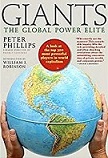 A look at the top 300 most powerful players in world capitalism, who are at the controls of our economic future.
Who holds the purse strings to the majority of the world’s wealth? There is a new global elite at the controls of our economic future, and here former Project Censored director and media monitoring sociologist Peter Phillips unveils for the general reader just who these players are. The book includes such power players as Mark Zuckerberg, Bill Gates, Jeff Bezos, Jamie Dimon, and Warren Buffett.
As the number of men with as much wealth as half the world fell from sixty-two to just eight between January 2016 and January 2017, according to Oxfam International, fewer than 200 super-connected asset managers at only 17 asset management firms – each with well over a trillion dollars in assets under management – now represent the financial core of the world’s transnational capitalist class. Members of the global power elite are the management – the facilitators of world capitalism, the firewall protecting the capital investment, growth, and debt collection that keeps the status quo from changing. Each chapter in Giants identifies by name the members of this international club of multi-millionaires, their 17 global financial companies – and including NGOs such as the Group of Thirty and the Trilateral Commission – and their transnational military protectors, so the reader, for the first time anywhere, can identify who constitutes this network of influence, where the wealth is concentrated, how it suppresses social movements, and how it can be redistributed for maximum systemic change.
Review Quotes:
“Adam Smith warned that the ‘masters of mankind’ will pursue their ‘vile maxim: All for ourselves, and nothing for other people.’ There could hardly be a more apt description of the recent era of savage capitalism, straining for new heights under cover of Trump’s antics. Who exactly are the masters? This remarkable inquiry lifts the veil, providing detailed and often shocking revelations about the astonishing concentration of private wealth and corporate power, its institutions and integrated structure – and not least, its threat to civilized and humane existence.” Noam Chomsky
“Peter Phillips’s book is a timely reminder that as the transnational capitalist class/global power elite changes it is vital that critical researchers keep up with these changes. The reader will find impressive documentation of the institutions and personnel driving capitalist globalization in its destructive and relentless search for growth and profits.” Leslie Sklair, Emeritus Professor of Sociology, London School of Economics and Political Science
“This innovative inventory of the globally networked power resources of mega-capitalists belongs on the book shelves and computer devices of every journalist and social activist. Thereby they can check global money laundering and business veiling strategies in terms of pervading power and exploitation.” Peter Ludes, founder of the German Initiative News Enlightenment
“Meet the Giants who really run the world in this timely and important new book, a potent combination of scholarly research and citizen call to arms. Not since C. Wright Mills’s Power Elite has a single book had the potential to transform the way we think about globalization.” Rob Williams, PhD, University of Vermont
“A tour de force of research and analysis on a frequently ignored but crucial topic affecting humanity’s future: the transnational capitalist class power elite. An extraordinary contribution.” Dr. Laurence H. Shoup, author of Wall Street’s Think Tank
“The dire challenges facing people and planet are not accidents. They are products of a system in which a relatively small corporate elite use their domination of resources to increase their wealth, to control governments, and to marginalize or destroy those who might impair their power. Sociologist Peter Phillips goes beyond this generalization by identifying, in great detail, the actual people and corporations at the core. This book is a must read for those who believe that system change is necessary, who want to understand which players are most central to the system, and who are prepared to learn how the system can be transformed.” Marc Pilisuk, PhD, Professor Emeritus, University of California, and faculty, Saybrook University
“Peter Phillips carefully uncovers the manipulative ways used by global class elites to keep the world safe for the Superrich – those who try to save capitalism from itself, a foul story we all need to hear and challenge. And Phillips does it splendidly.” Michael Parenti, PhD, author of The Face of Imperialism
“In this important book, Peter Phillips has advanced progressive thinking about power in several ways. He has expanded sociologist C. Wright Mills’s model of social structure from the national power elite to the transnational capitalist class. He identifies key power-holders within that class, thus highlighting an ethic of individual as well as institutional accountability. And he does so within a consistent human rights framework that is much required in today’s political climate. Giants: The Global Power Elite is a crucial map for desperately needed social change.” Prof. Robert Hackett, School of Communication, Simon Fraser University
“The unabated global concentration of capital and deepening inequality is putting humanity on the brink of extinction. The financial behemoths running this oppressive and violent economic order have largely operated in the shadows, but Peter Phillips names the names in his latest work.
Giants answers, in great detail, the commonly asked but rarely answered question: who really pulls the strings? This book outlines the handful of individuals who manage the most powerful think tanks, investment firms, and corporate boards, who make society’s decisions at the expense of the planet.
Giants is an essential tool to understand those at the reigns of empire and capitalist hegemony, so we can be empowered to fight for our survival.” Abby Martin, host of the investigative news program The Empire Files
“Following decades of research on power elites, Peter Phillips’s book Giants exposes the power networks that link the world’s wealthiest individuals and organizations and the ideological justifications that sustain their power. Impeccable original research provides the foundation for an impassioned call to action that reflects Phillips’s abiding commitments to social justice and human rights. This book is essential reading for anyone who wants to understand socioeconomic inequality in the twenty-first century, and it is vital inspiration for those committed to creating a better world.” Andy Lee Roth, associate director of Project Censored
“If the well-being and effective functioning of democracy is based on serving the peoples’ interests first, we must hold accountable parties who abuse public trust and resources under an impartial application of the rule of law. Apart from the standard elected and government bureaucrats, Peter Phillips challenges us to re-evaluate the role of powerful financial interests in shaping American life. More than a discussion about an abstract elite, Giants enumerates key players by names, interests, and roles. Valuable material for people who like critical thinking.” Loan K. Le, PhD, president and CEO of the Institute for Good Government and Inclusion (IGGI)
“If you want to know who is actually ruling the world – read this book.
“If you want to know the organizations they use and the networks that create them – read this book.
“If you want to know ‘what needs to be done’ to stop them from destroying the planet – read this book and then take action.” David Cobb, 2004 Green Party presidential nominee, co-founder of Cooperation Humboldt
“Giants: The Global Power Elite is an admirably accessible outing of the global oligarchy. The graphics work well and the writing is very clear and engaging. Peter Phillips has collected an awesome range of data and presents it really well. I salute his efforts here and hope the book finds many readers.” William Carroll, professor of sociology, University of Victoria
“Dr. Phillips does an incredible job of detailing the seventeen global financial giants who carry most of the power and control in our world, those who contribute to many of the social problems we are struggling with worldwide, but who often remain hidden from accountability. As a radical sociologist whose work is reminiscent of the great C. Wright Mills, Dr. Phillips names these giants and gives the reader a useful primer for social activism. He details how these groups stay protected by private security firms and the ways in which media spin keeps them looking clean. Speaking truth to power, Dr. Phillips ends his work with an open letter to these global giants, which I proudly signed, inviting them to reimagine a more just society.” Susan Rahman, PhD
“Giants: The Global Power Elite is a must-read for anyone concerned with how the concentration of wealth in the hands of a small number of global political elites affects the well-being of humanity and the ultimate sustainability of life on earth. In the best tradition of political sociology with a strong, data-driven analysis, Peter Phillips demonstrates that a small global power elite has ‘rigged’ a global economy to serve its own interests at the expense of the well-being – even the longevity – of humankind.” anthropologist Donna Brasset, PhD
“This book is a fearless expose of the ascendancy of a class of global elites and the power they wield around the world. Brilliantly argued and meticulously documented, the pages of this book lay bare the connections between power and wealth, and identify a system that allows a small minority of billionaires to control vast resources of the earth to devastating consequences. Phillips writes with compassion and humanity, and also tells us that unveiling mechanisms of power is a necessary first step in reshaping a global economic system to address the current crises of democracy, equality, and environmental destruction.” Robin Andersen, professor of Communication and Media Studies, Fordham University
“The global elite, with their associated armies and police forces are, at an accelerating rate, destroying the planet based on their bottom line, which clearly appears to be corporate profit and power at all costs. Indeed, the planet, our children, and grandchildren are facing a very bleak future if these titans of global control continue to have their way. Their policies have already carried us to the brink, putting life as we know it in jeopardy. Giants: The Global Power Elite is a field guide to what these greedy destroyers are up to in the name of profit and global control of planetary resources. Read it and weep, and then act to resist it however you can. As Joe Hill said: Don’t mourn, organize.” Dennis J. Bernstein, executive producer of the award-winning daily radio news magazine Flashpoints and author of Special Ed: Voices from a Hidden Classroom
“This book, a who’s-who of the global power elite, is a timely and important addition to the work on the Transnational Capitalist Class. Peter Phillips shows that a mere seventeen institutions of financial capital, and the individuals who run them, exert a stunning degree of control over the fate of humanity. Dominated by white males of European descent, this inter-connected global power elite ensures the continued growth of capitalism at the expense of the vast majority. It is a must-read for all scholars and activists committed to economic equality and social justice.” Deepa Kumar, president of Rutgers AAUP-AFT faculty union, associate professor of media studies at Rutgers University
“We all know that ‘they’ run the world, or much of it; and we know that their only purpose is to make themselves still richer; and that this compulsive enterprise is killing all the rest of us, by spreading poverty, creating endless war, and terminally poisoning the earth.We know how powerful they are, and what it’s doing to us; yet we don’t know exactly who ‘they’ are – information that we very badly need, and that “our free press” has not provided us, nor is it regularly taught in any schools, because the press and schools are largely theirs. And so those of us who want to break their chokehold are indebted (in a liberating way) to Peter Phillips, thanks to whom we finally know the names and stories of those 199 lethal super-managers.
Picking up where C. Wright Mills left off with his invaluable dissection of the “power elite” that used to run America alone, Phillips thoroughly identifies the members of the “transnational capitalist class” that largely runs the world today, through the mammoth instruments of Western military force, an international “intelligence community,” and – not least – ‘our free press.’
It is a daunting explication of the fix we’re in today; and yet Phillips also gives us hope, by pointing up the possibilities for real resistance, and a path toward (real) democracy. For anyone who wants to know precisely where we are today, and why – and who knows that we can and must go somewhere else – Giants is a book to read, and recommend, right now.” Mark Crispin Miller PhD, Professor Media Studies, New York University
About the Author:
Peter Phillips is a Professor of Political Sociology at Sonoma State University since 1994, former Director of Project Censored 1996 to 2010 and President of Media Freedom Foundation 2003 to 2017. He has been editor or co-editor of fourteen editions of Censored, co-editor with Dennis Loo of Impeach the President: The Case Against Bush and Cheney (2006), editor of two editions of Progressive Guide to Alternative Media and Activism (1999 & 2004). His most recent book is Giants: The Global Power Elite. He was a co-host of the weekly Project Censored show on Pacifica Radio with Mickey Huff from 2010 to 2017, originating from KPFA in Berkeley and airing on forty stations nationwide. He teaches courses in Political Sociology, Sociology of Power, Sociological of Media, Sociology of Conspiracies and Investigative Sociology. He was winner of the Firecracker Alternative Book Award in 1997 for Best Political Book, PEN Censorship Award 2008, Dallas Smythe Award from the Union for Democratic Communications 2009, and the Pillar Human Rights Award from the National Associations of Whistleblowers 2014. He lives in a redwood forest near Bodega, California with his wife Mary Lia.
Roxy Music: Triptych
From their album Country Life (1974).
Roger Eatwell & Matthew Goodwin: National Populism
The Revolt Against Liberal Democracy
Pelican, 2018 Amazon.co.uk
Publisher’s Description:
 A crucial new guide to one of the most urgent political phenomena of our time: the rise of national populism
Across the West, there is a rising tide of people who feel excluded, alienated from mainstream politics, and increasingly hostile towards minorities, immigrants and neo-liberal economics. Many of these voters are turning to national populist movements, which have begun to change the face of Western liberal democracy, from the United States to France, Austria to the UK.
This radical turn, we are told, is a last howl of rage from an aging electorate on the verge of extinction. Their leaders are fascistic and their politics anti-democratic; their existence a side-show to liberal democracy. But this version of events, as Roger Eatwell and Matthew Goodwin show, could not be further from the truth.
Written by two of the foremost experts on fascism and the rise of national populism, this lucid and deeply-researched book is a vital guide to our transformed political landscape. Challenging conventional wisdoms, Eatwell and Goodwin make a compelling case for serious, respectful engagement with the supporters and ideas of national populism – not least because it is a tide that won’t be stemmed anytime soon.
Review Quotes:
“Compelling…Eatwell and Goodwin do a good job of demolishing lazy stereotypes about Trump and Brexit supporters being almost exclusively white and old…Measured and insightful.” Sunday Telegraph
“A fascinating new study…the authors analyse the long-term demographic and socioeconomic trends shaping our age of upheaval. The attraction of this book lies in its cool, dispassionate tone. The authors intend to explain and inform rather than polemicise” Jason Cowley, The Sunday Times
“Intelligent, counterintuitive…[ranging] far beyond Brexit and Britain…they put a parochial debate in a much bigger context” Economist
“Valuable…A finely organised, lucid explanation of the elements presently constituting the most dynamic political movements in Europe and the US.” John Lloyd, Financial Times)
“A useful corrective…it demolishes the myth that young people aren’t attracted to the populist right.” Sarah Baxter, The Sunday Times
“A reality check to any clinging to the hope that populism is a passing political squall…Goodwin is one of the few academics to be vindicated by the political trends of the past few years. With a forensic grasp of the detail, Eatwell and Goodwin show how commentators have succumbed to ‘stereotypes that correspond with their outlook’ rather than evidence-based conclusions.” Asa Bennett, Telegraph
“Convincing, powerful and very definitely worth a read.” Robert Colvile, Director of CPS Think Tank
“An important and stimulating book…well written, well argued, highly accessible to the lay reader, and mercifully free of political science jargon…it leaves room for optimism for the future of our country.” Roger Liddle, Progress
“An invaluable guide to the new politics of revolt…Eatwell and Goodwin draw attention to the historic problem that liberalism has faced in accepting democracy. They give us the theoretical framework to understand national populism’s rise…Compelling.” Jon Holbrook, Spiked
“Informative and often compelling, providing clarity around a number of key debates within political science and political theory…Usefully, they provide copious evidence that rightwing populism has been a long time in the making.” Will Davies, Guardian
About the Authors:
Roger Eatwell is Emeritus Professor of Politics at the University of Bath. He has published widely on fascism and populism, including Fascism: a History.
Matthew J. Goodwin is Professor of Politics at the University of Kent and a Senior Visiting Fellow at Chatham House. He has published four books, including Paddy Power Political Book of the Year 2015 (for Revolt on the Right: Explaining Support for the Radical Right in Britain). He writes regularly for The Times, Financial Times and New York Times, and has worked with more than 200 organisations on issues relating to European politics. He lives in London.
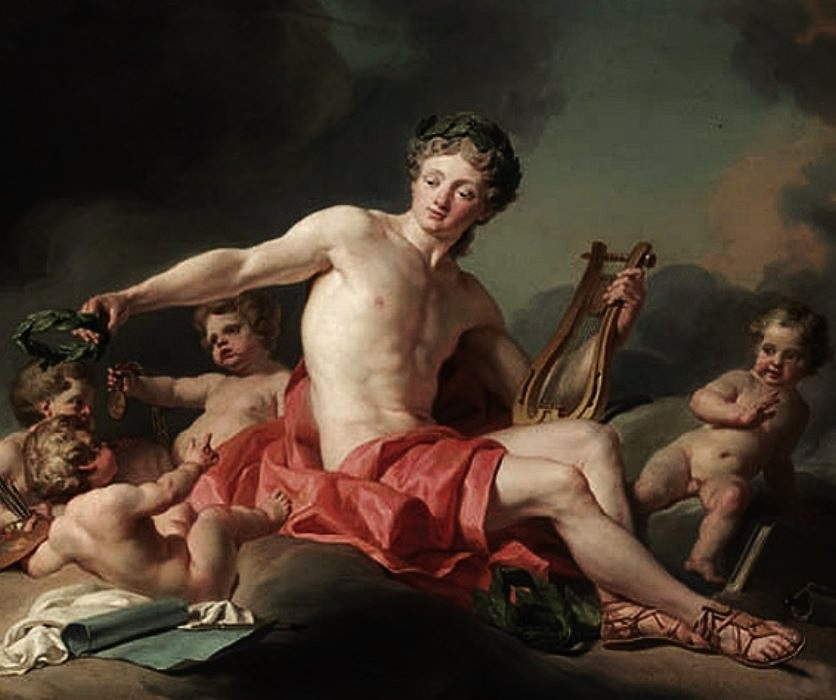
Nicolas-Guy Brenet: Apollon couronnant les arts